Vietnam issues national plan on aquaculture development for 2021-2030

Deputy Prime Minister Le Van Thanh has signed a decision to promulgate a national plan on aquaculture development in the 2021 – 2030 period.
Vietnam issues national plan on aquaculture development for 2021-2030 ảnh 1Illustrative photo (Source: VNA)
 

Hanoi (VNA) – Deputy Prime Minister Le Van Thanh has signed a decision to promulgate a national plan on aquaculture development in the 2021 – 2030 period.

The scheme’s overall aims is to develop aquaculture sustainably in response to climate change. The plan is also being set in place to improve productivity, quality, value, and competitiveness of aquatic products. This will help meet demand from domestic and international markets as aquaculture develops further in Vietnam.

As per the plan, by 2025, the total aquaculture production and export value will reach 5.6 million tonnes and 7.8 billion USD per year, with an annual rate of value growth averaging 4%.

It set the goal for the domestic production to be capable of supplying a large volume of products and sufficient breeding facilities for aquatic animals with high value.

Meanwhile, more than 30 concentrated aquaculture rearing and breeding areas will be invested and upgraded serving production requirements.

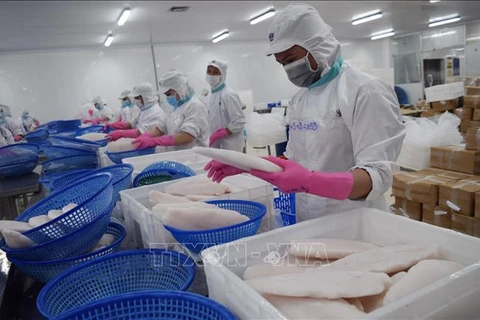
Vietnam issues national plan on aquaculture development for 2021-2030 ảnh 2Illustrative photo (Source: VNA)

The plan also sets out a target of building a supply chain, processing and consumption to ensure a stable output for over 30% of the total aquatic production.

By 2030, the yield of the sector is expected to hit 7 million tonnes annually, and contribute to better job creation and income improvement for workers.

Tasks set for the sector to press ahead include building and developing aquaculture areas to ensure food safety as well as increasing the use rate of domestic raw materials to reduce costs.

All economic sectors will be encouraged to invest in technology transfer, build facilities for the production of materials and equipment, improve competitiveness, and provide domestic services serving production and cost reduction./.
VNA

See more

Workers load rice bags onto a vessel for delivery. (Photo: VNA)

PM directs tasks to accelerate 2026 export growth

During January – February, Vietnam’s total export-import value hit 155.7 billion USD, up 22.3% year-on-year. Of the total, exports were estimated at 76.4 billion USD, up 18.3%, while imports totaled 79.3 billion USD, up 26.3%.

A quick report from data analytics platform Metric shows the number of active sellers across Shopee, TikTok Shop, Lazada and Tiki has dropped to just over 602,000, marking a year-on-year decline of more than 7%. (Illustrative photo: VNA)

Higher marketplace fees weigh on online sellers

Analysts identify rising operational costs as the key factor behind the exodus. In 2025, platforms simultaneously rolled out fee hikes ranging from 10–15%, significantly increasing the financial burden on merchants.

The latest approvals underscore the growing presence of Vietnamese rice in one of the world’s most demanding markets. (Photo: VNA)

Fragrant rice deepens EU market presence

Although the volume of individual shipments remains relatively modest, industry experts say the steady flow of exports reflects stable demand in the EU for high-quality rice.

Promoting stronger foreign direct investment (FDI) inflows is considered an important solution to help drive economic growth. (Photo: VNA)

Vietnam emerges as hub for high-quality FDI

Vietnam is gradually becoming a strategic destination for high-quality global FDI. Investment flows are increasingly directed toward sectors such as high-tech manufacturing, electronics, digital infrastructure, modern logistics, and industries that are closely linked to global supply chains.

Shrimp processing for export at Huy Nam company, An Giang province. (Photo: VNA)

Fisheries sector proactively adjusts to emerging challenges

In addition to food safety regulations, the US continues to closely monitor the origin of imported seafood through the Seafood Import Monitoring Programme (SIMP) administered by the National Oceanic and Atmospheric Administration (NOAA). Requirements linked to the Marine Mammal Protection Act (MMPA) are also a major concern for businesses.