Vietnam, Japan to step up forest management cooperation

Vietnam and Japan will enhance forest management collaboration under a Memorandum of Understanding (MoU) signed in a recent working visit to the East Asian country by Director of the Department of Forestry Tran Quang Bao.

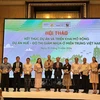
Vietnam and Japan sign an MoU on enhancing forest management collaboration. (Photo: VNA)

Hanoi (VNA) – Vietnam and Japan will enhance forest management collaboration under a Memorandum of Understanding (MoU) signed in a recent working visit to the East Asian country by Director of the Department of Forestry Tran Quang Bao.

Accordingly, they will work together to sustainably manage the forests, mitigate and respond to climate change, utilise forest resources, and enhance the forest biodiversity preservation work. Besides, they will research and develop new technologies in the area, and ensure the legality and responsibility of wood and wood products.

At the signing ceremony, Bao spoke highly of Japan’s cooperation with and assistance to Vietnam in the area over the past years, adding Japan has helped Vietnam build and carry out important strategies, policies, and projects such as completion of the legal system, particularly the Law on Forestry in 2017 and related decrees and circulars.

With non-refundable technical support programmes, ODA projects, and concessional loan programme, Japan has assisted Vietnam to enhance sustainable forest management, improve local livelihoods, preserve biodiversity, and respond to climate change.

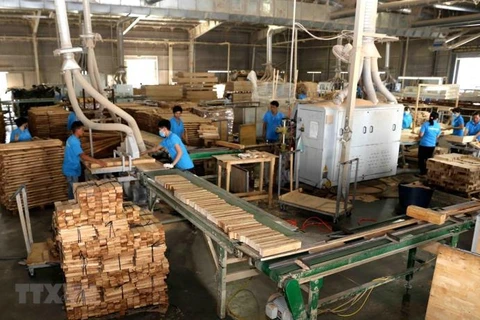
He went on to say that most of the programmes have been effectively implemented, contributing to the success of the forestry sector, adding Japan is one of the five largest importers of Vietnamese wood products with a value of 1.5-2 billion USD each year.

Bao suggested the two sides bolster cooperation to capitalise on their forestry potential and strengths, making contributions to the development of the forestry sector in each nation.

Director General of the Japanese Forestry Agency Aoyama Toyohisa recommended the two countries build plans to bolster cooperation in an effective and practical manner as defined in the MoU.

The two sides should coordinate to build and recognise each other’s wood legality to promote the trade of wood responsibly, create favourable conditions for Japanese experts to come and assist Vietnam more in the area, effectively roll out the Joint Crediting Mechanism, and develop and implement cooperative projects related to the International Tropical Timber Organsiation (ITTO), he added.

Bao attended a talk with the Japan BioPlastics Association, had a meeting with the Ministry of Economics, Trade and Industry, and participated in the 4th Asian bioplastics conference. At the events, the Vietnamese side shared information on the country’s wood processing and trade as well as regulations on the legality of wood./.

VNA

See more

Sarus cranes at Tram Chim National Park (Photo: VNA)

Return of sarus cranes: Hope takes wing in Dong Thap wetland

Beneath the wide Mekong Delta sky, Tram Chim National Park is racing against time, pouring heart and science into a decade-long (2022–2032) plan to rescue the Eastern sarus crane – an elegant, scarlet-headed bird listed as endangered on the International Union for the Conservation of Nature (IUCN) Red List and a living emblem of both the park and all of Dong Thap province

French Ambassador Olivier Brochet speaks at the press conference in Hanoi on December 11 to mark the 10th anniversary of the Paris Agreement on climate change and highlighting the COP30 outcomes. (Photo: VNA)

International community ready to support Vietnam in energy transition, climate response

In a video message to the press conference, UN Resident Coordinator in Vietnam Pauline Tamesis said the UN is ready to support Vietnam in building a pipeline of projects capable of absorbing financing mobilised under the Political Declaration on establishing the Just Energy Transition Partnership (JETP), as well as from global climate finance sources, including the Green Climate Fund and the Loss and Damage Fund.

Forest rangers in Son La province apply technological devices and software to forest management, monitoring, and protection. (Photo: nhandan.vn)

Digital technology application enhances forest management, protection

With a total forest area of over 14 million hectares, including more than 10 million hectares of natural forests, forests exist in all 34 provinces and cities across the country. Given the large area and limited workforce, applying digital solutions in forest management and protection has become a top priority for the forestry sector.

Sunda pangolins (Manis javanica), also known as the Javan pangolin, are listed in Group IB – critically endangered and strictly protected from all commercial exploitation (Photo: VNA)

Quang Ngai releases rare pangolin back into nature

Initial verification showed that the animal weighed 3.7kg and measured over 60cm. It was identified as a Sunda pangolin (Manis javanica), also known as the Javan pangolin, listed in Group IB – critically endangered and strictly protected from all commercial exploitation.

Residents of Tuyen Quang province take part in the One Billion Trees Programme. (Photo: VNA)

Tree-planting programme exceeds one-billion-tree goal

The total comprises 573.9 million scattered trees and 865.2 million trees grown in concentrated plantations, equivalent to 429,125 hectares of forest. Provinces posting the strongest results include Phu Tho with 177.9 million trees, Lao Cai with 108.8 million, and An Giang with 98.5 million.

Construction activity is one of the causes of air pollution in Hanoi. (Photo: VNA)

Hanoi takes urgent measures to curb air pollution

The city requires the enhanced application of advanced technologies and remote monitoring systems, including satellite remote sensing, drones, and AI-integrated traffic cameras, to monitor, detect, and strictly address the illegal burning of garbage, straw, and agricultural by-products.

The World Bank delegation holds working session with Can Tho city People's Committee and relevant units (Photo: VNA)

World Bank delegation surveys Can Tho urban resilience project

The project is jointly financed by the WB with up to 250 million USD and a 10-million-USD non-refundable grant from the Swiss State Secretariat for Economic Affairs (SECO), along with counterpart funding from the Vietnamese Government. Its goal is to build a climate-resilient and sustainable city that can drive socio-economic growth across the Mekong Delta, mitigate flood vulnerability in central Can Tho, and improve inter- and intra-regional transport connectivity.