Vietnam needs 1.2 million doses of rabies vaccine

The Drug Administration under the Ministry of Health has asked rabies vaccine suppliers and importers to ensure stockpiles are built up to meet increasing demand.
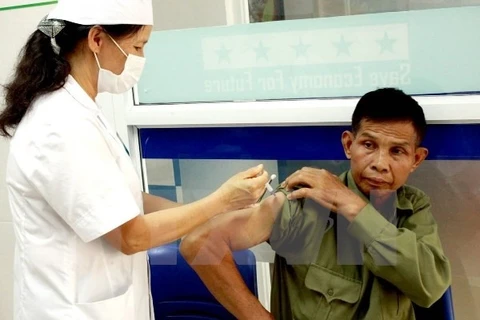
Vietnam needs 1.2 million doses of rabies vaccine ảnh 1(Photo: VNA)

Hanoi (VNS/VNA) - The Drug Administration under theMinistry of Health has asked rabies vaccine suppliers andimporters to ensure stockpiles are built up to meet increasing demand.

According to rabies vaccine importing facilities, the country needs about 1.2million doses of the rabies vaccine until the end of this year to address thevaccine shortage.

The administration has ordered vaccination facilities to keep enough of thevaccine in the stock to meet demand for at least one month.

The health ministry has asked for detailed contracts between vaccine suppliersand vaccination facilities. The contract must mention quantity, price of eachvaccine type and date of vaccine arrival and clarify the responsibilities ofrelated sides.

The ministry advised vaccination facilities to sign contracts with differentsuppliers, not only one, to avoid dependence on only one source.

Vaccination facilities should contact with rabies vaccine importing facilitiesto order the vaccine.

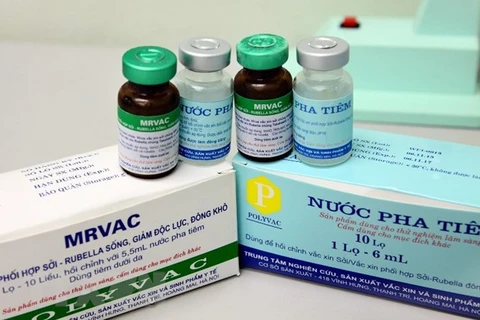
There are four rabies vaccines qualified to be used in Vietnam, namelyAbhayrab, Indirab, Speeda and Verorab.

In the first quarter of this year, it was reported that medical facilities werelikely to face a shortage of rabies vaccine stockpiles to meet the increasingdemand when summer came.

According to the health ministry, 18 people died of rabies in the first fourmonths of this year. In 2017, rabies killed 62 people while the figure for 2016was 91 people.

The victims mostly were not vaccinated and lived in rural areas where localshave the habit of leaving dogs unleashed or do not have their dogs vaccinated.

There have not been any drugs to treat the infection. Rabies vaccinesand rabies immune globulin are recommended for infection prevention.

The World Health Organisation estimates 59,000 people worldwide die from thedisease each year.-VNS/VNA 
VNA

See more

Under a phased rollout beginning in 2026, every resident in Ho Chi Minh City will receive at least one annual health check-up or health screening. (Photo: VNA)

Ho Chi Minh City develops integrated multi-tier healthcare system

Under the new model, healthcare is organised into interconnected levels based on people's needs rather than administrative boundaries. Patients can move seamlessly between levels while their electronic health records and treatment information remain connected through digital platforms, referral systems, telemedicine, electronic medical records, and integrated health databases.

Doctors conduct heart and lung examinations for workers. (Photo: VNA)

Draft policy encourages people to prepare for old age from middle age

A draft circular guiding the implementation of the National Target Programme on Health Care, Population and Development (2026-2035) marks a shift from focusing solely on elderly care to encouraging healthy and independent ageing through early preparation. It covers healthy lifestyles, regular health check-ups, financial planning, suitable employment and home-based elderly care skills.

The meeting between the Vietnam Military Medical University delegation and leaders of the Lao Ministry of National Defence in Vientiane (Photo: VNA)

Vietnam, Laos deepen military medical cooperation

Since 1954, Vietnam Military Medical University has trained 687 Lao military medical personnel, including 322 doctors, 67 master's degree holders, 10 doctorate holders, and dozens of specialist physicians, alongside hundreds of pharmacists and medical technicians.

Vietnam's first penis transplant from a brain-dead donor is successfully performed at Viet Duc University Hospital. (Photo published by VNA)

Vietnam reaches new milestone in reconstructive transplant surgery

As the first operation of its kind in Vietnam, the hospital spent months developing treatment protocols, studying international experience and assembling a multidisciplinary team that included experts in transplantation, andrology, microsurgery, anaesthesia, immunology and pathology.

Dr. Nguyen Thanh Xuan is performing brain surgery on a patient (Photo published by VNA)

National strategy aims to build advanced medical ecosystem

Vietnam's adjusted healthcare network master plan for 2021–2030, with a vision to 2050, also outlines a regional structure covering the country's six socio-economic regions. It envisages 17 provincial general hospitals serving regional functions, at least one highly specialised hospital in each region, and at least one advanced medical facility in every province and city.

Vietnamese Ambassador to Bulgaria Nguyen Thi Minh Nguyet and Prof. Dr. Nguyen Huu Tu, President of Hanoi Medical University, meet with Prof. Boycho Landjov, President of Sofia Medical University. (Photo: VNA)

Vietnam, Bulgaria forge closer medical ties

The visit's highlight was the signing of a memorandum of understanding (MoU) between Hanoi Medical University and Sofia Medical University, creating a long-term framework for academic exchanges, scientific research and institutional cooperation between the two countries' leading medical schools.

The Intensive Care Unit at Duc Giang General Hospital has continuously introduced and applied advanced specialised techniques to improve the treatment and survival of critically ill patients. (Photo: VNA)

40 years of renewal: Healthcare quality advanced for new era

Over the past four decades of Doi moi (Renewal), Vietnam’s healthcare sector has made remarkable progress, and is now well positioned to achieve further breakthroughs by harnessing science, technology and innovation to improve public health care in the new era, according to experts from the Vietnam Union of Science and Technology Associations (VUSTA).

Doctors from Cho Ray Hospital conduct preventive health screenings for residents at the Cho Lon ward health station. (Photo: VNA)

Ho Chi Minh City targets completion of universal health check-ups by December 15

According to the municipal Department of Health, as of July 20, a total of 732,873 residents had undergone periodic check-ups and had electronic health records established. The figure reflects encouraging initial results from the citywide campaign launched by the department and underscores local authorities' commitment to implementing one of the largest community healthcare programmes ever undertaken in the southern metropolis.