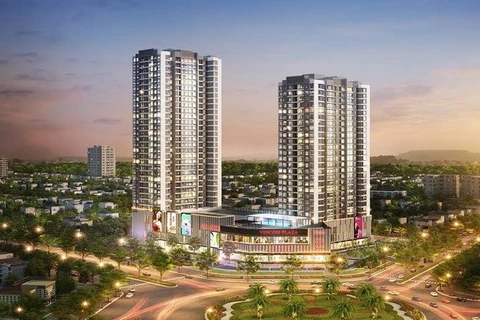
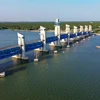
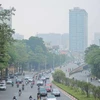
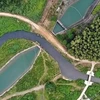
An aerial view of Phu My Hung residential area in HCM City. (Photo: VNA)
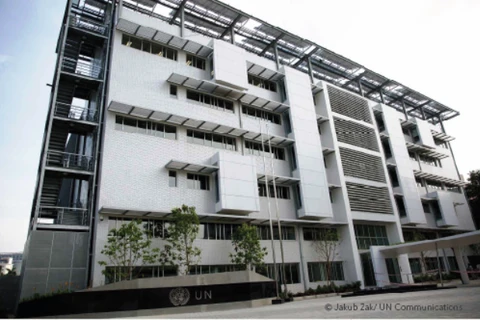
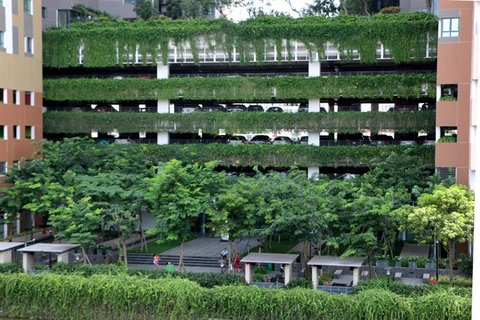
 HCM City (VNA) - Only 59 architectural works across the country have been recognised as achieving green standards of domestic and international organisations, including 45 works in the south, 11 in the north and three in the central region.
These figures indicate that investors in Vietnam have yet to give great attention to green development, according to the Green Architecture Club in Ho Chi Minh City.
Entering the local market in 2007, the building green work architecture was supported by both the Government and the private sector of Vietnam.
The country will be one of the most affected by climate change over the next three decades.
According to forecasts from the World Bank, if the sea level rises by one metre, Vietnam will lose 12 percent of its land, where 23 percent of the country’s population lives.
In the past 10 years, Vietnam has attained annual construction growth of 12 percent and urban development rate of 3.4 percent.
Over the same period, the country’s energy consumption rate rose by 13 percent annually, faster than its GDP rate.
Construction works have used about 36 percent of the energy and 33 percent of electriCity consumption in the country, contributing 25 percent to the greenhouse effect and a third of the country’s CO2 discharges, the main causes of climate change.
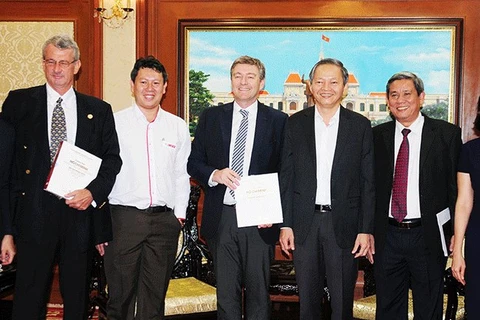
Mogens Bjorn Nielsen, head of the Water and Nature Department Municipality of Aarhus, Denmark, said the import of green construction methods from developed countries to developing ones is considered a good model.
However, planning is crucial for construction and developing smart urban areas and sustainable cities. Planning must ensure ecological, social and economic sustainability, Nielsen said.
Relevant authorities must attach great importance to the exploitation and use of water resources; development of clean energy resources; energy savings and efficiency; and transportation planning.
Green work construction is inevitable because it helps save energy and water resources, and uses sustainable materials. It also helps reduce exhaust gas and pollution, Nielsen said.
To develop green work construction, a comprehensive strategy must be built to introduce green products in all urban areas, construction works, products and materials.
It must also reduce the “input” of urban areas and construction works such as raw materials and the “output”, including pollution, waste and waste water.
Barriers
According to investors, high costs are one of the challenges facing the development of green construction in Vietnam as costs are 10 percent to 30 percent higher than the costs for other construction.
Meanwhile, a number of construction works have been named “green works” but have not made contributions to the environment and society.
Relevant authorities have not issued policies and incentives to encourage investment in construction of green works in the country.
Tran Khanh Trung, chairman of the Green Architecture Club in HCM City, said local residents’ lack of awareness of environmental protection and under-developed infrastructure for green work construction are the main challenges behind the slow development.
To build green works for smart and sustainable cities, the Government should issue incentives and create favourable conditions to encourage investment in construction of green works, experts have said.-VNA
VNA