Hanoi (VNA) – Vietnam’s over-4,000-year history has woven a tapestry of cultural treasure across the country, representing more than just the nation’s soul but emerging as a powerful catalyst for sustainable development. Amidst rapid globalisation and urbanisation, preserving and promoting the cultural wealth has never been more critical.
A rich tapestry of cultural treasure
Vietnam's cultural landscape, shaped up by its over four millennia of history, boasts both tangible and intangible heritage.
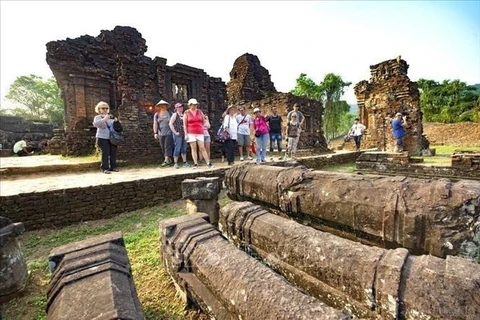
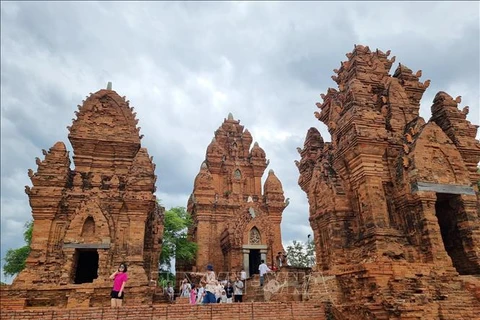
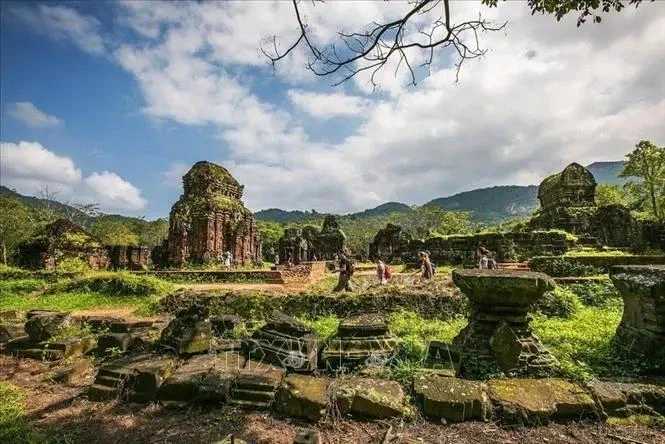
According to the Ministry of Culture, Sports and Tourism’s Department of Cultural Heritage, as of mid-2024, the country housed an impressive collection of more than 40,000 historical sites, including eight UNESCO-recognised world heritage sites, 130 special national monuments, and over 10,000 provincial-level heritage sites, and approximately 70,000 documented elements nationwide, with 15 inscribed on UNESCO’s representative list of the intangible cultural heritage of humanity and the list of intangible cultural heritage in need of urgent safeguarding.
Notably, the Trang An Scenic Landscape Complex stands as Southeast Asia’s only mixed heritage site, combining both cultural and natural significance.
The cultural treasure has been an important resource for the country’s socio-economic development. Many elements have become well-established cultural-tourism offerings, helping position the national brand in the era of global integration.
Driving force for sustainable development
Over the recent past, seeing cultural heritage as a driving force and catalyst for sustainable development, the Vietnamese Government has spent thousands of trillions of VND on preservation and renovation efforts.
The impact of heritage preservation in Vietnam tells a remarkable success story. The Hue Monuments Complex (recognised by UNESCO as a world relic site in 1993) and Ha Long Bay (1994) have transformed from modest attractions, drawing just tens of thousands of visitors, to world-class destinations welcoming millions annually. In the same vein, the Trang An Landscape Complex lured over 6.3 million visitors yearly within just five years of its UNESCO recognition.
These impressive numbers are driven by an innovative approach to heritage preservation that has mobilised diverse stakeholders, including organisations, businesses, UNESCO, and both governmental and non-governmental agencies. Particularly, local communities have become active participants in restoration projects, from the iconic One Pillar Pagoda in Hanoi to the monuments of Hue imperial city, proving that heritage conservation can go hand in hand with tourism development.
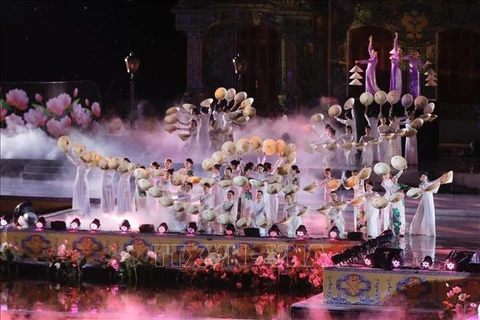
The preservation effort extends beyond physical landmarks to embrace intangible cultural heritage. Communities across the nation have passed down their cultural legacy to future generations through renovation work and establishment of clubs to encourage traditional art performances. Quan ho (love duet) singing in Bac Ninh province, Soc temple festival, Huong pagoda festival, Hue royal court music, and Soc Trang boat racing have evolved into distinctive cultural tourism brands, each telling their own unique story.

Heritage sites have become powerful engines of poverty reduction, generating thousands of jobs and elevating living standards in surrounding communities. Hoi An ancient town stands as a prime example. Two decades after achieving world heritage status, tourism now accounts for over 70% of the city's GDP. Tourism revenues have funded crucial improvement in local infrastructure, education, health care, and security, while also supporting ongoing heritage preservation efforts.
Cultural heritage going digitalised
Vietnam is increasingly embracing digital transformation in heritage preservation. A government program launched in December 2021 to digitise the nation's cultural heritage for the 2021-2030 period lays a foundation for agencies and organisations to digitalise and standardise existing data from museums and heritage site management boards nationwide. This is not only valuable for conservation work but also provides a basis to capitalise on the potential of heritage in the cultural industry.
The Vietnam National Institute of Culture and Arts Studies has already digitised an substantial collection, including nearly 5,700 video recordings, 980 photo albums containing 91,700 images, over 700 scientific reports, 1,154 documentary films, and 40,000 photographs.
Vietnam's commitment to cultural heritage preservation dates back to November 23, 1945, when President Ho Chi Minh signed a decree to set up the Vietnam Oriental Institute, a watershed marking the beginning of systematic heritage preservation in the country.
Since then the Government, aware of the significance of cultural heritage in socio-economic development, has issued various resolutions to connect the cultural heritage with sustainable development, affirming that culture is not only the a target but also a motive for development.
Particularly, the Party’s theory on promoting soft power of the Vietnamese culture, first introduced in the documents of the 13th National Party Congress, emphasises the cultural identity and the people’s strength have become the root of the soft power and a motive for sustainable development and international integration./.