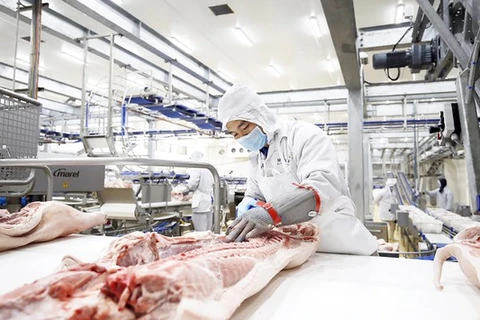
Customs clearance of commodities at a border gate (Photo: VietnamPlus)
Hanoi (VNA) – The congestion of farm produce at border gates continues to be a hot topic in recent times. Especially, amidst the developments of the novel coronavirus disease (2019-nCoV), solutions to sustainable exports are needed.
Unstable prices
According to Nguyen Dinh Tung from the Vietnam Fruit and Vegetables Association, the nCoV outbreak has affected the prices of agricultural products, especially fruits.
For example, before the Lunar New Year festival, the price of durians reached 70,000 VND per kg, now is dropping to only 40,000 VND per kg. The price of dragon fruits is now only 3,000 - 4,000 VND per kg and the price of watermelon is even only 1,000 VND per kg in some places.
In the Mekong Delta province of Tra Vinh, traders buy the most delicious red flesh dragon fruit at only 10,000 per kg, while they bought this fruit at 7,000 VND per kg for grade 2 and 5,000 VND per kg for grade 3, down about 35,000-45,000 VND per kg compared to the time before the festival.
One of main reasons for Vietnam's agricultural exports to China via border gates difficulties caused by the 2019-nCoV outbreak.
As of the end of February 5, a total of 362 trucks carrying goods had been still waiting for customs clearance in the border areas in the northern province of Lang Son, including 66 vehicles at the Huu Nghi international border gate, 205 others mainly storing dragon fruits and watermelons at the Tan Thanh secondary border gate, 33 at the Coc Nam secondary border gate, 57 at the Binh Nghi secondary border gate, and one at the Na Hinh secondary border gate.
Vietnamese authorities have coordinated with the Chinese side to take temporary solutions in order to accelerate the customs clearance for the goods, thus reducing congestion at border gates.
The Ministry of Industry and Trade recommended farmers to adjust their production amidst the complicated developments of the disease, while seeking ways to promote domestic consumption through connecting domestic distribution chains with big fruit producers.
In order to support farmers, many supermarkets and businesses have been involved in buying agricultural products, contributing to promoting the consumption.
Nguyen Thi Phuong, Deputy General Director of Central Retail Group, said the departments of Agriculture and Rural Development of Binh Thuan and Gia Lai provinces have asked her firm to support farmers in selling dragon fruits, watermelons, and other farm produce.
According to Phuong, the price of dragon fruit is not yet too low. A kilogram of the fruit is bought at 14,000 VND at warehouse.
Solutions needed
Le Duy Hiep, Chairman of the Vietnam Logistics Business Association (VLA), said on February 6 that the association received the ministry’s document and agreed to call on its member enterprises to reduce 10-20 percent of warehousing fees, especially cold storage, to support shopping centres and supermarkets involving in purchasing agricultural products for farmers.
“This is a practical measure of logistic enterprises to support efforts of the Government and entire people in the fight against the outbreak. We hope this will help create a close connection between logistics enterprises with domestic production and business enterprises, thus supporting each other as well as farmers in mitigating losses damage caused by the disease,” Hiep said.
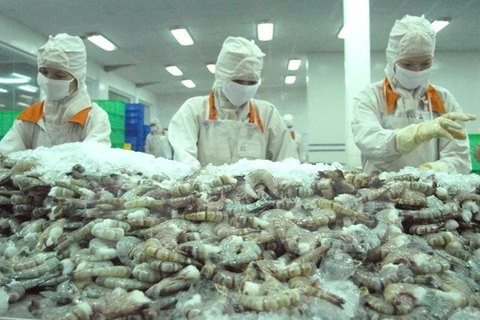
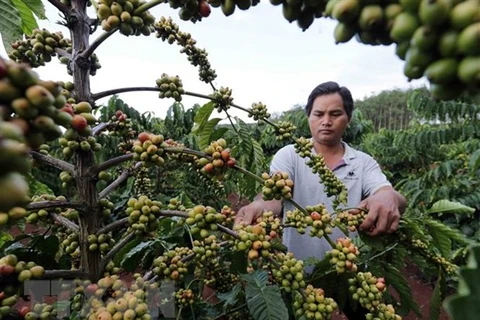
In 2019, Vietnam's agricultural exports to China reached 11.13 billion USD. However, the country has still faced difficulties in finding markets for its farm produce in recent years.
Deputy Minister of Industry and Trade Do Thang Hai said Vietnam's agricultural and fishery exports still depend on the Chinese market so when the market fluctuates, it will cause a remarkable impact on Vietnam's exports.
Besides, the restructuring of the agricultural sector towards reducing the quantity and increasing the quality has not been effectively implemented, leading to oversupply and difficulties in controlling the quality.
Therefore, when adverse changes appear from this market, it will be difficult for Vietnam to shift to alternative markets because it fails to meet standards and regulations on food safety and animal and plant quarantine of third countries.
According to Phuong, it is necessary to stimulate domestic demand of farm produce.
When export prices go up, many cooperatives prefer to export quickly and do not want to distribute their products in supermarkets because of negotiations and standards and given by supermarkets, she said.
She went on to say that if this way is being continued, there is no way to sell products in supermarkets when exports meet difficulties.
 The Vietnam Logistics Business Associations (VLA) calls on its member enterprises to reduce 10-20 percent of warehousing fees, especially cold storage, to support supermarkets involving in purchasing agricultural products for farmers. (Photo: VietnamPlus)
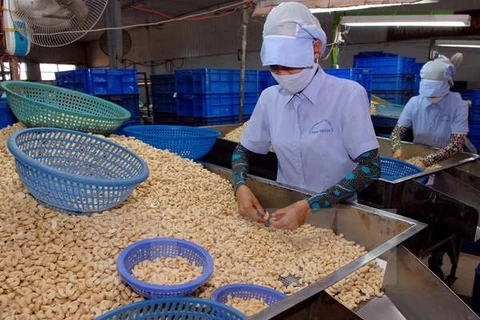
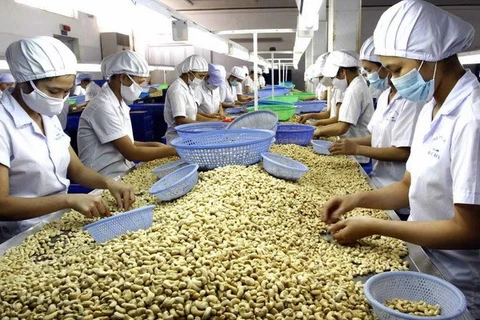
Deputy Minister of Agriculture and Rural Development Phung Duc Tien asked enterprises and localities to promote intensive processing for farm produce and accelerate promotion to avoid depending too much on an export market.
At present, only 9 kinds of agricultural products are eligible for export to China, so the ministry has planned to restructure agricultural products in localities following the market demand, Tien said./.