Vietnam, RoK target bilateral trade of 150 billion USD in 2030

The goal of raising two-way trade between Vietnam and the Republic of Korea (RoK) to 150 billion USD in a balanced and sustainable direction by 2030 is reachable, said Finance Minister Ho Duc Phoc.
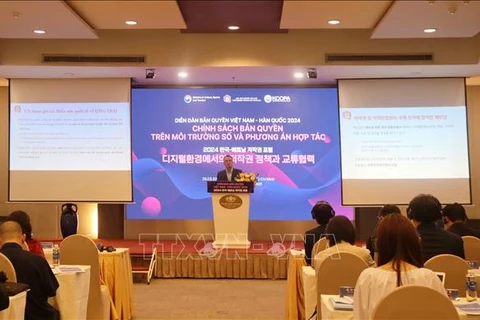
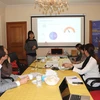
Vietnam, RoK target bilateral trade of 150 billion USD in 2030 ảnh 1

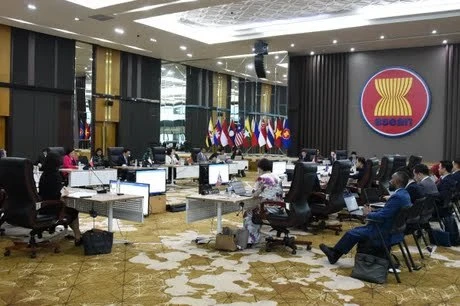
A financial investment promotion conference in the Republic of Korea themed "Vietnam - Investment Destination" in Seoul on March 7. (Photo: VietnamPlus)

Seoul (VNA) – The goal of raising two-way trade between Vietnam and the Republic of Korea (RoK) to 150 billion USD in a balanced and sustainable direction by 2030 is reachable, said Finance Minister Ho Duc Phoc.

Speaking at a financial investment promotion conference in the RoK themed "Vietnam - Investment Destination" in Seoul on March 7, Phoc said that the ministry is committed to accompanying and creating favourable conditions for partners, businesses, and investors of the two countries to seek investment and cooperation opportunities, and invest and expand their investment scale in Vietnam.

Vietnam is the RoK’s third largest trade partner, with two-way trade hitting nearly 80 billion USD last year. The RoK ranks first among the foreign investors in Vietnam, with 9,863 investment projects totaling around 90 billion USD and over 8,000 companies operating in the Southeast Asian nation.

Last year, Vietnam also welcomed more than 3.5 million Korean holidaymakers, and there are currently 180,000 Koreans living in the country.

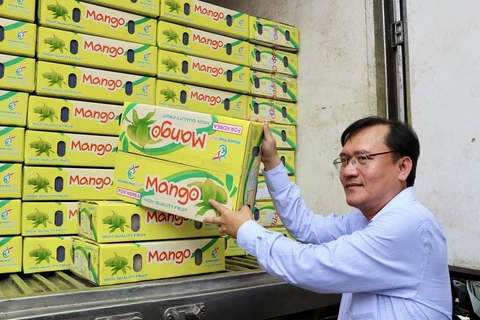
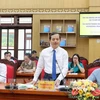
Vietnam, RoK target bilateral trade of 150 billion USD in 2030 ảnh 2

Finance Minister Ho Duc Phoc (Photo: VietnamPlus)

The minister said he believes the goal of raising two-way trade to 150 billion USD in a balanced and sustainable direction by 2030 is reachable.

To achieve that goal, the Ministry of Finance is coordinating with the Korean Embassy in Vietnam to organise a yearly policy dialogue conference on the financial sector to listen to Korean businesses and investors, join in tackling their problems, and create favourable conditions for them to run business in Vietnam.

Upgrading Vietnam’s stock market

Regarding Vietnam’s stock market, Phoc highlighted the rapid development of the market, which had a capitalisation value of nearly 270 billion USD, equivalent to nearly 63% of the GDP.

He cited Prime Minister Pham Minh Chinh's pledge at a conference on the stock market development in late February to develop a transparent, safe, effective and sustainable stock market and to ensure legitimate rights and interests of stakeholders.

Kim Yong-Jae, Standing Commissioner of the Korean Financial Services Commission (FSC), said that in the financial sector, Vietnam ranks second in the world in terms of the presence of RoK financial institutions, with 46 in the fields of banking, insurance, and securities.

Vietnam, RoK target bilateral trade of 150 billion USD in 2030 ảnh 3

Standing Commissioner of the Korean Financial Services Commission (FSC) Kim Yong-Jae speaks at the conference. (Photo: VietnamPlus)

He said that Vietnam has achieved incredible economic growth over a long period as the country's average annual growth in the past 20 years reached 6.29%.

Recently, Vietnam also recorded a high economic growth rate in the context of a stagnant world economy.

The economic growth is a result of the efforts the Vietnamese Government and the people have made together with decisive investment of international businesses, he said.

Kim shared that large Korean corporations and businesses such as Samsung, LG, and Hyundai recognise Vietnam's growth potential and have reaped rewards after investing early in the Vietnamese market. Korean financial institutions are also investing in Vietnam in many different forms such as establishing legal entities, and mergers and acquisitions.

According to Kim, the Korean economy has entered a mature stage, with population ageing, which makes investing in promising Vietnamese businesses a great alternative to overcoming the decline in investment yields of Korean companies and financial institutions.

At the same time, this investment process will become a solid stepping stone to further strengthen the driving force for Vietnam's economic growth, he stressed./.
VNA

See more

Khanh Hoa province has the largest sheep population in Vietnam, with around 100,000 individuals. (Photo: VNA)

Khanh Hoa province explores Halal ecosystem development

Khanh Hoa aims to estabish itself as a Halal-friendly destination while supporting businesses in expanding export markets, attracting strategic partners and investors, and drawing projects from countries with strong Halal logistics, tourism, manufacturing, processing and agriculture sectors.

The proportion of Vietnamese goods remains high at supermarkets. (Photo: VNA)

Vietnamese brands win over domestic consumers to go global

Amid increasingly fierce global competition, the goal is no longer simply to increase domestic consumption of Vietnamese goods, but to develop strong Vietnamese brands capable of winning consumers through quality, innovation and added value, thereby creating a stepping stone for expansion into international markets.

Illustrative image (Photo: VNA)

Automated VAT refunds to be rolled out from December

As of August 11, VAT refunds rose 32% from a year earlier, reaching 64.4% of the full-year estimate. Tax authorities issued 11,627 refund decisions totaling 111.726 trillion VND (4.26 billion USD), up 9% by volume. The payouts improved cash flow for companies and supported production, trade and exports.

ST25 rice is the centrepiece of the Vietnam Goods Week at Selgros. (Photo: VNA)

ST25 rice officially enters Selgros wholesale supermarket chain in Germany

The placement of ST25 rice on Selgros shelves not only creates an additional opportunity for German consumers to access Vietnamese rice products, but also contributes to efforts to increase the added value of Vietnamese agricultural products by shifting the focus from volume to quality, branding and value.

Trains on the elevated section of the Cau Giay – Nhon route in Hanoi provide convenient transportation for local residents. (Photo: VNA)

Multimodal connectivity to drive Vietnam’s transport infrastructure

Under the proposed approach, roads would serve mainly as connectors and for first- and last-mile transport; railways would handle large volumes over long distances; maritime transport would serve import and export cargo; inland waterways would carry large volumes at low cost; and air transport would focus on fast delivery and high-value goods.

Amata Industrial Park in Dong Nai city (Photo: VNA)

Green shift powers investment in southeast Vietnam

The Amata Industrial Park in Dong Nai City, established 32 years ago and covering more than 500ha, is home to over 160 domestic and foreign businesses. Selected in 2020 as one of three national pilot sites for conversion into an eco-industrial park, Amata has raised its compliance with the international eco-industrial park framework from 41% to 86% in 2024, and is working towards becoming Dong Nai's first certified eco-industrial park.

At a port in Ho Chi Minh City (Photo: VNA)

Multi-channel capital mobilisation needed to achieve double-digit growth

The Ministry of Finance estimates development investment for 2026-2030 at a minimum of 38.5 quadrillion VND (1.48 trillion USD), or about 40% of GDP. The state budget is expected to provide only about 20%, or more than 7.7 quadrillion VND, leaving over 80%, or more than 30 quadrillion VND, to be raised from the broader economy. That makes expanding capital mobilisation channels beyond bank credit essential.

An aerial view of the Nhieu Loc – Thi Nghe area in Ho Chi Minh City. The southern metropolis is home to the Vietnam International Financial Centre. (Photo: VNA)

Vietnam International Financial Centre launches membership registration system

Integrated into the official Vietnam International Financial Centre portal at vifc.gov.vn, the online system for registering and recognising members provides a unified online service channel through which investors, organisations and businesses can complete procedures related to membership, from new registration and recognition to information updates and termination of membership.

At a tax office in Hung Yen province (Photo: VNA)

Finance ministry moves to cut business costs, spur growth

Tax policy is among the solutions with the most direct impact on companies. Rather than prioritising near-term revenue collection, fiscal policy is being run to help them preserve cash flow, expand production and build more sustainable revenue sources.