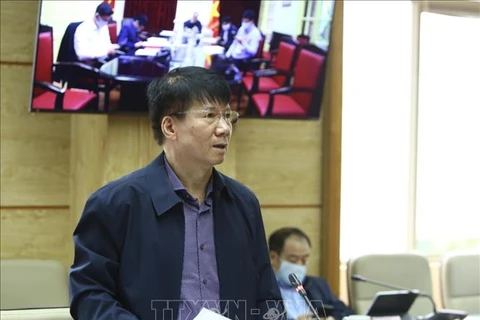
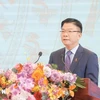
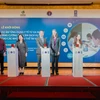
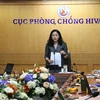
Associate Professor PhD Luong Ngoc Khue, Director of the Department of Medical Examination and Treatment (C) at the event (Photo: VNA)
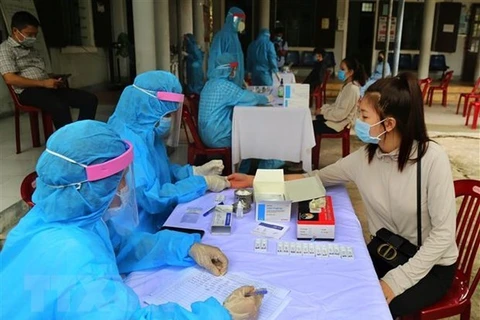
 Hanoi (VNA) - Vietnam has shared its experience in preventing and controlling the COVID-19 pandemic and lessons to make the initial success in treating the disease, as well as upcoming orientations of its Ministry of Health (MoH) for the work.
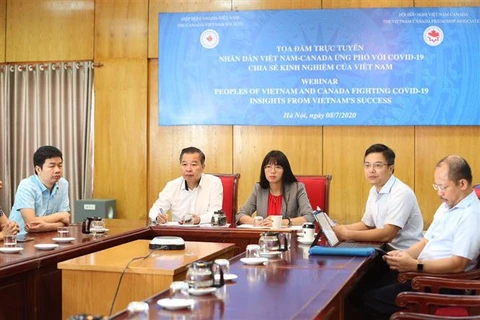
Addressing a forum on future health trends hosted by the National University of Singapore via a video conference on November 18, Associate Professor PhD Luong Ngoc Khue, Director of the Department of Medical Examination and Treatment under the MoH, said Vietnam's initial and positive success in disease prevention, treatment and control was thanks to great efforts of the whole political system, society, people and partners.
Vietnam has developed strategies and plans to respond to disease situations, organised treatment, management and caring at all levels, managed reports on the number of COVID-19 cases and regularly updated professional guidelines, Khue noted.
It has also built regulations on equipment, drugs and medical consumables for COVID-19 treatment units, established testing systems at medical examination and treatment facilities, and implemented the assessment of human resources working in resuscitation and infection, and provided training courses to improve their expertise.
In addition, the country also set up mobile teams to provide regular support to localities in the work and an online centre for supporting COVID-19 treatment, while regularly monitoring and supervising the implementation of safe hospital criteria in preventing the pandemic, he added.
In the time to come, Vietnam will continue to focus on both disease and economic development, with its priority given to the development of a Tele-Medicine Network to improve the quality of medical services, apply information technology in disease prevention and control and treatment, Khue said.
Attention will be also paid to reducing hospital overloading and cross-infection at health facilities, he went on.
Participants to the forum mainly focused on the impact of the COVID-19 pandemic, the response of health systems, especially difficulties to and challenges to allocating resources, including financial ones; major policy changes; and recommendations for public - private partnership.
In the time to come, Vietnam will continue to focus on both disease and economic development, with its priority given to the development of a Tele-Medicine Network to improve the quality of medical services, apply information technology in disease prevention and control and treatment, Khue said.
Attention will be also paid to reducing hospital overloading and cross-infection at health facilities, he went on.
Participants to the forum mainly focused on the impact of the COVID-19 pandemic, the response of health systems, especially difficulties to and challenges to allocating resources, including financial ones; major policy changes; and recommendations for public - private partnership.
Application of information technology and digital platforms in health systems such as tele-consult, tele-monitoring, and drug delivery to increase efficiency and reduce costs for health systems were also put on table.
The forum is rotated annually in Asia. Vietnam hosted the event in 2016 and 2018.
This year’s forum saw the participation of health experts from Vietnam, Thailand, Taiwan (China), India, Indonesia, the Philippines, and Bangladesh./.
The forum is rotated annually in Asia. Vietnam hosted the event in 2016 and 2018.
This year’s forum saw the participation of health experts from Vietnam, Thailand, Taiwan (China), India, Indonesia, the Philippines, and Bangladesh./.
VNA