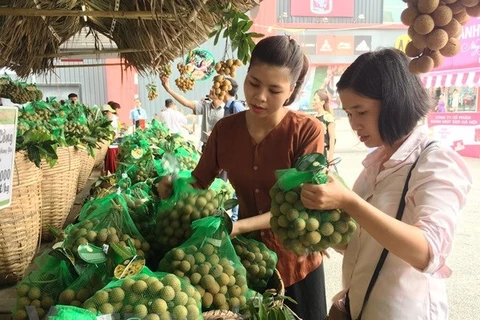
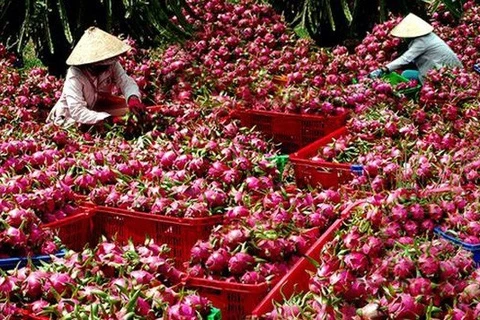
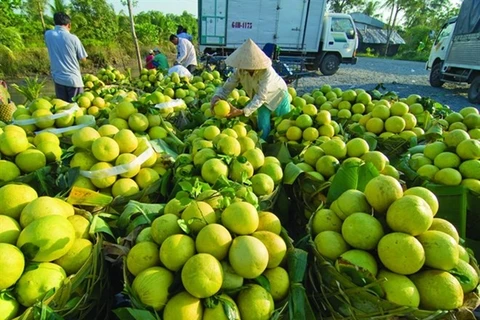
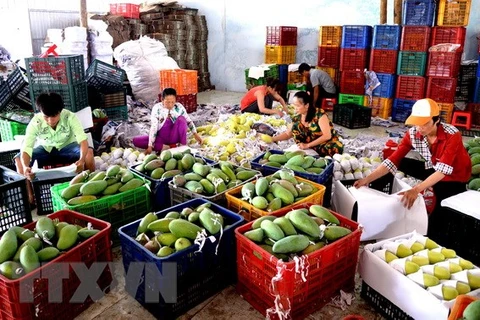
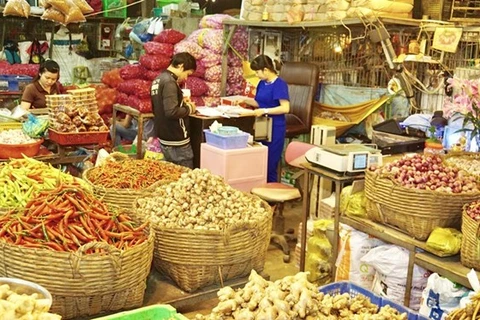
Illustrative image (Source: Vietnambiz.vn)
 Hanoi (VNS/VNA) - Vietnam has exported its fruits to high-standard markets in recent years, such as the US, the European Union and Japan, but increasing export volume is not an easy task.
Vietnamese fruits face competition in quality, design and price with fruits from other exporting countries, according to experts.
For instance, Vietnam exports six kinds of fresh fruits to the US, including lychee, longan, rambutan, dragon fruits, star apple and mango, but those have occupied a very small market share at about 3 percent of total US fruit imports.
According to experts, the low export volume is due to high costs of transport, preservation, quarantine and irradiation treatment for Vietnamese fresh fruits, reducing their competitiveness.
Therefore, to expand market share in the coming time, Vietnam should focus on processed products such as juice, dried and canned products, and especially organic products.
Vietnamese fruits meeting international standards required at least five years of negotiation to enter the US market, according to Dao Tran Nhan, former Counselor of the Vietnam Trade Office in the US. Moreover, the US has required Vietnamese companies to pay for irradiation treatment for their fruit before shipping to the market, forcing Vietnamese fruit exporters to charge high prices in the US.
In addition, any shipment of local fresh fruits to the US must indicate the area in which the fruits was planted according to the code agreed on by the two parties. This is a hurdle because Vietnamese fruits are often planted on a small scale and tracking their origins is challenging.
Vietnam’s fruit products have been exported to the EU market but only at a small volume due to competition in price, quality and delivery time with fruits from countries located closer to the EU such as Brazil, Peru, Ecuador and Panama, and from regional rivals such as Thailand, the Philippines and Malaysia.
Meanwhile, the EU has regularly reviewed and adjusted food safety regulations as well as increased the frequency of inspections for Vietnamese vegetables and fruit because many batches have not met EU regulations. Those are disadvantage for efforts to increase the export volume to this market, according to the experts.
Vietnamese fruits face competition in quality, design and price with fruits from other exporting countries, according to experts.
For instance, Vietnam exports six kinds of fresh fruits to the US, including lychee, longan, rambutan, dragon fruits, star apple and mango, but those have occupied a very small market share at about 3 percent of total US fruit imports.
According to experts, the low export volume is due to high costs of transport, preservation, quarantine and irradiation treatment for Vietnamese fresh fruits, reducing their competitiveness.
Therefore, to expand market share in the coming time, Vietnam should focus on processed products such as juice, dried and canned products, and especially organic products.
Vietnamese fruits meeting international standards required at least five years of negotiation to enter the US market, according to Dao Tran Nhan, former Counselor of the Vietnam Trade Office in the US. Moreover, the US has required Vietnamese companies to pay for irradiation treatment for their fruit before shipping to the market, forcing Vietnamese fruit exporters to charge high prices in the US.
In addition, any shipment of local fresh fruits to the US must indicate the area in which the fruits was planted according to the code agreed on by the two parties. This is a hurdle because Vietnamese fruits are often planted on a small scale and tracking their origins is challenging.
Vietnam’s fruit products have been exported to the EU market but only at a small volume due to competition in price, quality and delivery time with fruits from countries located closer to the EU such as Brazil, Peru, Ecuador and Panama, and from regional rivals such as Thailand, the Philippines and Malaysia.
Meanwhile, the EU has regularly reviewed and adjusted food safety regulations as well as increased the frequency of inspections for Vietnamese vegetables and fruit because many batches have not met EU regulations. Those are disadvantage for efforts to increase the export volume to this market, according to the experts.
The Japanese market has increased demand for tropical fresh fruits like bananas, dragon fruits, mangos and lychees. Vietnam could promote exports of dragon fruits due to their good taste and quality, but it has faced obstacles in enhancing the export volume of other fruit because they are comparatively expensive.
Nguyen Quoc Toan, acting director of Agro Processing and Market Development Authority, said fruit and vegetable exports may hit a weak patch at the end of this year due to the influence of the rainy season and reduced output for some kinds of fruits.
The US-China trade war may cut China’s demand for imported fruits, affecting the exports of Vietnamese fruits and vegetables to this market.
Therefore, businesses need to strengthen links in the production chain to ensure the quality of fruits and vegetables for export.
To link production chains, Nguyen Dinh Tung, general director of Vina T&T, said the businesses should convince farmers to cooperate with them and plant fruit trees in accordance with international standards.
In addition, the company must develop the process of harvesting, packaging and transport, especially the preservation technology that maintains the fruit quality until it reaches the consumer, he said.
Processing is an indispensable way to bring Vietnamese fruits to the world market and solve obstacles such as post-harvest preservation, price reduction due to over-supply and technical barriers in import markets.
The enterprises must maintain export markets that they have entered already. To do so, they must have production chains that ensure good quality, abundant quantity and competitive price.
On the other hand, to compete with fruit of other countries in demanding markets, enterprises have proposed the Government invest in cold storage, packaging facilities and irradiated facilities, reducing firms’ expenditures for exporting.
At the same time, the Plant Protection Department or the local authorities should provide information about importers’ quality standards for farmers.
According to the Ministry of Agriculture and Rural Development, Vietnam’s exports of fruits and vegetables in the first seven months of this year were valued at 2.3 billion USD, an increase of 12.6 percent. China was the largest export market of Vietnamese vegetables and fruits, consuming 74 percent of the total national vegetable and fruit exports.-VNS/VNA
Nguyen Quoc Toan, acting director of Agro Processing and Market Development Authority, said fruit and vegetable exports may hit a weak patch at the end of this year due to the influence of the rainy season and reduced output for some kinds of fruits.
The US-China trade war may cut China’s demand for imported fruits, affecting the exports of Vietnamese fruits and vegetables to this market.
Therefore, businesses need to strengthen links in the production chain to ensure the quality of fruits and vegetables for export.
To link production chains, Nguyen Dinh Tung, general director of Vina T&T, said the businesses should convince farmers to cooperate with them and plant fruit trees in accordance with international standards.
In addition, the company must develop the process of harvesting, packaging and transport, especially the preservation technology that maintains the fruit quality until it reaches the consumer, he said.
Processing is an indispensable way to bring Vietnamese fruits to the world market and solve obstacles such as post-harvest preservation, price reduction due to over-supply and technical barriers in import markets.
The enterprises must maintain export markets that they have entered already. To do so, they must have production chains that ensure good quality, abundant quantity and competitive price.
On the other hand, to compete with fruit of other countries in demanding markets, enterprises have proposed the Government invest in cold storage, packaging facilities and irradiated facilities, reducing firms’ expenditures for exporting.
At the same time, the Plant Protection Department or the local authorities should provide information about importers’ quality standards for farmers.
According to the Ministry of Agriculture and Rural Development, Vietnam’s exports of fruits and vegetables in the first seven months of this year were valued at 2.3 billion USD, an increase of 12.6 percent. China was the largest export market of Vietnamese vegetables and fruits, consuming 74 percent of the total national vegetable and fruit exports.-VNS/VNA
VNA