Vietnam to get highest trade, income gains among RCEP members: WB

Vietnam is expected to register the highest trade and income gains among Regional Comprehensive Economic (RCEP) members, according to a World Bank (WB)’s working paper.
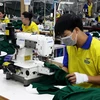
Vietnam to get highest trade, income gains among RCEP members: WB ảnh 1Production of workwear for export. (Photo: VNA)
Hanoi (VNS/VNA) - Vietnam is expected to register the highest tradeand income gains among Regional Comprehensive Economic (RCEP) members,according to a World Bank (WB)’s working paper.

To estimatethe economic and distributional impacts of RCEP in Vietnam, WB constructed abaseline and four alternative scenarios. The baseline reflects thebusiness-as-usual conditions, where the tariff schedules of previousagreements, including the most recent CPTPP, have been implemented, in parallelwith the US-China trade war.

In the baseline,between 2020 and 2035, the average trade weighted tariff imposed by Vietnamdeclines from 0.8 percent to 0.2 percent, while the tariffs faced by Vietnamare reduced from 0.6 percent to 0.1 percent. To measure the effects of RCEP,the policy scenario will be compared against this baseline.

The fourpolicy scenarios will measure the RCEP implementation incrementally. The firstscenario, the Tariffs scenario, is exclusively the implementation of tariffsaccording to the RCEP tariffs’ reduction schedules.

In the secondscenario, the RCEP scenario, WB implemented reductions of tariffs and ofnon-tariff measures, including the tariff reduction of 35 percent onagricultural goods; 25 percent on manufacturing goods; and 25 percent onservices.

Only whentariff reductions are combined with lower non-trade barriers (NTBs), areexporters able to take full advantage of the preferential rates under liberalRule of Origin (ROO).

WB assumedthat with the ROO regime, the third scenario, trade costs among its members arereduced by 1 percent over the implementation period of 2022-2035. However, inWB's simulations, implementation of ROO policy is costless, resulting in upperbound estimates of potential gains.

For the finalshock, the productivity kick scenario, an increase of productivity, as theresult of a higher degree of openness and falling trade costs, is implemented.

Vietnam’s realincome and trade expand faster than the baseline in the scenarios with tariffs,non-tariff measure reductions and rules of origin, and in the productivity kickscenario.

“In theproductivity kick scenario, where a productivity shock is included, Vietnam hasthe highest gains of all RCEP member countries. Real income increases by 4.9 percentrelative to the baseline, higher than the gains for the bloc as a whole, wherereal income increases by 2.5 percent,” WB reported.

“Trade alsoincreases the most in this scenario, with exports expanding by 11.4 percent andimports by 9.2 percent, relative to the baseline.”

In the baseline,which incorporates long-term trends and accounts for all the current tariffliberalisation commitments within the region (except RCEP), real income in Vietnamis expected to grow 112.7 percent between 2020 and 2035, with exports andimports increasing by 155.5 percent and 134.8 percent, respectively.

Withimplementation of RCEP, when rules of origin and productivity are included ontop of tariffs and non-tariff measures reductions, real income grows faster,with an increase of 123.1 percent between 2020 and 2035.

The benefitsof the implementation of these measures are also reflected in trade, withexports and imports growing 182.5 percent and 155.5 percent, respectively, andbetween the same period.

In thescenario where only the tariff reduction is implemented, the impact on Vietnam’seconomy is negligible, with real income close to zero. Trade too sees a smallreduction relative to the baseline, with both exports and imports declining by0.3 percent.

“With theimplementation of RCEP, the market for Vietnam will expand, particularly toChina, where Vietnam does not currently possess any trade agreement. Gains inthe productivity kick scenario are concentrated mostly in the manufacturingsectors, in particular wearing apparel, electrical equipment, and textiles,” WBreported.

“Some sectorswill suffer losses with the implementation of the agreement, due to aredistribution of resources to more productive sectors.”

The COVID-19pandemic has taken a high toll in human and economic terms. RCEP could helpcushion the negative effects of COVID-19 on economic growth by supportingregional trade and value chains, according to this report.

In themedium/long run, RCEP would increase the resilience of its members, it wouldmake them better prepared in the face of future shocks by enhancing regionalcollaboration, reducing trade costs, and further diversifying their economies.RCEP offers an opportunity to boost growth and support recovery from theCOVID-19 pandemic./.
VNA

See more

An art performance at 2026 Dak Lak Durian Festival. (Photo: VNA)

Dak Lak Durian Festival seeks to elevate Vietnam’s agricultural brand globally

Dak Lak has about 41,000ha of durian, with this year’s output estimated at nearly 500,000 tonnes. The province has 280 growing-area codes covering around 7,500ha, along with 41 packing facilities approved for export. In 2025, Dak Lak’s durian sector contributed about 1.1 billion USD to the country’s export turnover.

Delegates cut the ribbon to inaugurate the Ho Chi Minh City-Shenzhen direct air route. Photo: baodautu.vn

Vietravel Airlines launches direct Ho Chi Minh City-Shenzhen route

Vietravel Airlines' new route connects Tan Son Nhat International Airport (SGN) in Ho Chi Minh City with Shenzhen Bao'an International Airport (SZX), meeting growing demand for travel between the two markets for investment, trade, tourism and visiting relatives.

Thanks to digital transformation among local officials, Tam Dao commune of Phu Tho province has achieved an almost 100% on-time rate for processing administrative applications, helping improve public services for residents. (Photo: VNA)

Institutional reform fuels private sector's growth in Phu Tho province

The private sector is increasingly emerging as a key growth engine of the economy. To unleash its potential and ensure sustainable development, the northern province of Phu Tho is stepping up institutional and administrative reforms to cut costs, shorten procedures, and build a more transparent, business-friendly investment climate.

Hoa Phat Wharf inside the Dung Quat Economic Zone (Photo: VNA)

Dung Quat EZ, Quang Ngai IPs draw nearly 19.4 bln USD

The Dung Quat Economic Zone and Quang Ngai industrial parks have so far attracted 441 projects worth around 19.4 billion USD, according to the Dung Quat Economic Zone and Quang Ngai Industrial Parks Authority (DEZA).

The Kim Long Motor Hue factory (Photo: VNA)

Hue courts capital to turn industrial zones into growth engine

The economic and industrial zones in Hue city host more than 200 active investment projects worth over 152 trillion VND (5.84 billion USD), with 139 already operational. Since the start of 2026, they have generated about 32 trillion VND, contributed 4.2 trillion VND to the state budget and brought in 730 million USD in exports, while employing more than 46,000 workers.

Processing cashew nuts for export at Nguyen Thong Co., Ltd. in Dak Lak province. (Photo: VNA)

Vietnam’s exports to New Zealand post strong growth

According to the Customs Department, two-way trade reached 844 million USD in the first half of 2026, of which Vietnam’s exports to New Zealand totaled 399.7 million USD, up 18.8% year-on-year, while imports stood at 444 million USD.

Starting from September 2026, agricultural products from the Mekong Delta are expected to be transported directly from Cai Cui Port to Guangxi, China. (Photo: VNA)

Investing in logistics to boost agricultural production and exports

Logistics is increasingly becoming a major bottleneck for exports as transport costs rise and requirements for data management, low emissions and supply chain transparency become more stringent, requiring coordinated investment in logistics infrastructure, data infrastructure and transport capacity.

Harvesting rice in the Mekong Delta (Photo: VNA)

Vietnam seen as gateway for Canadian farm produce to ASEAN

As Canada steps up trade diversification and seeks to reduce its dependence on the North American market, Vietnam could serve both as a market for Canadian goods and a base for Canadian businesses to build production capacity and expand operations in the region.

Illustrative image (Photo: VNA)

Turkish cooperatives open sourcing channel for Vietnamese businesses

The Vietnam Trade Office recommended that Vietnamese businesses in agriculture and food actively study cooperative networks in different localities in Türkiye and consider them an additional channel for accessing raw materials, processing partners, and distribution networks.

Delegates at the signing ceremony (Photo: VNA)

VPI, Beicip-Franlab Asia deepen oil, gas cooperation

Under the MoU, VPI and Beicip-Franlab Asia will undertake advanced studies in geology, geophysics, and reservoir engineering to support exploration, field development, and oil and gas resource assessment.