Vietnam, US launch semiconductor industry development programme

Vietnam is one of eight strategic countries selected for the US International Technology Security and Innovation (ITSI) Fund, which is designed to enhance semiconductor capabilities and strengthen the resilience of the global semiconductor supply chain.

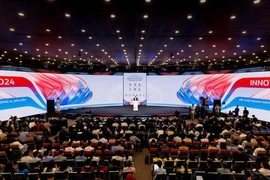
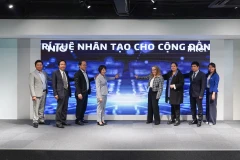
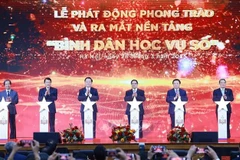
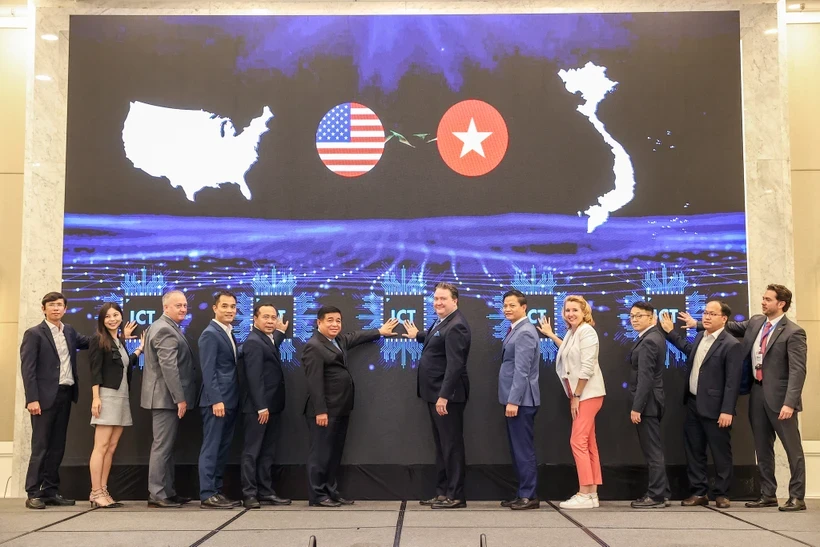
Delegates at the ceremony to announce the US International Technology and Security Innovation (ITSI) Fund in Hanoi on September 11, 2024. Photo: VNA

Hanoi (VNA) - A ceremony to announce the US International Technology and Security Innovation (ITSI) Fund in Vietnam took place in Hanoi on September 11. The event was organised by the National Innovation Center in collaboration with the US Department of State, the US Embassy in Vietnam, and Arizona State University.

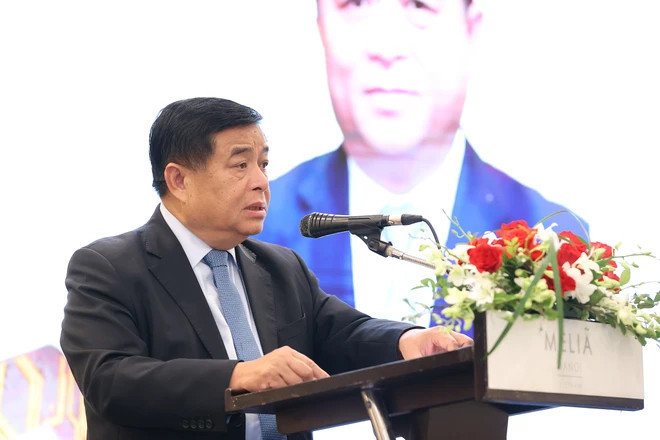
Speaking at the event, Minister of Planning and Investment Nguyen Chi Dung noted that the event is a meaningful and practical activity to celebrate one year of the comprehensive strategic partnership for peace, cooperation, and sustainable development between Vietnam and the US. This also marks an important milestone in the implementation of the project "Developing Human Resources for the Semiconductor Industry by 2030, with a vision towards 2050," which the Ministry of Planning and Investment has developed and submitted to the Prime Minister for approval, he added.
a47i6335-4891.jpg
Minister of Planning and Investment Nguyen Chi Dung speaks at the event. Photo: VNA

"In addition to cooperation in training and human resource development, Vietnam and the US have agreed to make innovation and high technology, especially the semiconductor industry, an important pillar in the bilateral collaboration," he stated.

According to the minister, the announcement ceremony not only marks the beginning of a new training programme with international standards regarding packaging and testing microchips for university lecturers and students in Vietnam, but also represents a significant step in the journey towards mastering technology in the semiconductor industry - a crucial solution to enhance the value of Vietnamese human resources in the socio-economic development strategy.

Thanking the US Government and all partners who have contributed to the success of this initiative, Dung called for collaboration from businesses, research institutes, and universities in both the US and Vietnam.

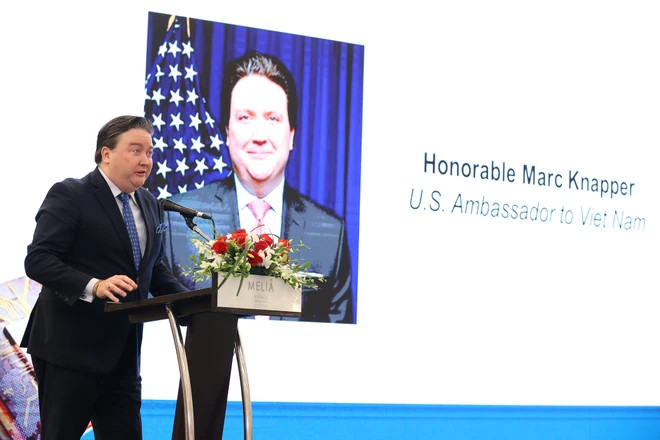
At the event, US Ambassador to Vietnam Marc Knapper emphasised the importance of the programme in connecting organisations of both countries. He stated that the US is proud to invest in the future of Vietnam through workforce development programmes, thus creating a long-lasting partnership.
a47i6384-8878.jpg
US Ambassador to Vietnam Marc Knapper addresses the event. Photo: VNA

The US and Vietnam are building relationships among organisations that will shape the semiconductor industry for years to come, he noted.

Established under the CHIPS and Science Act of 2022, the ITSI is designed to enhance semiconductor capabilities and the resilience of the global semiconductor supply chain.

Vietnam is one of eight strategic countries selected for this initiative, alongside Costa Rica, Mexico, Panama, Indonesia, the Philippines, Kenya, and India. The US Department of State has given Arizona State University 13.8 million USD to promote talent development and formulate public policy recommendations in these countries.

In late January 2024, Under Secretary of State for Economic Growth, Energy, and the Environment Jose Fernandez discussed the direction of cooperation with Vietnam, saying one of the hottest areas currently is semiconductors. When the two countries upgraded their relations to a comprehensive strategic partnership in September 2023, cooperation on semiconductors was included in the joint statement between Vietnam and the US.

On September 21, the Vietnamese Prime Minister issued a national strategy for semiconductor industry development and a human resource development scheme for the industry until 2030, with orientations to 2050. The Ministry of Planning and Investment (MPI) has proactively worked with relevant ministries, agencies, and domestic and foreign partners to enhance the training of a quality workforce for AI and semiconductor industries. The goal is to train 50,000 engineers by 2030./.
See more

Deputy Prime Minister Ho Quoc Dung speaks at the meeting. (Photo: VNA)

Deputy PM demands full disbursement for sci-tech in 2026

As of May 12, total disbursed capital reached 7.95 trillion VND, equivalent to 14.78% of the Prime Minister’s plan. Of this, central budget disbursement hit 4.06 trillion VND, or 14.8% of the target, while local budget disbursement exceeded 3.88 trillion VND, or 14.75%.

Using drones to spray pesticides in the An Nhut rice fields in Long Dien commune of Ho Chi Minh City. (Photo: VNA)

Solving technology challenge through the “three-party linkage”

According to Pham Duc Nghiem, Deputy Director of the Department of Startups and Technology Enterprises under the Ministry of Science and Technology, the “three party” linkage model involving the State, research institutes/universities and enterprises is becoming essential for developing strategic technologies. Enterprises provide practical problems, universities and research institutes develop technological solutions, while the State creates support mechanisms and policies to accelerate commercialisation.

Da Nang city's leaders present flowers to congratulate the Union of Science and Technology Associations in Da Nang on Vietnam Science and Technology Day (May 18). (Photo: VNA)

Human capital key to Da Nang’s digital economy ambitions: experts

Vo Cong Tri, Chairman of the Union of Science and Technology Associations (VUSTA) in Da Nang, described high-quality human resources as a “key driver” in the city’s transformation. Da Nang is already regarded as one of Vietnam’s leading “university cities,” with 19 higher education institutions and a high concentration of students and skilled workers. The city is also home to a growing network of science and technology organisations that are helping to foster an innovation ecosystem.

Delegates at the publication launching ceremony. (Photo: VNA)

Vietnam News Agency debuts monthly technology publication

Each 40-page issue is expected to pack 3-5 chapters, delivering a panoramic view of the global sci-tech landscape alongside in-depth analyses of emerging technology trends. The publication aims to explain strategic shifts that will shape the country’s development and examine the sci-tech, innovation and digital transformation policies of other nations.

A worker assembles ultra-precision micro-components used in semiconductor chip production. (Photo: VNA)

Vietnam prioritises 70 high technologies for strategic development

Issued under Decision No. 23/2026/QD-TTg dated May 15, 2026, the list covers a wide range of technologies, including artificial intelligence (AI), big data and data analytics, cloud and edge computing, distributed and high-performance computing, Internet of Things (IoT), blockchain, quantum technology, renewable and clean energy, advanced energy storage, AI-powered real-time disaster forecasting and warning systems, and next-generation microbiology technologies.

Vietnamese Ambassador to France Trinh Duc Hai (sixth from the right) and the leadership of Global Connect Vietnam France. (Photo: VNA)

Vietnamese association launched in France to foster technology, AI cooperation

In the context of the growing Comprehensive Strategic Partnership between Vietnam and France, Hai said GCVF should position itself as a bridge for knowledge and technology transfer, bringing scientific and technological achievements from France and Europe to support Vietnam’s practical development needs.

Party General Secretary and State President To Lam presents a statute of President Ho Chi Minh to VNU-Hanoi. (Photo: VNA)

Top Vietnamese leader’s vision puts scientists at core of growth drive

As the country enters a new era, the Party and State have designated sci-tech and and innovation as central priorities, Kiem said, adding that VNU-Hanoi, alongside other higher education establishments, must not only produce high-caliber talents but also function as a hub for knowledge transfer and groundbreaking innovation.

Illustrative image (Photo: VNA)

Korean robotics, AI firms interested in Vietnam

KOTRA said it is teaming up with the Korea Institute for Robot Industry Advancement to run the “K-Robot Pavilion"” at the 23rd Vietnam International Exhibition on Machinery, Equipment, Technology and Industrial Products (VINAMAC EXPO 2026) in Hanoi from May 14-16.

Party General Secretary and State President To Lam (left) and Sri Lankan President Anura Kumara Dissanayake come to lay flowers in tribute to late President Ho Chi Minh at the Colombo Public Library on May 8. (Photo: VNA)

Sri Lanka eyes breakthrough sci-tech cooperation with Vietnam

A Sri Lankan official has expressed confidence that science, technology and digital transformation will become a key driver in shifting bilateral ties from traditional friendship to a partnership grounded in innovation and inclusive economic growth.

Vietnam promotes cooperation with United Nations on crime prevention

Vietnam promotes cooperation with United Nations on crime prevention

Vietnam highly values the support of the United Nations Office on Drugs and Crime (UNODC) in strengthening national capacity in crime prevention and criminal justice, drug control, and addressing emerging challenges, particularly cybercrime, said Ambassador Vu Le Thai Hoang.