Sam Wood, Deputy Consul General at the British Consulate General in HCM City, speaks at the Net Zero Buildings workshop in HCM City on December 16. (Photo: VNA)
 Speaking at Net Zero Buildings – International Experience and Recommendations for Vietnam, Nguyen Cong Thinh, Deputy Director of the ministry’s Department of Science, Technology and Environment, said the Government has announced the National Action Plan on Green Growth for 2021-2030, National Climate Change Strategy to 2050 and others to fulfil its commitment.
The Minister of Construction has also approved the construction sector’s action plan to help implement the COP26 commitments, he said.
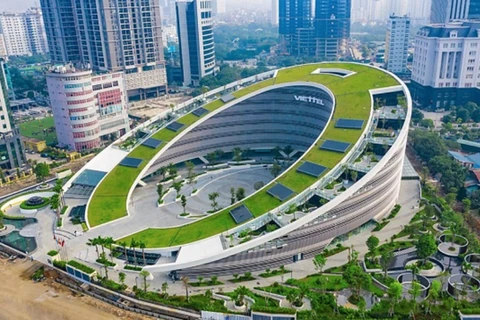
“Currently there is no net zero carbon emission building in Vietnam. Green buildings numbered only 258 by the third quarter of the year, tiny compared to the number of buildings built annually.
“This means more efforts are needed to achieve the goal.”
Sam Wood, Deputy Consul General at the British Consulate General in HCM City, said buildings and the built environment account globally for one third of total energy usage and 19% of energy-related greenhouse gas emissions. There has been a 45% increase in building related emissions since 1990 and on present trajectories this is set to worsen.
In big cities in Vietnam such as HCM City and Hanoi, buildings are also a considerable source of carbon emissions and so it is very encouraging to see a more sustainable approach in the plan, he said.
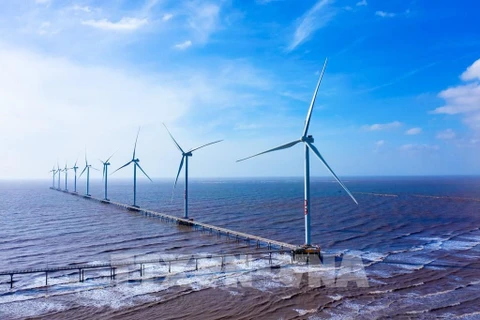
“Vietnam has a target of reducing a minimum of 563.8 million tonnes of carbon emission by 2030, of which 13% is expected to come from the construction sector. Through our engagements with both the public and private sectors, we know that there is increasing interest and appetite for sustainable building framework. Recent events in green building/ sustainable urban planning have drawn lots of attention.”
He also highlighted that to meet the country’s net zero pledge, more needs to be done, including building a comprehensive policy framework and ensuring consistent enforcement, and incentivising strong commitments from corporate stakeholders.
“It is important to enhance knowledge of sector players in how to achieve green/ net zero buildings such as standards to follow, enabling technologies etc., which is the focus of this training workshop today.”
Phan Thu Hang, Chairwoman of the Vietnam Green Building Council, said to shift buildings and construction towards full decarbonisation, it is necessary to approach “carbon emissions” from the perspective of the whole life cycle of a building, which is the sum of initial and future costs associated with the construction and operation of a building over a period of time.
She called on the sector to focus on emission reduction initiatives such as improving energy efficiency in operations including efficient design and systems, increasing access to renewable energy, and reducing the impact of the construction process by increasing circularity of materials and reducing embodied carbon in materials.
British experts presented ways to decarbonise the sector, including their country’s Net Zero Carbon Buildings Framework and Net Zero Carbon Buildings Standard.
The workshop was previously held in Hanoi on December 14, where the climate counsellor at the British embassy, Ronald Bohlander, said his country is committed to supporting Vietnam’s green growth agenda.
Organised by the embassy, the Ministry of Construction and the Vietnam Green Building Council, the series of Net Zero Buildings Workshops aim to promote sustainable construction./.
VNA