Vietnamese aviation industry dejected as COVID-19 returns

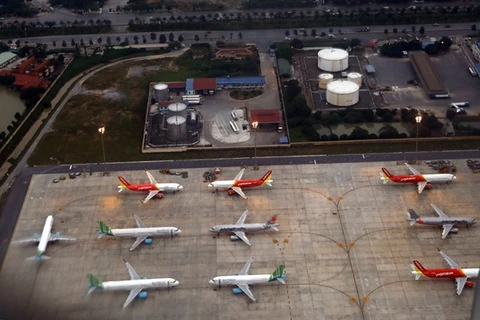
The second wave of COVID-19 that began at the end of July, the peak summer travel period, has disillusioned airlines that had earlier begin to hope for a recovery.
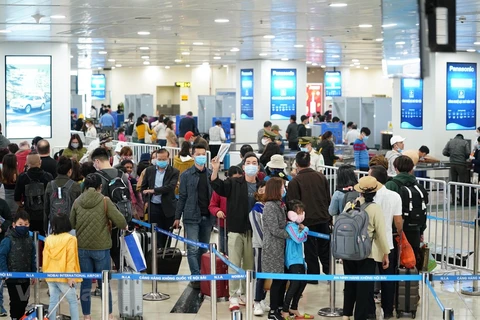
Vietnamese aviation industry dejected as COVID-19 returns ảnh 1A lounge at HCM City's Tan Son Nhat International Airport has few guests. (Photo: VNA)

HCM City (VNS/VNA) -The second wave of COVID-19 that began at the end of July, the peak summertravel period, has disillusioned airlines that had earlier begin to hope for arecovery.

After the first wave wascontrolled by the end of April they gradually increased operations on domesticroutes to somewhere approaching normalcy.

They were very hopeful ofoffsetting the earlier losses during the peak July-September travel season, butthe fresh wave has dashed those expectations.

According to the Civil AviationAuthority of Vietnam (CAAV), between July 19 and August 18 the five domesticcarriers, Vietnam Airlines, Vietjet, Bamboo Airways, Pacific Airways, andVASCO, operated only 16,400 flights, down 33 percent from the previous monthand 45 percent from the same period last year.

Vietnam Airlines’ schedule wasnearly 40 percent lighter at 4,300 flights. Vietjet Air’s was down 31 percentat 5,700.

Bamboo Airways, Pacific Airwaysand VASCO’s were down 17 percent, 15 percent and 43 percent month-on-month.

A decrease in demand alsodragged down fares, with round-trip tickets between Hanoi and HCM City at theend of September priced at only 1.2 million VND (52 USD), down two or threetimes from early July.

General Director of VietnamAirlines Duong Tri Thanh forecast the total number of domestic flights in thelast five months of the year to be only 70 percent of last year’s.

For the full year the numbercould be 30-40 percent lower as could fares, he said.

To improve cash flow, airlineshave to sell tickets for Tet (Lunar New Year) one month earlier than normal andoffer a lot of discounts.

The Vietnam Aviation BusinessAssociation has called on the Government to offer airlines credit worth 25-27trillion VND (1.07 billion USD-1.16 billion USD) at preferential interest ratesfor three- or four-year terms.

It was one of therecommendations it made to the Government recently to stimulate the sector thatis facing a severe downturn due to the pandemic.

It also called for extendingthe waiver and reduction of aviation service charges until the end of 2021 andcutting all airport service charges by 50 percent.

The association also petitionedPrime Minister Nguyen Xuan Phuc to allow resumption of flights to countriesthat have controlled the COVID-19 outbreak and allowing foreign tourists toenter Vietnam if they comply with safety requirements.

The International Air TransportAssociation has said the Vietnamese aviation industry will only return to lastyear’s levels by 2024.

Vietnamese airlines wouldsuffer estimated losses of more than 4 billion USD this year, it said./.
VNA
See more

Ahmad Haikal Hasan, Head of the Halal Product Assurance Organising Agency (BPJPH) of Indonesia, speaks at the seminar (Photo: VNA)

Indonesia ready to cooperate with Vietnam in halal sector

Ahmad Haikal Hasan, Head of the Halal Product Assurance Organising Agency (BPJPH) of Indonesia, described Vietnam as a “potential supplier” of halal products with the capacity to play a larger role in the market, particularly in the fast-moving consumer goods (FMCG) sector. He revealed a plan to visit Vietnam next week to discuss the country’s progress in the global halal industry.

Delegates perform the opening ceremony. (Photo: VNA)

Thailand Week 2026 opens in Hanoi

The event brings together more than 100 companies, including Thai enterprises and Vietnamese importers, across about 120 booths. It features a wide range of Thai products aligned with consumer trends in Vietnam, including food and beverages, health and beauty, mother-and-baby and pet products, fashion and jewellery, household goods and tourism services.

Illustrative image (Photo: VNA)

Vietnam remains Singapore’s third-largest seafood supplier in 2025

Data released by the Accounting and Corporate Regulatory Authority of Singapore (ACRA) show that Singapore spent 125.5 million SGD (97.7 million USD) importing seafood from Vietnam last year, up 10.7% year on year, accounting for 10.3% of the city-state’s total seafood import market.

Workers assemble mobile phone components at Diem Thuy Industrial Park in the northern province of Thai Nguyen. (Photo: VNA)

Electronics exports surpass 107 billion USD in 2025

With an export turnover of 107.75 billion USD in 2025, computers, electronic products and components not only maintained their position as Vietnam’s largest export by value, but also contributed more than half of the overall increase in the country’s export turnover in 2025.

Experts said that Vietnam’s economic outlook continues to be underpinned by stable foreign direct investment inflows and public investment, which is playing an important role in driving growth. (Photo: thoibaotaichinh.vn)

Foreign investors maintain strong confidence in Vietnam’s market

Looking ahead to 2026, prospects remain bright as manufacturing, economic growth and foreign investment in Vietnam are expected to stay robust, with the country forecast to post the highest growth rate in the region this year, according to Adam Sitkoff, Executive Director of the American Chamber of Commerce (AmCham) in Vietnam.

Toy production at a Hong Kong-invested factory (Photo: VNA)

Vietnam targets deeper market penetration in Hong Kong in 2026

Vietnam-Hong Kong trade hit 62.3 billion USD in the first 11 months of 2025, soaring 73.1% annually. Vietnamese exports to Hong Kong amounted to 36.8 billion USD, a 90.6% hike, ranking fourth among Hong Kong’s import sources, while imports from Hong Kong stood at 25.5 billion USD, up 52.9% and ranking third.

Vietnam’s start-up market enters restructuring phase

Vietnam’s start-up market enters restructuring phase

In 2026, venture capital inflows into Vietnam’s start-up ecosystem are expected to recover gradually, though in a more selective manner. VinVentures forecasts that capital will focus on start-ups that have survived the rigorous screening of 2024–2025, possess clear business models, strong commercialisation capacity, and the ability to generate real cash flows.