Vietnamese cashew nuts increase market’s share in Russia

The share of Vietnamese cashew nuts in Russia’s import of the product during the first half of 2021 reached 57.68 percent, increasing 7.4 percent year on year, according to statistics from the Federal Customs Service of Russia.
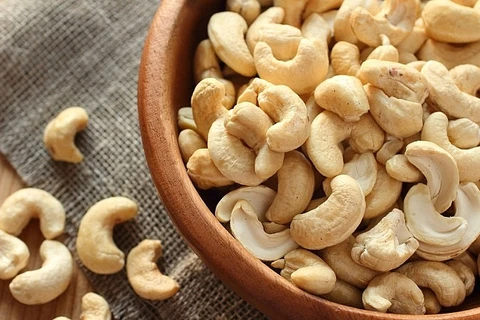
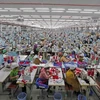
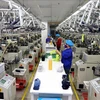
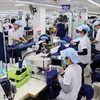
Vietnamese cashew nuts increase market’s share in Russia ảnh 1Workers at a cashew nut processing plants in Vietnam. (Photo: VNA)
Hanoi (VNA) – The share of Vietnamese cashewnuts in Russia’s import of the product during the first half of 2021 reached 57.68percent, increasing 7.4 percent year on year, according to statistics from the FederalCustoms Service of Russia.

During the six-month period, Russia imported 4,870 tonnes ofcashew nuts worth over 27 million USD from Vietnam, up 72 percent in volume and29.2 percent in value compared to the same period in 2020.

Russia also increased its cashew imports from Belarus, butsharply reduced its imports from other markets.

The Ministry of Industry and Trade’s Agency of Foreign Tradeattributed Vietnam maintaining of its position in the Russian cashew nut marketamid COVID-19 to stable supply sources and good quality.

For higher exports to the market in the near future, it recommendedthe cashew sector ensure clean criteria and exporters build close andlong-term links with producers to create value chains and shareresponsibilities and benefits.

The agency also highlighted the need for packaging improvement, building of high-capacity processing plants, and proactiveness in rawcashew supply sources./.
VNA

See more

Vietnamese bananas are sold at an AEON supermarket in Japan. (Photo: VNA)

Vietnamese products promoted at AEON stores across Japan

Speaking at the opening ceremony, Deputy Minister of Industry and Trade Phan Thi Thang highlighted the significance of 2026, which marks a decade of cooperation between the ministry and AEON in organising Vietnam Week in Japan.

Growing demand for financing for infrastructure and green transition projects is driving Vietnam’s search for new sources of capital. In the photo: A section of Noi Bai – Lao Cai Expressway. (Photo: VNA)

Vietnam seeks to unlock capital for infrastructure, green transition

As Vietnam advances its sustainable growth agenda and commitment to achieving net-zero emissions by 2050, the need for long-term capital is rising rapidly. Experts say meeting these financing requirements will depend not only on expanding available resources but also on broadening funding sources and improving project financing models.

Private technology enterprises are increasingly viewed as a driving force at the heart of the innovation ecosystem. (Photo: VNA)

Vietnam pushes to develop world-class technology startups

Vietnam’s startup ecosystem now comprises roughly 4,000 startups, 208 investment funds, 84 incubators and more than 20 startup support centres. With an estimated valuation of 75 billion USD, the ecosystem has established most of the key foundations needed for long-term growth.

Officials of the Vietnamese Ministry of Finance and the Japan International Cooperation Agency (JICA) at the meeting in Hanoi (Photo: Ministry of Finance)

Finance Ministry, JICA to hasten major joint projects

JICA President Tanaka Akihiko said he is pleased to return to Vietnam and see landmark projects of bilateral ties now operational and delivering clear benefits to the public, including Nhat Tan Bridge and Ho Chi Minh City’s metro line No. 1.

Customers conduct transactions at an Agribank office in Hung Yen province. (Photo: VNA)

Outstanding green credit reaches 828 trillion VND

To date, loans subject to environmental and social risk assessments have exceeded 5.1 quadrillion VND (some 193.6 billion USD), representing an almost 25-fold increase compared with the end of 2017 and accounting for 27.7% of total outstanding credit in the economy.