Vietnamese community in Cairo rings in Lunar New Year

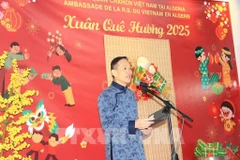
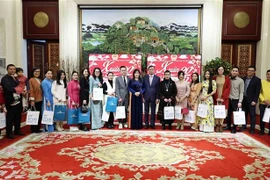
The Vietnamese Embassy in Egypt on January 23 hosted a vibrant community celebration to welcome the Year of the Snake, which brought together a large number of Vietnamese nationals living, working, and studying in the country, alongside numerous international friends.

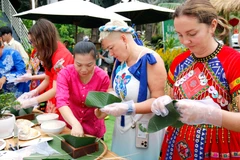
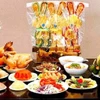
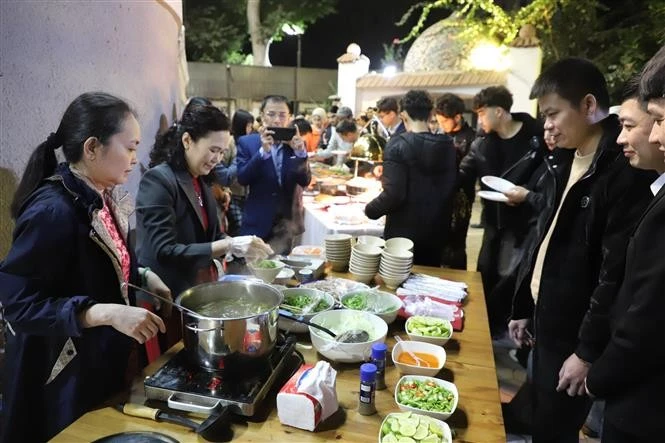
Vietnamese in Cairo enjoy traditional dishes (Photo: VNA)

Cairo (VNA) – The Vietnamese Embassy in Egypt on January 23 hosted a vibrant community celebration to welcome the Year of the Snake, which brought together a large number of Vietnamese nationals living, working, and studying in the country, alongside numerous international friends.

Ambassador Nguyen Huy Dung extended wishes to the community for a prosperous, healthy, and successful new year. He expressed deep appreciation for the Vietnamese expatriates in Egypt, recognising their role in strengthening the ties between the two countries.

He encouraged the community to continue fostering patriotism, preserving Vietnamese culture, traditions, and language, while promoting solidarity and mutual support.

Ambassador Dung reaffirmed that the Party and State always consider the Vietnamese community abroad an inseparable part and a vital resource of the nation.

Referring to Vietnam’s economic progress, the diplomat highlighted the country’s impressive growth despite global challenges, at 7.09% in 2024, surpassing the target of 6-6.5%. Vietnam’s total trade turnover exceeded 800 billion USD, with a trade surplus of nearly 25 billion USD. The country now ranks among the world’s top 40 economies and top 20 in trade and foreign investment attraction.

He also underlined Vietnam’s strategic targets of becoming a developing country with a modern industrial base and upper middle income by 2030 and a developed socialist country with high income by 2045.

On Vietnam-Egypt relations, Ambassador Dung noted significant potential for further collaboration between the two nations. He expressed confidence that 2025 will see continued growth in bilateral relations, particularly in sectors such as trade, investment, agriculture, textiles, tourism, education, and cultural exchange.

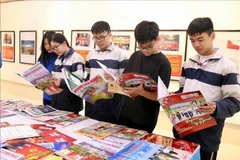
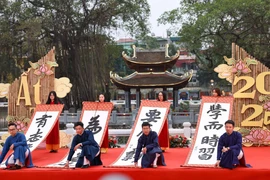
The event included a cultural performance by Vietnamese students in Egypt, featuring traditional music and dance. The Tet celebration offered an opportunity for the Vietnamese community to come together and reconnect in a festive and warm atmosphere. Guests enjoyed classic Vietnamese dishes like “banh chung” (square glutinous rice cakes), “nem” (spring roll), and “pho” (Vietnamese noodle).

On January 21, at the Phat Tich Pagoda in Vientiane, Laos, the Vietnam Buddhist Sangha (VBS) and the pagoda presented Tet gifts to disadvantaged people and those with disabilities living in the Lao capital.

The event was attended by Vietnamese Ambassador to Laos Nguyen Minh Tam, Venerable Thich Minh Quang, head of the VBS’s coordinating board in Laos and head of the Phat Tich Pagoda, along with representatives of the Vietnamese community in Laos, monks, nuns, and local residents.

Ambassador Tam highlighted the Vietnamese traditional values of solidarity and mutual support, stressing the Vietnamese Party and State’s great attention to overseas Vietnamese. He expressed his hope that the Vietnamese community in Laos will continue strengthening the bond between the two countries

At the event, the diplomat and Venerable Thich Minh Quang, alongside the Phat Tich Pagoda’s followers, presented 250 gift packages, each valued at 500,000 LAK (about 23 USD), to disadvantaged individuals in Vientiane. The gifts were intended to spread warmth and kindness, ensuring that no one would be left behind during the festive season./.
VNA

See more

A performance at the Vietnam–Korea Festival 2026 in Da Nang city (Photo: VNA)

Vietnam–Korea Festival 2026 kicks off in Da Nang

Now in its fifth edition, the festival has cemented its place as Da Nang’s signature annual diplomatic event, spotlighting the distinct cultures of both nations, fostering friendship and driving cooperation with Korean localities and partners.

A performance at the opening ceremony of the 2026 Hanoi International Martial Arts Festival on August 7 (Photo: VNA)

Hanoi opens international martial arts festival

The event attracts about 2,000 martial artists of 66 delegations, including seven international delegations from six countries, namely Indonesia, Russia, France, Germany, Switzerland and Morocco.

The statue of Vietnam's King Ly Thai To ( (974 - 1028) in Bonghwa county (Photo: VNA)

RoK to develop K-Vietnam Valley project linked to Ly Dynasty heritage

With the designation in place, Bonghwa will carry out eight specialised projects worth a combined 347.6 billion KRW (245.1 million USD) from 2026 to 2030 – among them the K-Vietnam Valley itself, tourism development around Changpyeong Reservoir, rental smart farms, and a Baekdudaegan healing ‘pet village.’

The organising committee presents awards to outstanding martial artists at the festival. (Photo: VNA)

9th Int’l Festival of Vietnamese Traditional Martial Arts wraps up

The ninth International Festival of Vietnamese Traditional Martial Arts has fostered the martial spirit, strengthened national pride, promoted cultural exchanges and reinforced the aspiration to bring Vietnamese traditional martial arts to a wider international audience.

An appetising bowl of My Quang features a rich combination of ingredients. (Photo: VNA)

Da Nang to host festival honouring Quang Nam-style noodle soup

My Quang is not only a signature dish of the Quang region but also reflects the history, culture and daily life of communities in central Vietnam. With its diverse ingredients, preparation methods and distinctive flavours, the noodle soup has become one of Vietnam's best-known culinary specialities, helping strengthen Da Nang's position on the culinary tourism map.

Hanoi’s traditional silk weaving craft continues to be preserved and developed today. (Photo: VNA)

Van Phuc silk weaving village officially recognised as Hanoi tourist destination

With its millennia-old heritage and growing integration of preservation and innovation, Van Phuc silk weaving village is poised to become a distinctive cultural destination, helping promote Hanoi’s sustainable cultural tourism and bring the quintessence of Vietnamese silk weaving closer to domestic and international visitors.

Minister of Construction Tran Hong Minh speaks at the session (Photo: VNA)

Lawmakers mull over changes to architecture law

On architectural management, the draft Law amending and supplementing several articles of the Law on Architecture clarifies the concept of “national cultural identity in architecture”, tying design to the preservation and promotion of regional heritage. It pushes architecture that mirrors local identity and fits each locality’s natural, historical and social conditions, while setting criteria to identify, assess and protect architecturally valuable buildings as a distinct form of cultural heritage.