‘Apricot blossom horse’ – a soulful flight of cultural memory
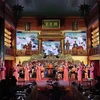
In the ever-evolving landscape of Vietnamese art, the "Ngua hoa mai" (Apricot blossom horse) project stands as a testament to how folk motifs can find new life.
According to the State Records and Archives Department, part of the archives from the French colonial period (1858–1954) is preserved in Vietnam, while the remainder is kept in France.
Horses have long been embedded in Vietnamese culture, carrying layered symbolism in language and belief while remaining part of daily life in many ethnic minority communities.
A major attraction is a unique “Eight galloping horses” (Bat Ma) sculpture displayed at the To Trinh gemstone booth. Carved from a rare monolithic jade block, the artwork features eight spirited horses racing across golden rice fields. The harmonious blend of pure jade veins and natural golden tones enhances both its aesthetic depth and symbolic meaning, evoking prosperity and abundance associated with Vietnam’s rice civilisation.
The ceremonial part will proceed with full solemnity under traditional rites, including commemorative orations, incense offerings to the Tran Kings, water and land processions, and other ritual observances.
A vibrant array of cultural and media events has been launched across Vietnam to welcome the Lunar New Year of the Horse 2026, highlighting both the country’s enduring traditions and its dynamic socio-economic progress.
Since the mid-point of the 12th lunar month, Hang Luoc street has assumed a celebratory guise. Soft and vivid pink peach blossoms, golden kumquat trees bowed under the weight of ripe fruit, and crisp white apricot blooms herald the onset of spring.
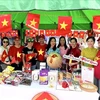
Each culinary stall at the Spring Fair 2026 presents its own regional specialities, meeting on-site dining needs while promoting the richness of Vietnamese culinary culture.
As the flagship zone of Sun World Vung Tau, Aqua Adventure spans 15 hectares and features 20 major attractions with nearly 100 high speed water slides. Holding multiple world records, it stands among the region’s leading water parks in both scale and advanced technology integration.
Its activities recreate the traditional Tet (Lunar New Year Festival) atmosphere of the former royal court. Visitors enjoyed court and folk games, immersive light displays, and traditional Tet cuisine.
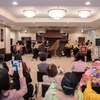
Exhibition spaces of Gia Lai and Dak Lak provinces in the Central Highlands have made a strong impression by combining agricultural product displays with cultural performances, offering visitors a unique and engaging experience.
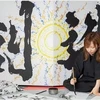
A central attraction remains the traditional New Year calligraphy request activity, featuring 35 booths staffed by calligraphers selected through a rigorous, transparent evaluation process.
Through photos and videos, the contest seeks to honour the traditional values of Vietnam’s biggest and most important festival.
The royal audience ceremony, one of the most significant court rituals under the Nguyen Dynasty, was traditionally held on the first day of Tet. Favourable weather conditions this year helped draw large crowds of both domestic and international visitors.
Each ethnic group brings its own unique Tet customs to the Vietnam National Village for Ethnic Culture and Tourism on the outskirts of Hanoi, creating a rich and colourful cultural mosaic.
Skoczek also pointed to striking similarities between Vietnam’s Tet and Poland’s Christmas Eve traditions, particularly the emphasis on family reunions, symbolic meals and shared rituals passed down through generations. Despite differences in customs and cuisine, she said the essence of the celebrations remains universal: bringing loved ones together to welcome a new start.
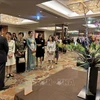
More than a seasonal attraction, the flower street also functions as a formal cultural venue for receiving ambassadors, their spouses and representatives of diplomatic missions attending the Vietnam Discovery Day 2026 programme. Its linkage with an external event further reinforces the Thang Long Imperial Citadel’s position as a key platform for introducing Vietnam’s cultural identity to international friends.
A total of 36 tulip varieties, all imported directly from the Netherlands, have been selected, marking the highest number of varieties and colour tones ever presented at Ba Na.
Organised by the municipal People’s Committee in coordination with the Vietnam National Commission for UNESCO, the programme recreated a range of ceremonial practices once performed in the royal court. These included the Tien lich ritual, in which calendars were formally distributed to the court and the public; the Thuong tieu ceremony featuring the ceremonial New Year pole erected to ward off evil spirits and welcome spring; the ritual release of carp to send the Kitchen Gods to heaven; and the solemn changing-of-the-guard ceremony inside the imperial citadel. Together, the activities helped audiences better understand the cultural, spiritual and ceremonial order of Vietnam’s feudal past.
Local residents and visitors can enjoy spectacular fireworks displays at locations like the Hanoi Post Office in Hoan Kiem ward; Coconut island in Thong Nhat park, Hai Ba Trung ward; the F1 racetrack area in Tu Liem ward; Lac Long Quan flower garden in Tay Ho ward; Van Quan lake in Ha Dong ward; and the Son Tay Ancient Citadel in Son Tay ward.