Vietnamese exporters must self-verify origin from 2019

Vietnam’s exporters must self-verify the origin of their products that they export to the European Union (EU) from 2019 to be qualified for Generalised System of Preferences (GSP) which is the tariff preference for developing countries.
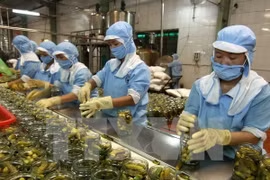
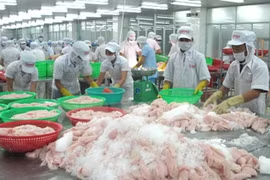
Vietnamese exporters must self-verify origin from 2019 ảnh 1A panagasius production chain at Bien Dong Seafood Co. Ltd in Can Tho city (Photo: VNA)

Hanoi (VNA) - Vietnam’s exporters mustself-verify the origin of their products that they export to the European Union(EU) from 2019 to be qualified for Generalised System of Preferences (GSP)which is the tariff preference for developing countries.

With the aim of integrating further into theglobal economy, Vietnam has joined many free trade agreements (FTAs) that havethe self-certification mechanism of origin.

Self-certification of origin is a mandatoryrequirement of the EU for some countries, including Vietnam.

The Import and Export Department under the Ministry of Industry andTrade said under the requirement, the responsibility for verifying productorigin will be shifted from authorities to enterprises or exporters.

Enterprises will have to perform all the stepsthemselves, meeting the requirements of product origin and be accountable fortheir accuracy.

At the same time, it reduces the risk of licensingauthorities and minimises the burden on customs.

According to trade experts, this mechanism offersmany benefits in terms of reducing time and cost of transaction, activelyissuing commercial invoices, and helping businesses to know commitment on rulesof origin in the FTA.

Vietnam currently has 2,700 Vietnamese enterprisesexporting to the EU that enjoy the benefits of GSP and it will be quite a rushto force enterprises with self-certification of origin from early 2019,according to the ministry.

The only difference is that instead of theauthorities, the enterprise will issue its own C/O by including the line “thisproduct is qualified for GSP” in their document and invoice.

Enterprises becoming self-certifying exportersshows the trust of government agencies in businesses, in compliance withVietnam’s commitment to the FTA, said Tran Thanh Hai, Deputy Director of theExport and Import Department.

Vietnamese businesses will have around six monthsof transition time to reduce the burden on them. During this time, ifenterprises are unable to self-verify the origin of their products, they canapply for certification of origin from the Vietnam Chamber of Commerce andIndustry (VCCI) and the Ministry of Industry and Trade as usual.

The ministry will still train, instruct and remaina place for business registry. In case any issue arises in the trading process,the agency will have information to collaborate with the EU to determine thesource of goods and enterprises.

When businesses self-certify the origin of theirproducts, they are acting on the government’s behalf.

Experts said that if businesses do not comprehendthe mechanism and the necessary requirements that can result in falsecertification, the outcome would not only affect the businesses but also to thewhole nation.

Hai said the ministry would assist enterprises byorganising seminars that would provide information on the self-certificationmechanism of origin and the training courses for enterprises in self-certifyingthe origin of goods.

At present, the ministry has concentrated ondeveloping a circular guiding enterprises to self-certify the origin of goodsexported to the EU. After the issuance of the circular, the ministry willcooperate with the VCCI, the associations and branches as well as theenterprises to provide training courses and guidance that would help themcertify their origin quickly and accurately.-VNA
VNA
See more

Speakers at the conference (from left): AVPI Advisory Board Chair Dr Le Thu Huong, Australian Ambassador to Vietnam Gillian Bird, and Vietnamese Consul General in Sydney Nguyen Thanh Tung. (Photo: VNA)

Vietnam, Australia turn momentum into practical cooperation

Vietnam and Australia should focus on promoting two-way investment, expanding cooperation linked to APEC 2027 and making better use of people-to-people connections. Vietnam needs capital, skills, technology, infrastructure, and energy transition expertise - areas where Australia could offer valuable support.

The interface of the National E-Procurement System. (Photo: muasamcong.mpi.gov.vn)

Vietnam to move PPP bidding online from 2027

From January 1, 2027, PPP project proposals must be submitted through the National E-Procurement System. From September 1, 2027, investor selection for PPP projects tendered through open bidding will move fully online.

An automated robot-based production line at CAYI Technology Vietnam Co., Ltd. in Yen Phong II-C Industrial Park, Bac Ninh city (Photo: VNA)

EuroCham: Business Confidence Index in Vietnam remains high at 78.3 in Q3

The survey found that 64% of respondents described their current business conditions as good or very good, while 28% maintained a neutral or cautious outlook, reflecting a wait-and-see attitude as international demand remains flat and businesses look for policy momentum to translate into faster procedures and more predictable outcomes.

Workers manufacture handheld power tools at the Keystone Electrical Vietnam factory in Lien Ha Thai Industrial Park, Thai Thuy commune, Hung Yen province (Photo: VNA)

Vietnam seeks to turn FDI inflows into domestic value added

Vietnam is shifting its FDI attraction strategy from expanding investment volumes to prioritising capital inflows that brings technology, knowledge, modern management practices and stronger links with domestic businesses, particularly in semiconductors, artificial intelligence (AI), chips and renewable energy.

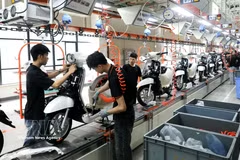
At Yadea Vietnam’s smart manufacturing plant in Tan Hung Industrial Park, Bac Ninh province (Photo: VNA)

Vietnam ties FDI incentives to local supplier commitments

Incentives will increasingly hinge on investors’ performance and commitments, not just on landing projects. Key commitments include transferring technology to Vietnamese firms, training workers, providing technical support and opening FDI supply chains to domestic companies.

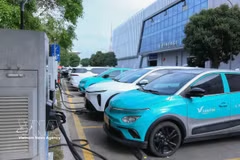
Green SM has launched all-electric taxi service in the US. (Illustrative photo: VNA)

Green SM launches all-electric taxi service in US

The move brings Green SM into one of the world’s most dynamic and demanding markets. It also marks another step in the international expansion of the Vietnamese mobility brand, following its rapid growth across markets in Asia and Europe.

An overview of the meeting between IMF Managing Director Kristalina Georgieva and ASEAN Finance Ministers and Central Bank Governors (Photo: VNA)

Vietnam strengthens financial cooperation at IMF-World Bank annual meetings

The Vietnamese Governor underscored the complementary roles of global and regional financial cooperation mechanisms, including the Chiang Mai Initiative Multilateralisation (CMIM) and the ASEAN+3 Macroeconomic Research Office (AMRO). He also highlighted the importance of technical assistance in fintech, digital transformation, cybersecurity and risk management.

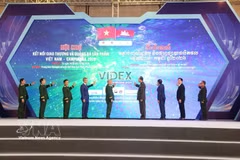
Representatives of the organising committee at the opening ceremony of the fair (Photo: VNA)

Vietnam-Cambodia trade expo promotes bilateral economic cooperation

The Vietnam-Cambodia Business Networking and Product Promotion Exposition has become a key trade promotion event, creating business and investment opportunities while strengthening mutual understanding and trust between the two countries’ armies, people and enterprises.