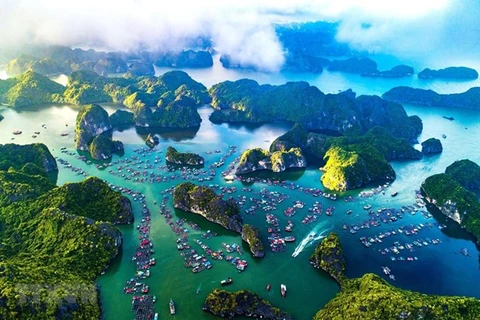
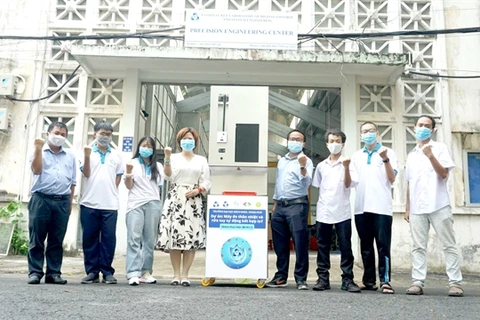
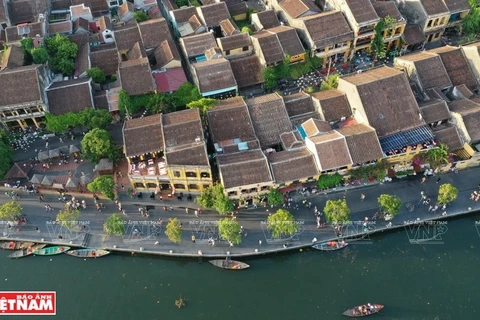
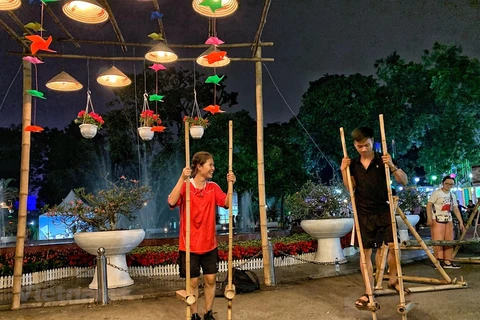
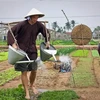
Vietnamese holidaymakers choose sustainable tourism in the post-pandemic period (Illustrative image)
 Hanoi, (VNA) - The negative impacts from COVID-19, including social distancing, have created a while of silence in the daily life, give people time to think about the environment and community more than before and discover new exploration journeys once the conditions permit.
According to a recent research, up to 88 percent of Vietnamese tourists revealed that the pandemic has prompted them to change their perceptions and desire to pursue a more active lifestyle. Some 79 percent of Vietnamese holidaymakers believe that everyone must act now to protect the planet for future generations and that sustainable tourism is exactly what people need.
Once the pandemic is put under control, there are plenty of ways to travel and making positive impacts on the environment and connecting with the local community.
Choosing environmentally-friendly hotels
In your upcoming trips, you start by choosing a hotel with a sustainability policy. However, that doesn't mean you have to spend more because there are many affordable sustainable accommodation options available today. In a recent survey by Booking.com, it is surprising that 100 percent of asked Vietnamese travelers said that they would choose a hotel that is committed to sustainable tourism.
 Vietnamese tourists want to stay in hotels which are committed to sustainable tourism. (Photo: VietnamPlus)
 So how do you know if the accommodation is really sustainable? One of the easiest ways to determine that is to see if they have an eco-certification (e.g., Global Sustainable Tourism Council - GSTC, Green Tourism, EU Ecolabel, EarthCheck, Green Growth 2050, as well as sustainability programmes of many hotel chains)...
Avoid popular places
Amid complicated development of the COVID-19 pandemic in the world, 64 percent of Vietnamese tourists said they tend to avoid going to popular places in order to prevent overload, helping to reduce impacts on the surrounding eco system which is currently under pressure during the pandemic, as well as reduce pressure on local communities.
Therefore, by looking for lesser known destinations or near-by places of popular attraction, going on vacation during low-season, you can help protect the environment.
 Tourists should travel to lesser-known destinations with cultural identity (Photo: VietnamPlus)
 You can travel to Ky Co beach in Quy Nhon, Tu Nham in Phu Yen or go trekking through pine forest in Lam Dong, immersing in the Cat Tien National Park surrounding.
Saying no with single use plastic products
One of the major hurdles we are facing is reducing single use plastic products as over 91 percent of plastic is not recycled and but buried in landfills.
Many accommodation providers have already started adopting ways to reduce and eliminate single-use plastic. However, visitors can also bring glass and stainless steel water bottles instead of buying plastic water bottles during the trip, or pack their favorite bottles of shower gel and shampoo.
 Tourists bring reusable water bottles instead of single-use plastic water bottles throughout the journey. (Photo: Vietnamplus)
 Supporting local communities
If you are planning your next trip, you should look for socially responsible tour operators who are committed to supporting and contributing to the development of the local communities, as well as complying with local tourism standards.
In a recent survey by Booking.com, 84 percent of Vietnamese travelers also prioritise true experiences that reflect the culture of the destination while respecting the local cultural features while 93 percent believe that raising awareness of culture as well as preserving heritage is important.
 Tourists enjoy local specialties (Photo: VietnamPlus)
 Keeping good habits during the trip
Currently, many tourists have begun to make more conscious choices in protecting the environment such as turning off the lights when they are not needed, or controlling the temperature and duration while using air conditioners at home. However, 53 percent of Vietnamese tourists are concerned that it will be difficult to maintain sustainable habits during their trips. So, the first sustainable step when traveling is simply trying to remember the sustainable habits.
 Vietnamese tourists are willing to travel to lesser-known places to promote tourism in the area (Photo: VietnamPlus)
 Purchasing local products
One of the ways to support the local economy is to buy local products or products with organic ingredients.
Some 59 percent of Vietnamese holidaymakers said they would buy at small, local farms to support the economy of the destinations which they travelled to.
The global pandemic has contributed to changing the perception of Vietnamese tourists in a more sustainable direction, thereby creating behaviors that have a positive impact on community tourism activities./.