Vietnamese youth football heads to Asian events

Vietnamese youth football teams are aiming to achieve promising results in the upcoming continental events.

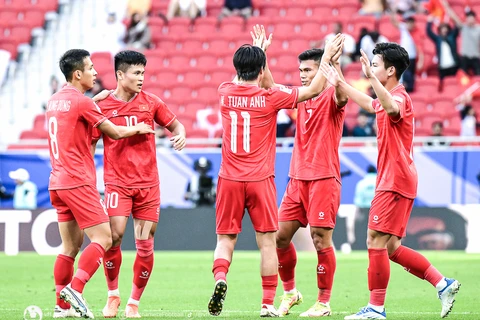
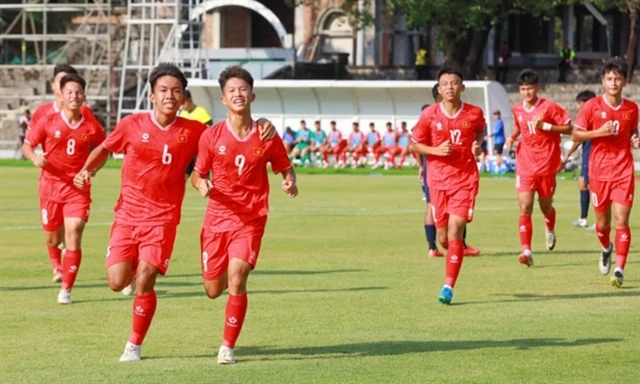
U17 Vietnam team are ready for the AFC U-17 Asian Cup qualification. (Photo: VFF)

Hanoi (VNS/VNA) - Vietnamese youth football teams are aiming to achieve promising results in the upcoming continental events.

Following the 2024 ASEAN U-16 Boys Championship, the U16 Vietnam team have reunited in Hanoi to prepare for the 2024 AFC U-17 Asian Cup qualification, scheduled for next October.

To ensure optimal preparation, Coach Cristiano Roland's team will participate in the 2024 Peace Cup international friendly tournament in China from August 16 to 20. They will compete against teams from Japan, Uzbekistan and the host nation, China.

After this tournament, U17 Vietnam will embark on a training trip in Japan prior to the AFC U-17 Asian Cup qualification.

Meanwhile, the U20 Vietnamese team, primarily composed of U19 players who recently participated in the U19 Southeast Asia tournament, gathered on August 15 to prepare for the 2025 AFC U-20 Asian Cup qualification.

Coach Hua Hien Vinh's team will also have the opportunity to train in Japan, where they will play friendly matches against strong opponents selected by the Japan Football Federation. Upon their return, U20 Vietnam are expected to participate in two internal friendly matches against U20 Russia in Hanoi.

To ensure the best conditions for both the U17 and U20 teams, the Vietnam Football Federation (VFF) is committed to helping Vietnamese youth football secure spots in the finals of Asian events and make a significant impacts at home.

Vietnam will host two groups for the 2024 AFC U-17 Asian Cup qualification and the 2025 AFC U-20 Asian Cup qualification in Phu Tho province from October 23 to 27 and in Hai Phong from September 21 to 29, respectively.

VFF Vice President Tran Anh Tu emphasised that the main goal is to enable national youth teams to regularly participate in the finals of Asian events across all age groups, helping players improve their skills at the continental level./.
VNA

See more

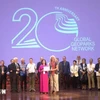
Participants in the 20th Cong hien (Devotion) Awards presentation ceremony in Hanoi on April 15 (Photo: VNA)

Devotion Awards mark two decades of honouring excellence in music, sports

Nguyen Thien Thuat, Editor-in-Chief of the The Thao & Van Hoa newspaper and Head of the organising board of the awards, said, noting that their achievements reflect the spirit of the Politburo’s Resolution No. 80, which emphasises preserving national cultural values while selectively absorbing the essence of world culture.

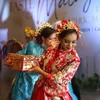
Artisans and students take part in cultural activities and exchanges in the Xoan singing performance space at Hung Lo ancient communal house in Phu Tho province (Photo: VNA)

Ancestral legends revived through contemporary performance

Beyond cultural value, well-organised festival programmes linked with tourism and media can contribute to the development of cultural industries and enhance Vietnam’s cultural soft power, positioning heritage-based events as distinctive national cultural brands in the international arena.

Khue Van Cac (Khue Van Pavilion) stands as a defining cultural symbol of Hanoi, closely associated with Vietnam’s long-standing tradition of valuing education and honouring knowledge. (Photo: VNA)

Greater efforts needed for heritage to shape Hanoi’s identity

As suggested by UNESCO experts, heritage should be approached as an integrated system encompassing space, people and everyday life. This perspective can inform urban planning, cultural tourism development and the creation of clear economic drivers.

Participants at the gathering (Photo: VNA)

Lao, Cambodian students welcome traditional New Year in Ho Chi Minh City

In his speech, Vice Chairman of the municipal People’s Committee Nguyen Manh Cuong said the municipal Party organisation, authorities and people always value the close ties and solidarity among Vietnam, Laos and Cambodia. He described the three nations’ longstanding ties, forged through shared hardships, as an invaluable spiritual asset and a bedrock for sustainable development.

Vietnamese kickboxers win 32 gold medals at the Kickboxing World Cup 2026. (Photo: Vietnam Kickboxing Federation)

Vietnam finish third at Kickboxing World Cup 2026

According to Vu Duc Thinh, President of the Vietnam Kickboxing Federation, the strong results reflected careful preparation by local training centres and the determination of Vietnamese fighters. The team’s participation, funded largely through socialised and local resources, also demonstrated growing support for the development of kickboxing in Vietnam.

Politburo member, Secretary of the Party Central Committee and Head of the Party Central Committee’s Commission for Information, Education and Mass Mobilisation Trinh Van Quyet speaks at the event (Photo: VNA)

National Radio Festival opens in Quang Ninh

The opening night was combined with an artistic programme titled “sounds of the new era,” drawing around 50,000 spectators. The programme was structured in three chapters: Origins of Sound, Heritage Sound, and Sound of the New Era.

Vietnamese puppetry faces pressure to adapt to modern lifestyles, particularly amid growing competition from diverse entertainment forms (Photo: VNA)

Vietnamese puppetry seeks renewal amid preservation challenges

People’s Artist Nguyen Hoang Tuan, Chairman of the Hanoi Theatre Association, noted that while northern Vietnam had 27 puppetry guilds in 1986, only 14 remain today. Many traditional plays and original scripts have been lost, hurting restoration and preservation efforts.

Visitors enjoy the "Stone History Preserves Memories" exhibition, featuring a traditional format combined with digital technology solutions (Photo: VNA)

Project on digital transformation in cultural sector approved

By 2030, the project targets the establishment of shared digital platforms across 100% of cultural sectors. All digitised cultural heritage will be standardised under the national data framework and shared in accordance with regulations, while 80% of public digital heritage assets are expected to receive digital identifiers to clarify ownership and management, encouraging organisations and individuals to do the same and support market development.