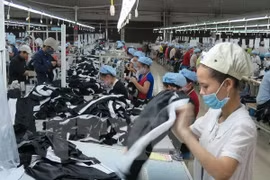
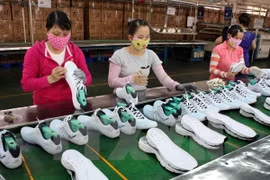
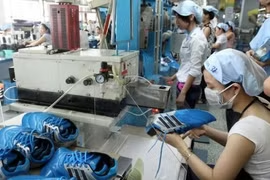
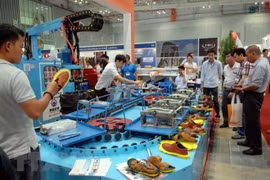
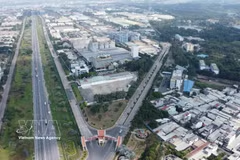
Illustrative image (Source: VNA)
HCM City (VNA) – Despitechallenges, Vietnam’s leather and footwear sector will still have a competitiveedge for the next two decades, according to Deputy Chairman of the VietnamLeather, Footwear and Handbag Association (LEFASO) Diep Thanh Kiet.
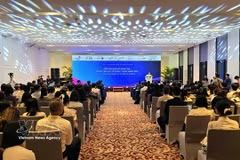
During the Vietnam Footwear Summit held inHo Chi Minh City on March 21, Kiet said Vietnam has moved up to the secondplace globally in leather and footwear exports and third in manufacturing.
Last year, Vietnam earned more than 18billion USD from leather exports, 16.4 billion USD of which was leatherfootwear, up 12 percent annually. Its major importers are the US (36 percent)and the EU (30.6 percent).
There are opportunities for the industry tocontinue developing, he said, adding that Vietnam has free trade agreementswith major markets like Japan, the Customs Union of Russia, Kazakhstan andBelarus, the Republic of Korea and ASEAN in addition to the Comprehensive andProgressive Agreement for Trans-Pacific Partnership and an agreement with theEuropean Union.
According to him, Vietnam has a goldendemographic structure with nearly 67 percent of the population at working age,providing an abundant supply of workers.
It is forecast that the country could supply60 percent of leather materials for domestic footwear and handbags by 2030compared to roughly 45 percent at present.
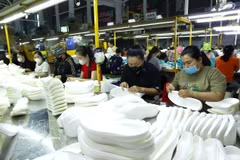
Nguyen Thi Xuan Thuy, chief of the Strategyand Integration Policy Office under the Ministry of Industry and Trade saidVietnam is home to more than 1,500 enterprises with nearly 1 million workers inleather sector and 500,000 workers in the support industry. Most of them aremore skilled than those in such emerging markets as Cambodia, Bangladesh,Ethiopia and Myanmar.
Overall, Vietnam has advantages in workforcecost compared to China and Thailand and has succeeded in producing andexporting high-value products.
Thuy said that once the Vietnam – EuropeanUnion Free Trade Agreement takes effect this year, Vietnam will able to expandexports and create momentum to attract investment to the support industry.
She urged Vietnamese firms to conform toquality standards, ensure the rate of locally-made products and commit tosocial responsibilities. Apart from traditional markets such as the US and theEU, they should also focus on Asia, which consumes more than half of footwearglobally.
Philip Kimmel, Director of KingmakerFootwears, suggested using less workers to reduce costs and rearranging production.
Duncan Scott of New Balance Athletic ShoeInc, said countries moving up the value chain could stop making footwear andthose continuing to make footwear would need “sophistication”.
Cheap labour alone would not ensure success,and firms need to continue to drive efficiency and digital connectivity, hesaid.
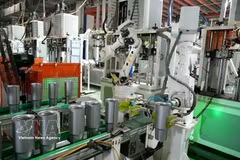
Delegates said proper use of automationcould eliminate redundant workers and make factories more efficient andprofitable.
The industry is aiming rapid, sustainabledevelopment and better use of trade deals to expand exports.
It plans to restructure production to addvalue to products, increase local content, improve designs and focus on mediumand high-quality products.
John Graebin from US footwear companyDeckers Brands said more and more automation solutions will be used, and thatis an opportunity for Vietnam to compete for decades to come.-VNA
VNA