Vietnam’s iconic “pho” noodle soup

Vietnamese pho has been named the world’s 20th best food experience by world travel guide book publisher the Lonely Planet.
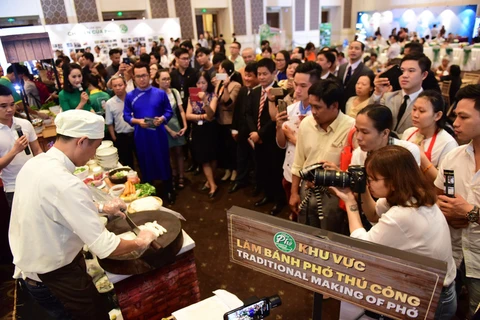
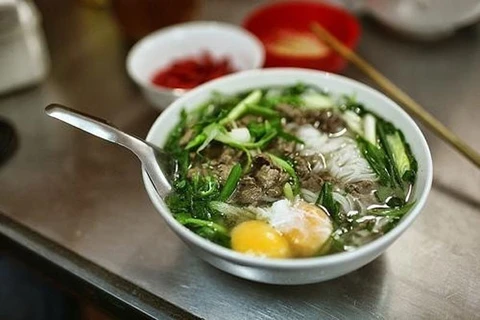
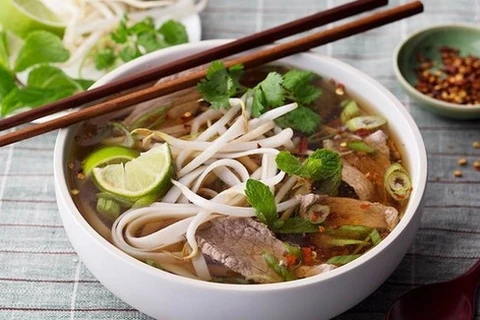
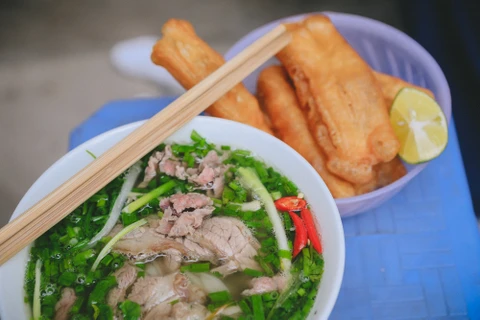
Vietnam’s iconic “pho” noodle soup ảnh 1Vietnamese pho has been named the world’s 20th best food experience. (Photo: VNA)

Hanoi (VNA) – Vietnamese pho has been named the world’s 20th bestfood experience by world travel guide book publisher the Lonely Planet.

Pho on the Hau Riveralong 500 other dishes was selected as for the book Ultimate Eatlist: TheWorld’s Top 500 Food Experiences...Ranked published on August 15, 2018.

Entries werenominated by Lonely Planet writers, bloggers and staffers and whittled down toa final 500 by a panel including chef and TV presenter Adam Liaw and foodblogger Leyla Kazim.

There are many theories regardingPho’s origin. Some say it started as a variation on pot-au-feu, a French beefstew dish. Others believe it’s the heir to a Chinese beef noodle soup or to atraditional Vietnamese dish of noodles with buffalo meat. What is certain isthat “pho”, a simple yet deceptively complex dish of noodles served withbeef or chicken in a hot bowl of broth, has become Vietnam’s pride on the worldmap of cuisine.

Though its origins are disputed, historiansbelieve “pho” was first made popular in Hanoi and Nam Dinh,two major northern cities, during the French colonial period. And we knowthat “pho” wasn’t invented in a restaurant. It began life on the sideof the road, on the shoulders of street vendors who wandered the city with abig pot of both, always kept hot and ready with their mobile stoves. It wasreinvented many times by vendors and home cooks with ingredients that wereavailable to even the poorest, and it was shaped by the country’s turbulenthistory.

Until the 19th century, Vietnam wasstill largely an agricultural country. Cows were raised not as a source of foodbut to help out with land cultivation and rice farming. In order to protect theanimals’ utility as farming aides, slaughtering them for meat was strictlyforbidden and perpetrators were heavily punished if caught. At the beginning ofthe country’s French colonial period, consuming beef was a foreign practice.Locals either couldn’t afford it or had no desire to try it. 

By the 20th century, attitudes towards beefhad changed, as people flocked to cities where they worked in offices andfactories instead of fields. “Pho” became popular as successfulstreet vendors opened their stores in big cities across the country. As ifdictated by some rule, most stores are named after their founders in a singleword, such as “Pho Hien”, “Pho Thin” or “Pho Co”.

Though beef was once the most distinctive aspectof the dish, the most critical aspect is the broth. It’s always the first thingpeople taste when they tuck into a bowl. A good broth must be clear. It shouldcarry the scent of herbs and spices such as cinnamon, cardamon, corianderseeds, cloves, star anise, onion and pepper as well as the taste of cow bones.Everything should be boiled for about six hours for all of the flavours toblend.

When it comes to the broth, it’s almost love orhate at first taste. A good broth means the cook knows what he’s doing andtakes the time and effort to get the dish right. During difficulttimes, “pho” has been served without meat. But the broth must alwaysremain carefully prepared and richly flavourful. If you’re ever looking for anexcellent bowl of “pho”, look for a place where people finish the brothwhen they’re done with the noodles and beef.

Vietnamese people eat “pho” all thetime: for breakfast, lunch, dinner and as a late-night snack. It’s variable andalways satisfying even though there are only two choices when it comes to themeat: chicken or beef.

Since the original “pho” was made withbeef, some die-hard fans insist there is no other way to eat it.But “pho” with chicken has an interesting story of itsown. In  early days of “pho”, beef was a rarity and there wasn’tenough to go around every day of the week. In the olddays, “pho” stores closed on Mondays and Fridays because there was nosupply of beef.  People got creative, however, andinvented “pho” with chicken.

“Pho” with beef has a strong flavour fromthe cow bones. “Pho” with chicken has a gentler aroma and may come withfatty or lean chicken. Each has their own merits. Ultimately, only personalpreference can settle the question of which is superior. But why choose whenyou can have both?

Not unlike a super hero, “pho” comeswith sidekicks. Two of the foods people love to eat with “pho” areeggs and Chinese crullers (oil sticks).

Eggs are poached in boiling hot water and you canchoose between rare, medium and well-done; just make sure you don’t break them.Crullers should be crunchy and crispy—return them if they are not. They can beeaten separately from your “pho” but many, including yours truly,like to dip them in the broth for a mix between crunchiness and a soft, brothytaste. Take care you don’t dip too many because these sticks are oily and mayruin the broth.

Today, there are more expensive variations andadaptations of the dish, with ingredients like foie gras, Kobe andWagyu beef, which may cost up to 50-100 USD a bowl. But even after 200 years,one of the best places to have it is still on the side of the street. Nothingbeats the chilling wind of winter better than a hot, street-side bowlof “pho” bought for 2 USD.

“Pho” can be found everywhere and can behad anywhere: in a train cruising across the country, in a boat among abustling floating market of the Mekong Delta and on the pavement of a busycity. It remains a simple and widely affordable dish that carries both thehistory and identity of the people that create it. - VNA
VNA
See more

Deputy Minister of Foreign Affairs Ngo Le Van, Chairman of the Vietnam National Commission for UNESCO, speaks at plenary session of the 48th session of the UNESCO World Heritage Committee in Busan on July 20, 2026. (Photo: VNA)

Vietnam proposes priorities to strengthen international cooperation on world heritage conservation

On behalf of Vietnam, the deputy minister proposed three priorities of strengthening international cooperation and capacity-building for member states, particularly developing countries; promoting science-based conservation that strikes a balance between preservation and development while placing local communities at the centre; and enhancing coordination among relevant conventions and programmes, alongside the responsible application of digital technologies and artificial intelligence in heritage conservation.

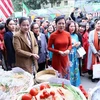
Claudia Roth, a member of the German Bundestag, visits the Vietnamese booth at the festival. (Photo: VNA)

Vietnam attends multicultural festival in Germany as guest of honour

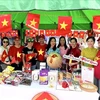
The Vietnamese booth attracted a large number of visitors with traditional dishes such as "nem cuon" (fresh spring rolls) and "bun cha" (grilled pork with vermicelli), along with displays of ao dai (traditional long dress), conical hats and cultural performances imbued with Vietnamese identity. These activities helped spread Vietnamese culture and foster understanding and closer ties between the Vietnamese community, German residents and international friends.

Representatives of countries and territories participating in the Asian Pencak Silat Championship. Photo: VNA)

10th Asian Pencak Silat Championship opens in Dong Nai

Speaking at the opening ceremony, Director of the municipal Department of Culture, Sports and Tourism Le Thi Ngoc Loan said the championship offers athletes an opportunity to compete in a spirit of fairness and sportsmanship while promoting exchanges, mutual understanding and friendship among participating countries.

A special art performance at the Khanh Hoa Sea Festival 2026 (Photo: VNA)

Khanh Hoa Sea Festival 2026 opens, promoting sustainable marine development

Having been held 10 times, the Khanh Hoa Sea Festival has evolved beyond a local celebration into an event of national significance in culture, economy and external relations. This year's edition continues to honour Vietnam's maritime cultural heritage while promoting tourism, the marine economy and international integration.

The golf course at NovaWorld Phan Thiet will host international tournaments during Sports Festival 2026. (Photo: VNA)

Around 7,000 athletes to compete at Sports Festival 2026

This year's festival will feature 12 sports, introducing several new events such as national youth triathlon and beach tennis championship, while expanding its international scope by bringing together clubs, athletes, and police forces from ASEAN countries for events such as the ASEAN Police Open Golf Tournament 2026.

A performance of Cheo Tau folk singing, a distinctive cultural tradition of O Dien commune in Hanoi. (Photo: VNA)

Beyond preservation: Unlocking the value of Vietnam's heritage

Dr. Nguyen Thu Hanh, Director of the Centre for Research and Development of Vietnam Cultural Industry (SDCI), said Vietnam has traditionally focused on preserving heritage rather than creating new value from it. The key obstacle, she noted, is the weak connection between heritage and science, technology, education, design, communications and the marketplace, limiting its economic, educational and social impact despite the country's abundant cultural resources.

Vietnamese Ambassador to Laos Nguyen Minh Tam speaks at the event. (Photo: VNA)

Film screening in Vientiane highlights Vietnam-Laos strategic cohesion

A screening of the special Vietnamese feature film Mua Do (Red Rain) was held in Vientiane on July 16 to mark the 49th anniversary of the signing of the Vietnam-Laos Treaty of Amity and Cooperation (July 18, 1977–2026), reaffirming the two countries' strategic cohesion through cultural exchange.

Artists from the Vietnam National Puppetry Theatre deliver emotionally compelling performances that recreate the rich historical legacy of Thang Long–Hanoi. (Photo: VNA)

Top leader's directives chart new course for culture-led development: experts

Artists and cultural experts shared the view that the top leader's guidance at the second meeting of the Central Steering Committee for the Development of Vietnamese Culture not only reviewed the initial implementation of the Politburo's Resolution No. 80-NQ/TW but also identified four major gaps requiring urgent action and three strategic shifts to unlock the full potential of culture.

Digital transformation in heritage should adopt people-centred approach: UNESCO

Digital transformation in heritage should adopt people-centred approach: UNESCO

Digital transformation in the heritage sector should adopt a people-centred approach, ensuring the meaningful participation of communities at every stage-from documentation and preservation to the management, use and dissemination of cultural data. Jonathan Baker, Representative of the United Nations Educational, Scientific and Cultural Organization (UNESCO) told the Vietnam News Agency during an interview on July 8.

After covering more than 4,000 km across Europe, the Pho Cultural Roadshow Europe 2026 makes its final stop at Viet Pho Restaurant in Berlin. (Photo: VNA)

Pho roadshow ends European journey with Berlin finale

The initiative brought together eight leading Vietnamese chefs and culinary experts, who introduced pho and other traditional dishes at eight destinations – Prague, Warsaw, Trnava, Bratislava, Vienna, Budapest, Bochum and Berlin. Each stop celebrated a different facet of Vietnam's culinary heritage while fostering professional exchanges and discussions on the future of Vietnamese cuisine.