Vietnam’s PMI disrupted by storms and flooding

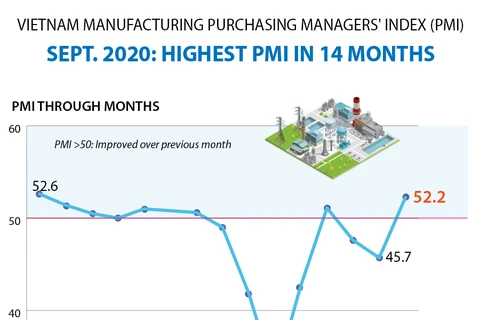
The Vietnam Manufacturing Purchasing Managers' Index (PMI) dipped fractionally below the 50.0 no-change mark to 49.9 last month, signalling broadly unchanged business conditions during the month.
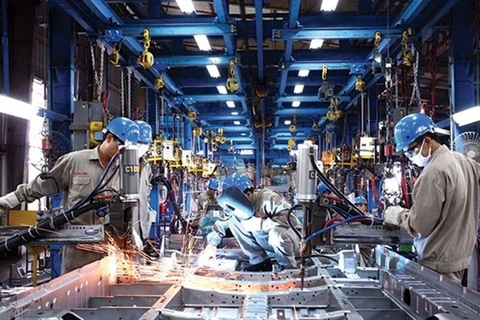
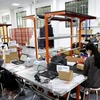
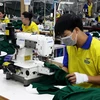
Vietnam’s PMI disrupted by storms and flooding ảnh 1Workers at a manufacturing chain inside an LG Electronics Vietnam’s production plant in Hai Phong (Photo: VNA)

Hanoi (VNS/VNA) - The Vietnam Manufacturing Purchasing Managers' Index(PMI) dipped fractionally below the 50.0 no-change mark to 49.9 last month,signalling broadly unchanged business conditions during the month.

Asurvey by newly-released IHS Markit showed that the recovery in the Vietnamesemanufacturing sector paused last month as a succession of storms and associatedflooding hit the country.

Thisfollowed a reading of 51.8 in October and was the first sub-50 figure in threemonths. Output decreased slightly last month, thereby ending a two-monthsequence of growth.

Thatsaid, anecdotal evidence suggested that the reduction could be temporary as anumber of firms indicated that recent stormy weather and subsequent floodinghad disrupted their production during the month. The COVID-19 pandemic was alsoa factor weighing on output.

Neworders continued to rise, but only fractionally as business was impacted by thestormy weather conditions and flooding, as well as the pandemic. The latter hada particular effect on new export orders, which decreased solidly.

Onthe other hand, a number of respondents indicated that new orders had increasedamid improving underlying demand.

Withnew order growth slowing, firms worked through outstanding business, leading toa tenth successive reduction in backlogs of work. The latest fall was solid,but softer than in October.

Fallingworkloads led firms to scale back their employment and purchasing activity lastmonth. The modest reduction in staffing levels followed a slight rise in theprevious month.

Purchasingactivity decreased for the first time in three months.

Thefall in input buying fed through to a reduction in stocks of purchases. In bothcases, however, consumer goods producers bucked the wider trend by postingexpansions.

Meanwhile,a reduction in output during the month resulted in a decrease in stocks offinished goods.

Aswell as hampering production, the stormy weather and COVID-19 pandemic combinedto disrupt the delivery of purchased items to manufacturers. Suppliers' leadtimes lengthened for the twelfth successive month and to the greatest extentsince August. Raw material shortages were also a factor behind delivery delays.

Shortagesof raw materials contributed to rises in input costs during November, withdifficulties importing items and higher prices in international markets alsocited. Input prices increased sharply, and at the fastest pace since August2018. The rate of output price inflation also quickened, but remained modest.The rise in charges was the greatest for two years.

Despitethe setback in November, firms expect production to expand over the comingyear. Confidence was centred on expectations that the COVID-19 pandemic wouldremain under control in Vietnam and cause less disruption globally.

IIPincreases slightly

Theindex of industrial production (IIP) last month is estimated to increase by 0.5percent from the previous month and by 9.2 percent from the same period lastyear.

Inwhich, the mining industry decreased by 6.2 percent; processing andmanufacturing increased 11.9 percent; electricity production and distributionincreased by 4 percent; water supply and waste and wastewater management andtreatment increased by 5.3 percent.

TheGeneral Statistics Office's socio-economic situation report for November and 11months of this year said that in the context of well-controlled COVID-19pandemic in the country and the EU-Vietnam Free Trade Agreement (EVFTA) createdthe driving force for sectors of the economy to recover and operate in the newnormal states.

Generally,the IIP in the first eleven months of this year was estimated to increase by3.1 percent over the same period last year, lower than the 9.3 percent increaseof the same period last year.

Specifically,processing and manufacturing increased by 4.7 percent, contributing 3.8percentage points to the general growth; power generation and distribution rose3.2 percent, contributing 0.3 percentage points.

Inaddition, the water supply, waste and wastewater management and treatmentsector increased four percent, contributing 0.1 percentage points; the miningindustry alone decreased by 7.1 percent, down 1.1 percentage points in theoverall growth./.
VNA

See more

Viettel launches the Unitel Logistics brand in Laos. (Photo: VNA)

Vietnamese firms expand global footprint

The Government recently approved the “Go Global” programme for 2026-2030, which identifies the private sector as a key driving force in Vietnam’s international expansion process. It aims to help Vietnamese private enterprises strengthen their overseas presence in a comprehensive, effective and sustainable manner through international investment, business activities and deeper integration into regional and global supply and value chains.

Vietnam and Cambodia are seeking to strengthen supply chain connectivity and promote sustainable border trade at a trade promotion conference in Vietnam's Mekong Delta province of Dong Thap on May 15. (Photo: https://thoibaonganhang.vn/)

Vietnam, Cambodia eye stronger border trade, supply chain connectivity

Vietnam–Cambodia trade ties have grown rapidly in recent years, becoming one of the major pillars of economic cooperation in the Mekong sub-region. The two countries share a 1,137-km border and an increasingly developed network of international and secondary border gates, facilitating cross-border trade, logistics and investment.

Illustrative image. (Photo: VNA)

Three proposals to connect overseas Vietnamese resources with private economy at home

There are currently many Vietnamese IT specialists working in technology corporations, banks, start-ups and innovation ecosystems across Canada. With appropriate mechanisms in place, this workforce could become a technology bridge, helping Vietnamese enterprises access management expertise, technical solutions, international standards and partnership networks in North America.

The Nguyen Van Linh–Nguyen Huu Tho intersection fully opens both underpasses to traffic, helping ease congestion in the area. (Photo: VNA)

Ho Chi Minh City pushes for full public investment disbursement

Ho Chi Minh City was allocated a record 147.599 trillion VND (5.6 billion USD) in public investment capital for 2026, up 22.6% from last year and accounting for nearly 14.6% of the nation’s total public investment budget. However, disbursement by the end of April remained below the national average.

Visitors explore Quang Tri province’s OCOP products (Photo: VNA)

Quang Tri links OCOP products with tourism to expand farm produce markets

The central province currently has 160 OCOP products developed by cooperatives, cooperative groups and businesses, including two five-star and 31 four-star products. These locally distinctive products are gradually becoming "ambassadors" showcasing Quang Tri’s culture and identity to domestic and international visitors.

Work starts on Hanoi’s Red River Landscape Boulevard Axis project on December 19, 2025. (Photo: VNA)

Hanoi approves nearly 28-bln-USD Red River landscape boulevard project

Covering more than 11,400 hectares and requiring an estimated 736.96 trillion VND (nearly 28 billion USD), the project is expected to reshape urban development along both banks of the Red River over the coming decades while improving transport connectivity and public spaces in the capital.

Deputy Prime Minister Nguyen Van Thang and delegates perform the ground-breaking ceremony for the Northwest Dien Bien Phu New Urban Area, Resort and Sports Complex project. (Photo: VNA)

Vingroup launches largest-ever urban development project in Dien Bien

Under the master plan, the project will span more than 228.5ha and accommodate around 12,000 residents. It is designed under a “city within a city” model integrating residential areas, commercial and service facilities, resorts, schools, healthcare services, public spaces and sports infrastructure.

Deputy Prime Minister Nguyen Van Thang and delegates press the button to launch construction of the Dien Bien Phu cultural-historical tourism and cable car complex project in Dien Bien province on May 10, 2026. (Photo: VNA)

Dien Bien Phu cultural-historical tourism, cable car complex project launched

The project aims to effectively tap the area’s natural landscapes, geographical advantages and distinctive historical value, while creating a high-quality tourism product with strong competitiveness. It is also intended to preserve, honour and promote the value of the Dien Bien Phu Victory special national historical relic site.

Politburo member Nguyen Duy Ngoc (third, right), who is Standing Deputy Head of the Central Steering Committee for Science-Technology Development, Innovation and Digital Transformation, holds a working session with the Colombo Port City Management Board. (Photo: VNA)

Vietnam studies Colombo smart port city model

Ngoc praised Sri Lanka’s orientations in developing seaport infrastructure, digital infrastructure, digital economy and international service centres, describing them as valuable references for Vietnam in developing strategic infrastructure, innovation centres, smart urban areas and digital economy ecosystems.