Vietnam’s third-cycle UPR national report released

Vietnam has implemented 175 out of the 182 recommendations by the UN Human Rights Council’s (UNHRC) second-cycle Universal Periodic Review (UPR) which it accepted in June 2014, heard a seminar in Hanoi on December 3.
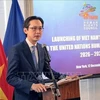
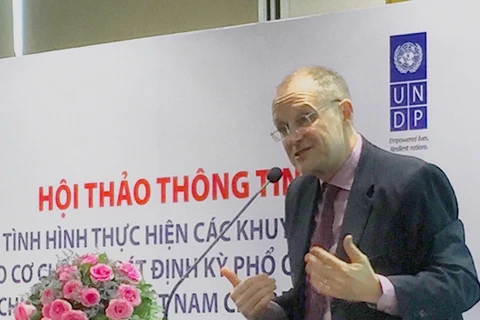
Vietnam’s third-cycle UPR national report released ảnh 1At the workshop (Photo: VNA)

Hanoi (VNA) – Vietnam has implemented 175 out of the 182 recommendations by the UNHuman Rights Council’s (UNHRC) second-cycle Universal Periodic Review (UPR)which it accepted in June 2014, heard a workshop in Hanoi on December 3.

According to Vietnam’sthird-cycle UPR national report announced at the workshop, the realisation ofthe recommendations has exerted positive impacts across all aspects of society inVietnam, especially in building human rights-related laws, ensuring socialwelfare, improving people’s living standards, and promoting cooperation anddialogues on human rights at regional and international levels.

Since the 2014 UPR,Vietnam’s development achievements have been acknowledged by the internationalcommunity, including its ahead-of-schedule completion of the MillenniumDevelopment Goals (MDGs) and the initial results of the implementation of theSustainable Development Goals (SDGs).

Vietnam’s per capitaincome has increased continuously and the income of poor households has risenfrom between 15-20 percent. Meanwhile, the multi-dimensional poverty ratedropped from 9.88 percent in 2015 to 7.69 percent last year.

Vietnam is one ofthe countries worldwide witnessing the fastest internet development pace, withmore than 50 million internet users, the report said.

The report alsopointed out challenges and limitations regarding the legal framework, resources,and policies to promote and ensure human rights in Vietnam, especially those ofdisadvantaged groups.

It also proposedpriorities to the Vietnamese Government in the time ahead in order to ensure eachresident’s improved access to fundamental rights and freedom.

Addressing theevent, Caitlin Wiesen, the United Nations Development Programme (UNDP) CountryDirector for Vietnam, stressed the special significance of the implementationof the mechanisms to the UPR Working Group slated for January 2019.

The UNDP willcontinue to coordinate closely with the Vietnamese Government to materialise mechanisms,thus contributing to better ensuring and promoting human rights in the country,she pledged.

The third-cycle UPRnational report, approved by the Prime Minister on October 17, 2018 andsubmitted to the UNHRC on October 22, 2018, was completed with theparticipation of 18 relevant Vietnamese ministries and agencies, said DangHoang Giang, chief of the foreign ministry office.

The UPR is an inter-governmental mechanism of the UN Human RightsCouncil, aimed at reviewing issues related to the human rights of all UN membercountries. Vietnam first implemented the UPR in May 2009. –VNA   
VNA
See more

Deputy Minister of Foreign Affairs Le Thi Thu Hang speaks at the panel discussion titled “Russia – APEC: Broad Cooperation Prospects on the Horizon until 2035”. (Photo: VNA)

Vietnam shares vision, preparations for APEC 2027

Deputy Foreign Minister Le Thi Thu Hang underlined the importance of stronger coordination between APEC and other regional and global mechanisms in order to improve efficiency and optimise resources in addressing common challenges.

General Secretary of the Central Committee of the Communist Party of Vietnam and President of Vietnam To Lam delivers a keynote address at the opening of the 23rd Shangri-La Dialogue in Singapore on May 29. (Photo: VNA)

Singaporean FM highlights shared strategic outlook with Vietnam

Singapore and Vietnam remain committed to supporting a rules-based international order, strengthening ASEAN integration, and enhancing the bloc’s resilience. The two countries upgraded their ties to a Comprehensive Strategic Partnership (CSP) last year, marking Singapore’s first CSP with an ASEAN member state.

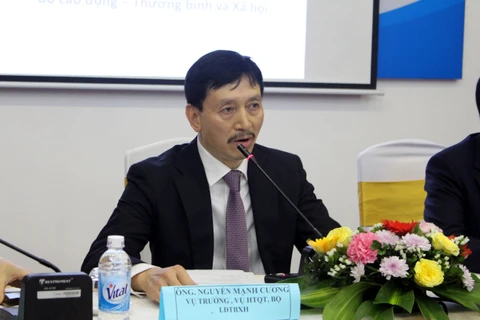
Deputy Minister of Foreign Affairs Nguyen Manh Cuong (Photo: VNA)

ASEAN Future Forum 2026 to advance ASEAN community-building process

Vietnam hopes the forum will continue to demonstrate its role as an active and responsible member of the Association of Southeast Asian Nations (ASEAN), contributing to regional affairs and advancing the Party and State’s foreign policy and international integration strategy.

General Secretary of the Communist Party of Vietnam Central Committee and State President To Lam speaks at the 23rd Shangri-La Dialogue on May 29, 2026. (Photo: VNA)

Vietnam contributes to shaping regional agenda at 23rd Shangri-La Dialogue: Indian expert

Speaking to Vietnam News Agency correspondents in New Delhi, Pradhan noted that, drawing on his extensive experience in national security and international relations, as well as his deep knowledge of international law, the top Vietnamese leader identified three closely interrelated crises facing the world today: a crisis of the international order, a crisis of the development model, and a crisis of strategic trust.

Administrative procedures cut and simplified will be publishedNational Public Service Portal (Photo: VNA)

Administrative procedures cut, simplified to be published online

The dispatch states that in implementing Conclusion No. 18-KL/TW dated April 2, 2026 of the 14th Party Central Committee on the 2026–2030 socio-economic development plan, national finance, public debt management and medium-term public investment, linked to the goal of achieving double-digit economic growth, the Government on April 29 issued 11 resolutions on cutting, decentralising and simplifying administrative procedures, business conditions, and conditional business lines. The Prime Minister subsequently directed ministries, agencies and localities to implement these resolutions.