White book on religions, religious policies in Vietnam debuts

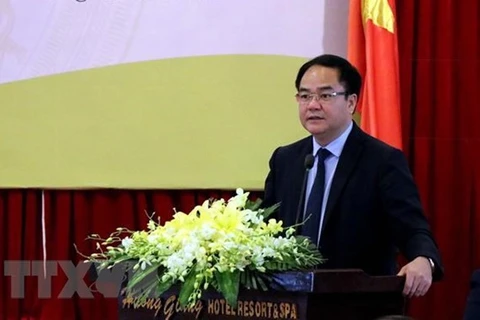
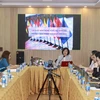
The Government Committee for Religious Affairs released the white book on religions and religious policies in Vietnam at a conference held by the Ministry of Information and Telecommunications in Hanoi on March 9.
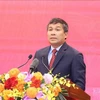
White book on religions, religious policies in Vietnam debuts ảnh 1The Government Committee for Religious Affairs released the white book on religions and religious policies in Vietnam (Photo:baoquocte.vn)

Hanoi (VNA) – The Government Committee for Religious Affairs released the white book on religions and religious policies in Vietnam at a conference held by the Ministry of Information and Telecommunications in Hanoi on March 9.

A 132-page book consists of three chapters that provides introduction to basic information about religions in Vietnam, its religious policies as well as achievements, challenges and advantages in ensuring the right to freedom of belief and religion.

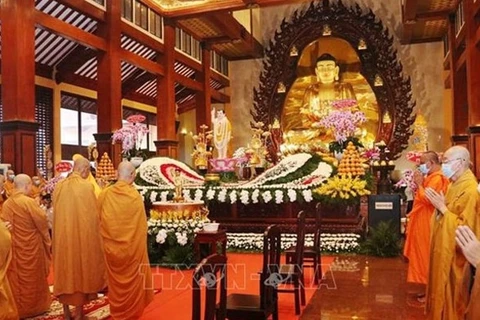
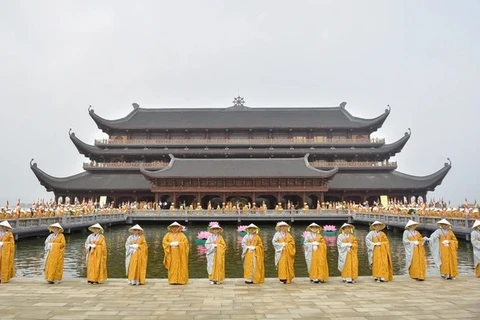
The book introduces 16 popular religions in Vietnam, including Buddhism, Catholicism, Protestantism, Caodaism, and Hoa Hao Buddhism, among others. It also presents the Communist Party of Vietnam's view on beliefs and religions during the renewal period, the right to freedom of belief and religion stipulated in the Constitution of the Socialist Republic of Vietnam, regulations on religious activities in current legal documents.

Published by the Religious Publishing House, the book includes an appendix with some images of religions and religious activities in Vietnam, statistics on religions, a list of religious organisations and registered religious activities, and Article 24 of the 2013 Constitution.

Deputy head of the committee Nguyen Tien Trong said Vietnam has a long-standing cultural tradition and is home to 54 ethnic groups with
diverse religions. At present, the country is home to over 26.5 million religious followers, or 27% of the population; over 54,000 religious dignitaries and 29,658 places of worship.

The first Constitution in 1946 and its revised editions always affirm that the right to freedom of belief and religion is one of the fundamental rights of human beings. The 2013 Constitution specifies that the right to freedom of belief and religion is a right of all people, he said.

In order to realise the 2013 Constitution, the Vietnamese National Assembly passed the Law on Belief and Religion on November 18, 2016. The Vietnamese Government issued Decree No. 162/2017/ND-CP on December 30, 2017, detailing some articles and measures to enforce the Law on Belief and Religion.

Vietnam has so far recognised 36 religious organisations, issued registration certificates to four religious organisations and one religious sect of 16 religions./.
VNA

See more

A performance at the meeting with over 1,000 overseas Vietnamese in Ho Chi Minh City on February 6 evening to celebrate the upcoming Lunar New Year (Tet). (Photo: VNA)

Ho Chi Minh City hosts pre-Tet gathering with overseas Vietnamese

Nguyen Van Duoc, Deputy Secretary of the municipal Party Committee and Chairman of the municipal People’s Committee, attributed the southern metropolis’s socio-economic development achievements partly to important contributions by OV entrepreneurs, scientists, experts, and intellectuals worldwide through investment activities, knowledge transfer, market connection, and promotion of the city’s image.

Aerial view of Co To Island. (Photo: VNA)

Co To to offer free vessel trips to/from island on 29th day of last lunar month

To meet rising demand from residents returning home for Tet and visitors travelling to the island, transport operators in Co To will continue daily passenger and cargo services to/from the island until the 29th day of the last lunar month, with operations resuming from the second day of the first lunar month (February 18).

PM orders stronger transport measures to ensure traffic safety during Tet. (Illustrative photo: VNA)

PM orders stronger transport measures to ensure traffic safety during Tet

To accommodate surging travel demand and keep transport operations running smoothly, the PM instructed relevant bodies to boost transport capacity, particularly public passenger services, to ensure seamless connections at railway stations, airports, bus terminals and ferry ports. Authorities were told to ensure that no travellers are left stranded or delayed in returning home for Tet due to a shortage of transport, while strictly preventing fare gouging and unlawful price hikes. Proactive measures to curb traffic accidents and congestion during the peak holiday period were also highlighted.

Politburo member and Permanent member of the Party Central Committee’s Secretariat Tran Cam Tu presents gifts to the elderly in Da Nang city on February 5. (Photo: VNA)

Permanent member of Party Central Committee's Secretariat pays Tet visit to Da Nang

Politburo member and Permanent member of the Party Central Committee’s Secretariat Tran Cam Tu reaffirmed that the Party and State consistently uphold the principle of placing the people at the centre, stressing that caring for their material and spiritual well-being is both the goal and the driving force of national development.

The delegation Inspects anti-IUU fishing efforts at Hung Thai Port, Long Hai commune. (Photo: VNA )

Ho Chi Minh City's efforts to combat IUU fishing examined

The inspection aimed to identify grassroots-level difficulties, promptly address technical bottlenecks, require telecommunications enterprises to upgrade their systems, and advise the Government and relevant ministries and sectors on refining mechanisms and policies.

Representatives of Hanoi units sign a coordination mechanism for piloting public interest civil litigation (Photo: VNA)

Hanoi launches pilot mechanism for public interest civil litigation

The coordination framework is designed to ensure that the People’s Procuracy can promptly, fully and accurately access information related to public interest civil cases; facilitate the swift and effective verification and collection of documents and evidence; and strengthen the responsibilities of agencies, organisations and individuals in fulfilling their mandates to protect the civil rights of vulnerable groups and public interests.