Women’s economic empowerment – strong commitment of Vietnam: minister

“Economic empowerment for women is a strong commitment and one of the priorities of the Vietnamese Government,” Minister of Labour, Invalids and Social Affairs Dao Ngoc Dung said on March 13.
Women’s economic empowerment – strong commitment of Vietnam: minister ảnh 1A vocational training class for ethnic women (Photo: VNA)

Hanoi (VNA) – “Economic empowerment for women is astrong commitment and one of the priorities of the Vietnamese Government,”Minister of Labour, Invalids and Social Affairs Dao Ngoc Dung said in a speechat the General Discussion during the 61st Session of the UN Commission on theStatus of Women on March 13.

Dung, who also chairs the National Committee forthe Advancement of Women, said that Vietnam has obtained considerableachievements in this field as reflected in laws and policies. Its legal frameworkhas been improved and is compatible with the UN Convention on the Eliminationof All Forms of Discrimination against Women, conventions of the InternationalLabor Organisation, and the Beijing Platform for Action about women.

With its own efforts and assistance fromdevelopment partners and UN organisations, the country has realised theMillennium Development Goal on gender equality.

The proportion of women in the labour market isnearly 73 percent and the rate of female enterprise and farm owners 24.9percent.  According to a 2016 World Economic Forum report, Vietnam ranked65 out of 144 countries on the gender gap index, while the female-to-male ratioof labour force participation was 0.92 – nearly reaching the equality level,the minister noted.

Numerous activities have been implemented tosupport entrepreneurship training and promote access to financial and creditsources, Dung said, adding that “the role and status of Vietnamese women in allaspects of social life have been raised significantly.”

However, he admitted that the country stillfaces challenges. While female workers mainly work in informal sectors, thereexists a gap in employment quality, employment status and income between maleand female workers. Most businesses headed by female entrepreneurs are micro smallscale with informal activities and gaining low profit.

Women’s ability and potential is still oftenundervalued. Other challenges include natural disasters, epidemics, labourmarket, finance, the changes of employment structure due to the 4th IndustrialRevolution, low global economic development in recent years and tradeprotection.

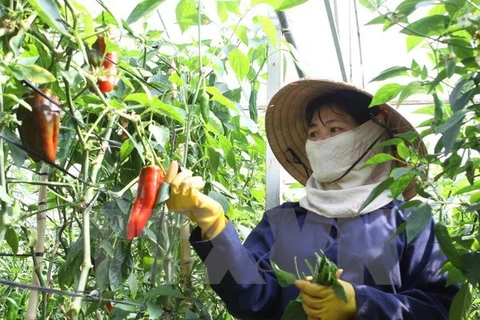
Facing this, the Vietnamese Government plans tosupport women, especially young women, to access skill training in emergingfields, particularly in science, technology, technical education andmathematics. It will prioritise spending on social security and caringinfrastructure to help women reduce family burdens and increase their access tosocial protection. More investment will also be poured into improving theproductivity and income of women in agriculture, he added.

In another speech on behalf of the 10 ASEANmember nations, Minister Dung said: “ASEAN Member Countries have accomplished agreat deal in the advancement of women at the national and regional levels.”

However, they also recognise that there arestill barriers to be removed to ensure women and men enjoy equal economicopportunities and that the ASEAN Community as a whole enjoys prosperity andsustainable growth.

He said that the bloc will strive to address theconstraints in all dimensions. Gender mainstreaming, increasing women’sparticipation in the labour force, economic, social and political spheres, andensuring access to education and vocational training are essential for theempowerment of women and securing the full enjoyment of human rights andfundamental freedoms for women.

The 61st Session of the UN Commission on theStatus of Women takes place at the UN headquarters in New York, the US, fromMarch 13-24 under the theme “Women’s economic empowerment in the changing worldof work”.

As part of the session, Minister Dung alsoaddressed fringe events, including a discussion on enhancing women’s role inagriculture and rural areas in Vietnam, and a workshop on dealing with harmfulpractices of male preference held by the UN Population Fund.-VNA 
VNA

See more

General Secretary of the Communist Party of Vietnam Central Committee and State President To Lam speaks at the working session in Hanoi on May 13, 2026. (Photo: VNA)

Party, State leader calls for consolidation of central steering committees on legal, judicial reform

Consolidating the central steering committees for institutional and legal reform and for judicial reform is necessary in order to streamline organisational structures without reducing responsibilities, while ensuring clear accountability, measurable outputs and concrete results. Following the restructuring, the body will be renamed the central steering committee for institutional improvement and law enforcement, with the Party General Secretary and State President serving as its head.

Civil servants provides administrative services for citizens in Son Hai commune of Bac Ninh province. (Photo: VNA)

Reform drive expected to remove barriers, unlock growth momentum

Prime Minister Le Minh Hung recently ordered ministries and agencies to immediately cut at least 30% of administrative procedures, 50% of processing time, 50% of compliance costs and 30% of business conditions, while eliminating all unnecessary procedures.

Ambassador Do Hung Viet, Permanent Representative of Vietnam to the United Nations (UN), meets with Annalena Baerbock, President of the 80th session of the UN General Assembly (UNGA). (Photo: VNA)

Vietnam strives for substantive outcome at NPT review conference

At the meeting this week, Ambassador Viet briefed the UNGA President on developments during the first two weeks of the conference. He stressed that the current international geopolitical landscape poses numerous complex challenges, while reaffirming Vietnam’s determination, together with other member states, to promote substantive and balanced outcomes at the conference.

General Secretary of the Communist Party of Vietnam Central Committee and President of Vietnam To Lam (R) receives Athsaphangthong Siphandone, member of the Lao People’s Revolutionary Party Central Committee, Secretary of the Vientiane Party Committee and Chairman of the municipal People’s Council, in Hanoi on May 12, 2026. (Photo: VNA)

Top leader of Vietnam receives Vientiane official in Hanoi

The host leader stressed that cooperation between localities, particularly between the capitals of Hanoi and Vientiane, plays an especially important role as a pioneering force in effectively implementing the foreign polices of the two Parties and States, while also serving as a bridge between politics and development, as well as between strategy and concrete action.

Prime Minister Le Minh Hung receives Chinese Ambassador to Vietnam He Wei in Hanoi on May 12. Photo: VNA

Prime Minister receives Chinese Ambassador

The Party and State of Vietnam always value the assistance China has provided to Vietnam during its past struggle for national independence as well as in national development today. Vietnam consistently regards the development of relations with China as a steadfast policy, an objective requirement, a strategic choice, and a top priority in its foreign policy of independence, self-reliance, multilateralisation and diversification.

Secretary of the Hanoi Party Committee Tran Duc Thang and Secretary of the Vientiane Party Committee Atsaphangthong Siphandone witness the signing of a memorandum of understanding on cooperation between the Women’s Unions of Hanoi and Vientiane for 2026–2030, as well as a memorandum on enhanced cooperation between the Ho Chi Minh Communist Youth Union of Hanoi and the Lao People’s Revolutionary Youth Union of Vientiane for the same period. (Photo: VNA)

Hanoi, Vientiane promote comprehensive cooperation in new phase

The capitals of Vietnam and Laos signed memoranda of understanding on joint work in the fields of public communication and mass mobilisation, women and youth affairs, foreign relations, industry and trade, education and health care. These are expected to provide an important basis for implementing their cooperation priorities for 2026–2030.