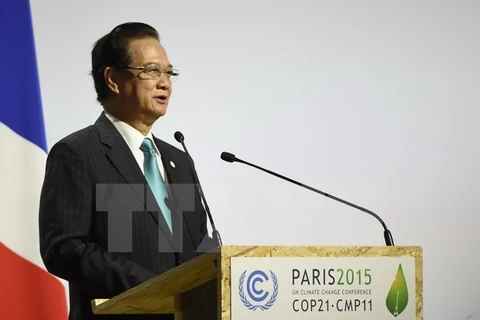
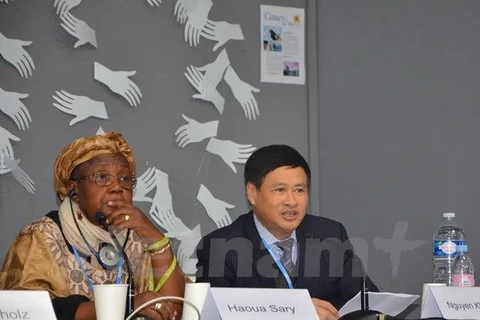
Participants at the opening session of he 21st Conference of the Parties to the United Nations Framework Convention on Climate Change (COP21) in Paris, France (Source: VNA)
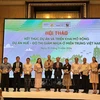
 Hanoi (VNA) - Impacts of the Paris Agreement reached at the 21st Conference of the Parties to the United Nations Framework Convention on Climate Change (COP21) on Vietnam and the country’s preparations for implementing the deal were analysed and discussed at a workshop in Hanoi on January 21.
Pham Van Tan, Vice Director of the Department of Hydrometeorology and Climate Change and Deputy Head of the Board of Vietnam’s Climate Change Negotiation Group, briefed participants on the Vietnamese delegation’s contributions to COP21 and the agreement.
Approved by envoys from 195 nations attending the United Nation Framework Convention on Climate Change (UNFCCC) on December 12, 2015 in Paris, the Agreement is considered an historical accord after 20 years of negotiation, ushering in an energy revolution.
This brings a great opportunity for countries, which are under serious threats from climate change such as Vietnam, to access greater international financial assistance to thoroughly resolve climate change-related issues, including changing the development model towards a low-carbon economy and promoting the application of clean technologies, Tan said.
He stressed the need to thoroughly plan for Vietnam’s implementation of the universal agreement and the provisions the country has set in her report on intended nationally-determined contributions (INDC) .
The State should enhance its management of activities to reduce emissions, build a road map for shifting to a low carbon socio-economic development model and roll out a national-level adaptation plan, he said.
Koos Neefjes, a climate change expert from the UN Development Programme (UNDP), said Vietnam must cut down greenhouse gas emissions to restrict the average temperature rise and meet the new target ratified in Paris: an average rise below 2 degrees Celsius and towards 1.5 degrees Celsius.
Vietnam and other countries will have to pull greenhouse gas emissions down to zero degree Celsius by 2055-2060.
Koos Neefjes affirmed that Vietnam will receive financial assistances for its efforts to reduce greenhouse gas emissions and respond to climate change.
During negotiations in COP21, the Climate change Working Group (CCWG) of NGOs in Vietnam actively participated in and organised sideline activities for the conference.
Vu Minh Hai, NGOs’ CCWG Chairwoman, said the implementation of the Paris Agreement will facilitate close partnership between the Vietnamese Government and NGOs, thus bringing benefits to the groups which are vulnerable to climate change, including poor women, ethnic minority communities, the disabled, the elderly and children.
The Paris accord sets a target of limiting warming of the planet to “well below” 2 degrees Celsius compared with temperatures at the beginning of the Industrial Revolution, while aiming for an even more ambitious goal of 1.5 degrees Celsius. To do so, emissions of greenhouse gases will need to peak “as soon as possible”, followed by rapid reductions.
Developed countries agreed to provide at least 100 billion USD a year from 2020 to help developing countries.
The workshop was co-organised by the Department of Hydrometeorology and Climate Change and the Climate change Working Group (CCWG) of non-governmental organisations (NGOs) in Vietnam.-VNA