World Bank pledges continued support for Vietnam’s high-quality, low-emission rice project

Vietnam is a pioneer in low-emission rice farming, she said, adding that many people around the world are eager to visit the country to learn from this model.

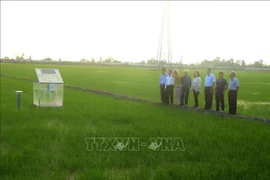
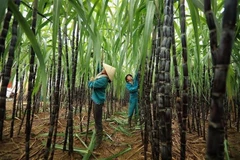
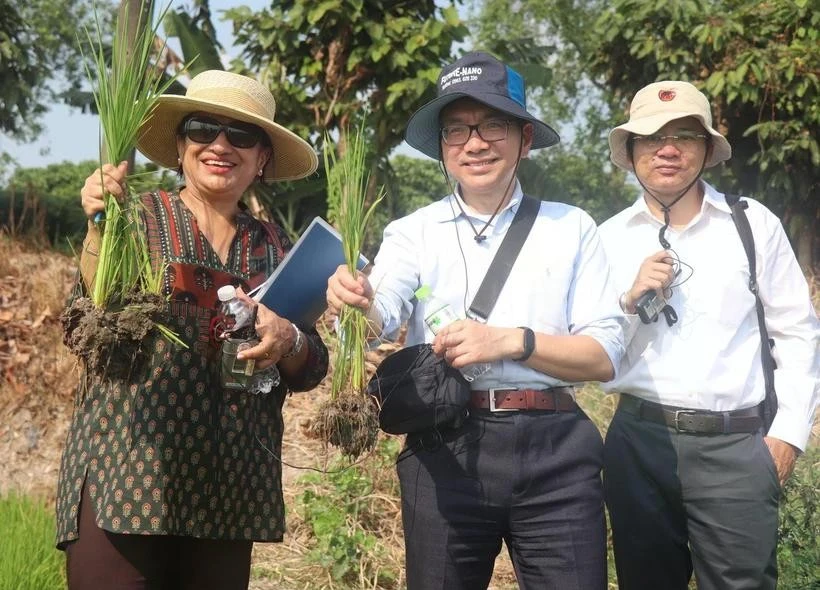
Shobha Shetty, Global Director for Food and Agriculture at the World Bank (first, left) inspects rice grown under the emission-reducing farming model. (Photo: VNA)

Can Tho (VNA) – The World Bank is committed to mobilising additional non-refundable aid to support Vietnam’s project on developing one million hectares of high-quality and low-carbon rice in association with green growth in the Mekong Delta region, a senior WB official has said.

Shobha Shetty, Global Director of the Agriculture and Food Global Practice at the World Bank, made the statement while making a field trip to a rice cultivation site at New Green Farm Cooperative in Thot Not district, Can Tho city, on March 19.

The New Green Farm Cooperative currently comprises over 100 households cultivating 148 hectares of rice. It has been part of the project for three consecutive seasons.

According to Dong Van Canh, Head of the Cooperative, farmers have adopted the "One Must, Five Reductions" technique, which requires using certified seeds while reducing seeding rates, fertilisers, pesticides, water usage, and post-harvest losses. Additionally, by integrating organic fertilisation from rice straw, farmers have been able to reduce chemical nitrogen fertiliser use by 40%, lower production costs by nearly 1.7 million VND (67 USD) per hectare per season and increase profits by 3.5 million VND per hectare per crop.

New Green Farm is also the first cooperative in Can Tho to adopt circular agriculture. Instead of discarding rice straw, cooperative members repurpose it to cultivate straw mushrooms and produce organic fertiliser, creating additional income streams.

"The circular economy model maximises the use of by-products, enabling farmers to earn more from selling straw, mushrooms, and organic fertiliser," Canh explained.
an-giang.jpg
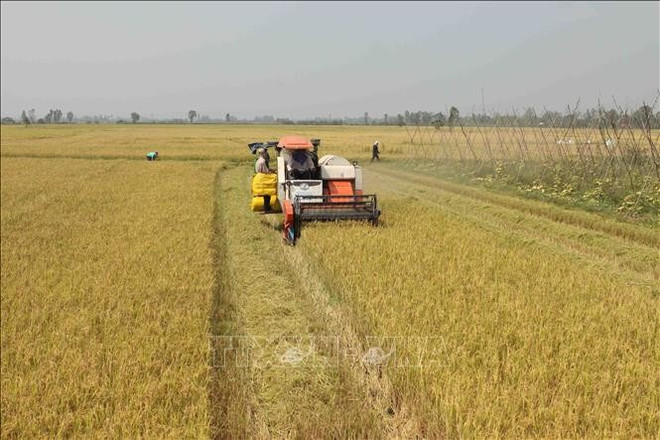
An Giang province's rice production area ranges from 600,000 - 620,000 ha per year, with an annual output of nearly 4 million tonne (Photo: VNA)

Shetty said that her visit helped her better understand low-emission rice farming practices. Vietnam is a pioneer in low-emission rice farming, she said, adding that many people around the world are eager to visit the country to learn from this model.

According to Deputy Minister of Agriculture and Environment Tran Thanh Nam, despite fluctuations in global food prices and recent drops in rice prices, farmers involved in the one million-hectare rice project remain financially secure because lower production costs have increased their profits. As a result, even when rice prices drop, farmers maintain stable incomes and peace of mind, thanks to partnerships with enterprises that ensure market access.

Recognising the project’s positive impact on farmers’ livelihoods, Nam noted a growing interest among farmers in adopting high-quality, low-emission rice cultivation.

To further support the project, the WB is helping Vietnam access the Transformative Carbon Asset Facility (TCAF) and is preparing a technical and infrastructure support project for high-quality, low-emission rice production in the Mekong Delta, which will be financed through WB loans.

To accelerate the signing of agreements with TCAF and finalise project proposals, the WB has organised a working delegation to work with the Ministry of Agriculture and Environment and provinces involved in the one million hectare rice project from March 17 to March 25./.
VNA

See more

The Song Khoai Industrial Park (Quang Ninh province) attracts numerous enterprises for investment and production, creating jobs for local workers. (Photo: VNA)

Quang Ninh removes bottlenecks to attract 3 billion USD in FDI

Chairman of the provincial People’s Committee Bui Van Khang said that Quang Ninh aims to draw 101 non-state budget domestic investment projects with total registered capital of nearly 569 trillion VND (21.6 billion USD), and 3 billion USD in FDI capital in 2026.

Average economic growth of 6.3% per year, together with an estimated 8.02% expansion in 2025, has placed Vietnam among the world’s most dynamic economies. (Photo: VNA)

Indonesian scholar praises Vietnam as model of sustainable, inclusive growth

These achievements so far stem from the consistent leadership of the Communist Party of Vietnam, the spirit of self-reliance and resilience, and strong national solidarity, laying a solid foundation for the country’s strategic development goals towards 2030 and the vision to 2045, according to a senior researcher at the Centre for Southeast Asian Studies.

Vietnam – India trade hit historic high of nearly 16.46 billion USD in 2025. (Illustrative photo: VNA)

Vietnam – India trade sets new record at nearly 16.5 billion USD

India supplies key inputs such as iron and steel, chemicals, pharmaceuticals, textiles and garments, animal feed and aquatic products, while Vietnam exports technology-intensive goods, electronics, textiles and garments, chemicals, wood products, footwear, spices, coffee and pepper.

Experts discuss at the event (Photo courtesy of the organiser)

Venture capital falls for fifth straight year in 2025

This downturn continues the trend of decline that began in 2021 amid tighter global liquidity and a structural reset in investor risk appetite, according to the 'Vietnam Tech & Venture Capital Outlook 2025' report published by VinVentures.

With many advantages, Vietnam has opportunities to integrate more deeply into the global technology value chain. (Photo: VNA)

Vietnam emerges as typical case of Asia’s FDI success

Vietnam stands out as a representative example. The article cites US technology group Intel as a case in point. Since establishing its testing and assembly facility at the Saigon Hi-Tech Park in 2010, Intel has expanded operations through total investments of 1.5 billion USD.

Vietnamese, Chinese enterprises exchange experience at the networking and exchange programme in Da Nang city on January 13, 2026 (Photo: VNA)

Da Nang promotes logistics cooperation with Chinese businesses

With the goodwill and active engagement of partners, particularly the Chinese business community, the cooperation is expected to generate concrete and long-term opportunities, contributing to the development, deeper integration and sustainability of Da Nang’s startup and innovation ecosystem, said Le Son Phong, Deputy Director of the municipal Department of Science and Technology.

SCAVI Hue Co., Ltd. (100% invested by Financière B’Lao Group, France), specialising in garment manufacturing at Phong Dien Industrial Park in Hue. (Photo: VNA)

Business Confidence Index reaches seven-year high: EuroCham Vietnam

After several years affected by global volatility and disruptions, the Q4/2025 BCI indicates that European business sentiment in Vietnam has returned firmly to positive growth territory, surpassing levels seen prior to US tariff announcements and even before the COVID-19 pandemic. Specifically, 65% of surveyed companies assessed their current business conditions as positive in Q4/2025, with the figure rising to 69% when looking ahead to Q1/2026, suggesting that optimism is set to strengthen further as the new year begins.

Prime Minister Pham Minh Chinh chairs the 5th meeting of the Central Steering Committee on Housing Policy and the Real Estate Market in Hanoi on January 13, 2026. Photo: VNA

PM chairs meeting on housing policy, real estate market

The right to housing is a fundamental right of citizens, and housing is an essential need of every person. Housing development is an important pillar of social welfare policy, while also serving as a driving force for economic growth, labor market stability, and sustainable socio-economic development, said Prime Minister Pham Minh Chinh.