Yellow apricot blossom – a symbol of Tet in Vietnam

Apart from peach flower and marumi kumquat, Vietnamese, especially southerners, often celebrate the Tet (Lunar New Year) festival with yellow apricot blossom (Ochna integerrima) that symbolises good luck, wealth, good health, happiness and love.
Yellow apricot blossom – a symbol of Tet in Vietnam ảnh 1Yellow apricot blossom – a symbol of Tet in Vietnam (Photo: VNA)

Hanoi (VNA) – Apart from peach flower and marumi kumquat, Vietnamese, especially southerners, often celebrate the Tet (Lunar New Year) festival with yellow apricot blossom (Ochna integerrima) that symbolises good luck, wealth, good health, happiness and love.

After the 15th day of the 12th lunar month, southerners often pick leaves of yellow apricot trees with the hope that flowers will be in full bloom on the first day of the Lunar New Year, which, they believe, will attract good fortune.

Even though the golden flower petals beautifully reflect the sunrays, the already bloomed trees are not preferred by customers as they want the apricot blossoms to flourish at the beginning of a new year instead.

Apricot blossom used to be associated with the Confucian scholars. It is included in the group of four noble trees: "Pine, Chrysanthemum, Bamboo, Apricot".

Yellow apricot blossoms are now on display in different locations around the city ahead of the celebration.

During Tet, many Vietnamese families use the plants and flowers to decorate their houses in order to create a lively atmosphere and colorful touch aligned with the enthusiastic and cheerful spirits of the holiday.

Most importantly, as the apricot blossom only blooms once a year in late January or early February, Vietnamese believe the blooming blossoms bring happiness and good fortune for a new year./.
VNA

See more

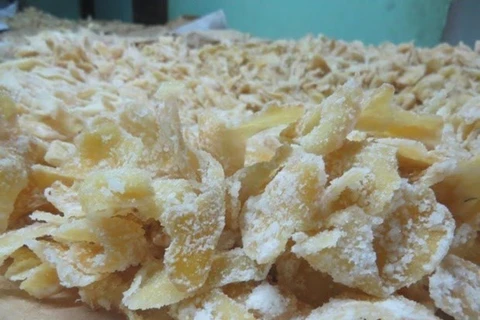
Illustrative photo (Photo: VNA)

Tet gifts, chung cake made for disadvantaged people

Beyond its charitable significance, the programme also aims to introduce domestic and international visitors to the unique cultural values of Vietnam’s traditional Tet, while raising public awareness, particularly among younger generations, of the responsibility to preserve and promote the cultural identities of Vietnam’s ethnic groups.

The Hoa Lai stele, a national treasure, is currently on display at the Khanh Hoa provincial Museum's Branch 2 in Phan Rang ward. (Photo: VNA)

Breathing new life into Cham cultural heritage in Khanh Hoa

With its ancient temple towers, lively festivals, craft villages, and rich cultural heritage, both tangible and intangible, Cham culture in the south central province of Khanh Hoa is not only a long-standing historical treasure but is also being actively promoted alongside tourism and community livelihoods, bringing fresh energy to Cham heritage in modern life.

Visitors take part in a night tour at the Temple of Literature (Van Mieu – Quoc Tu Giam) in Hanoi. (Photo: nhandan.vn)

Heritage seen as economic driver through tourist attractions

Technology has opened up new approaches to heritage preservation and promotion. At sites such as the Temple of Literature, Hanoi’s Old Quarter and the Thang Long Imperial Citadel, night tours featuring creative lighting, immersive storytelling and extended reality (XR) applications have expanded visitors’ experiences and reimagined how heritage can be explored.

The joy of U23 Vietnam players after the victory. (Photo: Asian Football Confederation)

U23 Vietnam fuel Asian dream with dramatic semi-final run

Vietnam U23's hard-fought victory over UAE in the 2026 AFC U23 Asian Cup quarterfinals sent the Southeast Asian representative into the semi-finals and drew praise from the official fanpages of FIFA and the Asian Football Confederation (AFC).

Le Y Linh, a music researcher living and working in France (Photo: VNA)

14th National Party Congress expected to continue affirming culture as pillar of Vietnam’s soft power

Talking to a Vietnam News Agency correspondent in Paris, Le Y Linh, a music researcher living and working in France, said culture should be placed on an equal footing with other sectors in the country’s development strategy. According to her, investment in culture should go beyond preservation and be closely linked with creativity, so that cultural values are not only safeguarded but also continue to evolve in contemporary life.