Young Vietnamese intellectuals selected for UN innovation programme

Two young Vietnamese, Vu Son Tung and Le Minh Anh, have surpassed over 100 candidates in the Asia-Pacific region to be selected for the United Nations programme “Youth Innovation for Human Mobility”.
Young Vietnamese intellectuals selected for UN innovation programme ảnh 1Poster of the programme.

Hanoi (VNA) - Two young Vietnamese, Vu Son Tung and Le Minh Anh, have surpassed over 100 candidates in the Asia-Pacific region to be selected for the United Nations programme “Youth Innovation for Human Mobility”.

The UNDP Human Mobility Team and Youth Co:Lab, an initiative co-led by the UNDP and Citi Foundation, are partnering with the International Organisation for Migration (IOM), the UN Human Settlements Programme (UN-Habitat), the Asia Pacific Refugee Rights Network (APRRN), and Migrant Forum Asia (MFA) for the first Youth Innovation for Human Mobility initiative in the Asia-Pacific region.

The initiative called for exciting business proposals or innovative ideas to improve the lives of migrants, displaced people and their host communities among the urban poor. It prioritised proposals and ideas that target to address a range of challenges experienced by the groups. These are generating jobs and incomes in ways that protect natural resources and avoid environmental damage; improving relations between migrants, displaced people, their host communities and local authorities; preventing or lessening the impact of disasters and climate change on the urban poor; and enhancing health and other essential services for the urban poor.

The UN Development Programme (UNDP) announcement of the selection of suitable candidates for its initiative came after four months of processing 150 submissions from the region.

Two Vietnamese, Vu Son Tung and Le Minh Anh, have been selected for the programme. Both of them are international students in the US and representatives of the Global Network of Young Vietnamese Intellectuals.

To be selected, applications ought to address at least one of the social or economic challenges outlined above; are specific to the urban poor, and respond to the particular challenges of migrants/displaced people in the target areas, particularly women or youths; and involve people from the target community in the proposal development. They are also requested to be innovative, and demonstrate the potential for the proposal’s viability and long-term sustainability.

The project by Son Tung and Minh Anh, named VieSIBLE, helps provide services and training programmes for immigrant and informal workers in Hanoi based on artificial intelligence programming.

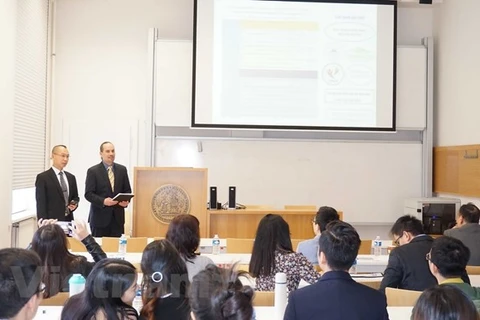
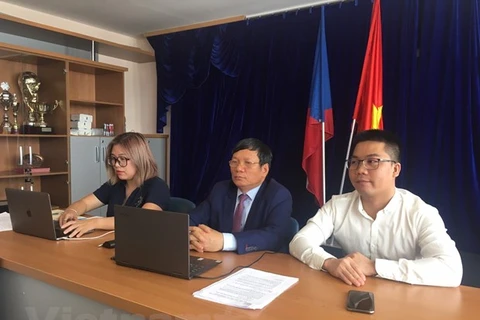
Young Vietnamese intellectuals selected for UN innovation programme ảnh 2Illustrative image (Photo: VNA)

VieSIBLE receives information from the groups on their living situation, challenges, and desire to improve their current life. Its algorithms will screen and provide the most suitable training or services for them, saving time and consulting costs to the maximum. Thereby, migrant workers will receive career orientations, navigation on related administrative processes, legal support, as well as psychological consultation.

Son Tung and Minh Anh said they both care about social issues, particularly development rights of vulnerable groups in the society. They have actively participated in the Global Network of Young Vietnamese Intellectuals’ activities and been trained on innovation by the network.

Making efforts to join the UNDP’s initiative, the two said they believed the highlight of their project is “technology”, as it offers a convenient, accessible, time and cost saving, and sustainable solution, particularly amid the COVID-19 pandemic.

They will receive up to a cash prize of 1,000 USD to springboard their innovation and join the Youth Co:Lab Springboard Programme – an incubation platform for young Sustainable Development Goals (SDG) entrepreneurs to turn innovative SDG solutions into sustainable businesses.

They will take part in the Youth Co:Lab Summit – a flagship event that brings together the brightest young entrepreneurs in the Asia-Pacific region and connect them to a support network to help them succeed. They will also be featured in a multimedia campaign for broad exposure, including videos, blogs and posters./.

According to the UNDP, 1 billion people, or about 1 in every 8 persons around the world, live in informal urban areas, where families across generations are often squeezed into tiny, makeshift dwellings without access to running water, adequate sanitation and other essential services. Many are unemployed or in precarious work situations that barely pay for their daily survival. Their communities typically experience weak governance and rule of law, and their voices are rarely considered in urban planning processes. The impact of disasters and climate change is increasingly worsening such challenges.

Most people in informal urban areas live in the sprawling megacities of Asia, with internal and cross-border migrants, displaced people, youth and women often over-represented, contributing to their exclusion. The marginalization of migrants and displaced people is frequently compounded by factors related to immigration status or municipal registrations, access to information and social support networks, or discrimination and xenophobia. 
VNA

See more

Assoc. Prof. Dr. Tran Le Hung, lecturer at the ESIEE Paris - an engineering school of University Gustave Eiffel. wins the promising award in the 5th national writing contest on safeguarding Party's ideological foundations in 2025 (Photo: VNA)

Science - technology paves way for “second wave of Doi moi”: expert

Assoc. Prof. Dr. Tran Le Hung, lecturer at the ESIEE Paris - an engineering school of University Gustave Eiffel, said future “Make in Vietnam” science and technology products will not only directly serve domestic demands, improve the people’s livelihoods, and boost labour productivity, but also have the potential to compete in international markets.

Hoang Nguyen Dinh, Vice Chairman of the People’s Committee of Ho Chi Minh City, speaks at the event (Photo: VNA)

Vietnam promotes On-chain financial infrastructure cooperation at Davos 2026

Jointly organised by the municipal People’s Committee, the Centre for the Fourth Industrial Revolution (C4IR) in the city (HCMC C4IR) and the Vietnam International Financial Centre in Ho Chi Minh City (VIFC-HCMC), the event was part of a series of activities showcasing the vision for building VIFC-HCMC, while expanding cooperation with global partners in finance, technology and innovation.

Trio of core drivers of new growth model highlighted at 14th National Party Congress

Trio of core drivers of new growth model highlighted at 14th National Party Congress

Member of the Party Central Committee and Minister of Science and Technology Nguyen Manh Hung emphasised that in moving from middle-income to high-income status, Vietnam must rely on science and technology, innovation, and digital transformation. These three drivers have been expanded and redefined by the Party under a new approach, creating broader development space and unlocking new resources for growth. With this trio, Vietnam has the potential to achieve double-digit growth.

A view of the site where the Ninh Thuan 1 Nuclear Power Plant is located in Phuoc Dinh commune, Khanh Hoa province (Photo: VNA)

Gov’t rolls out communication scheme for nuclear energy development

By 2027 around 60% of leaders, managers, civil servants and public employees in relevant ministries and localities will acquire basic knowledge of nuclear energy development and application. In parallel, the professional capacity of reporters, editors and information officers covering the sector will be strengthened.

According to Minister of Science and Technology Nguyen Manh Hung, Vietnam has established a new framework in which science, technology, innovation and digital transformation are judged by outcomes, with socio-economic effectiveness as the core benchmark. (Photo: baochinhphu.vn)

Science, technology and innovation elevate Vietnam’s standing in new era

The most significant achievement in recent years has not been a single technological success, but a fundamental shift in awareness, mindset and ways of doing. Vietnam has established a new framework in which science, technology, innovation and digital transformation are judged by outcomes, with socio-economic effectiveness as the core benchmark.

Dr. Heng LiHong, Permanent Vice Chairman and Secretary-General of the Vietnam-Cambodia Business Association. (Photo: VNA)

New growth model helps position Vietnam on global technology map: expert

Heng LiHong, who is also a member of the Standing Board of the Business Association of Overseas Vietnamese (BAOOV), expressed his confidence that this new growth model will help Vietnam move beyond a development path reliant on low-cost labour and resource extraction, enabling the country to gradually climb to higher levels in the global value chain.

Deputy Prime Minister Nguyen Chi Dung receives a delegation of Seoul Semiconductor Co., Ltd. led by its CEO Lee Chung-hoon in Hanoi on January 16. (Photo: Government Portal)

Vietnam seeks stronger sci-tech cooperation with international partners

Informing the UN official about some of Vietnam’s achievements in sci-tech development, innovation, and digital transformation, Deputy PM Nguyen Chi Dung highlighted that the country and the UN have recorded progress in their sci-tech relations, with cooperation in strategic areas matching global trends and bilateral cooperation demand.

The ASEAN Digital Awards 2025 ceremony is held in Hanoi on January 15 (Photo: VietnamPlus)

Vietnam wins three awards at ASEAN Digital Awards 2026

In the digital startup category, MedCAT’s Idus platform, developed by MedCAT, won the gold award. Designed for reading, classifying and structuring documents, the platform has been applied in banking, public administration and healthcare, supporting automated insurance claims processing, smart healthcare services and the development of personal electronic health records.

Illustration of part of the digital technology and mixed-use park project in Hanoi Tay Tuu and Phu Dien wards. (Photo: FPT)

Hanoi breaks ground on digital technology, mixed-use park

The digital technology and mixed-use park in Hanoi is envisioned as a key nucleus of the capital’s innovation ecosystem, aligned with its goal of becoming a major national hub for science, technology and the digital economy.