2018 has better beginning than 2017: Prime Minister
New Year 2018 had a better beginning than the same period in 2017, regarding some indicators, Prime Minister Nguyen Xuan Phuc has said at the Government meeting for January.
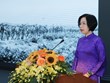
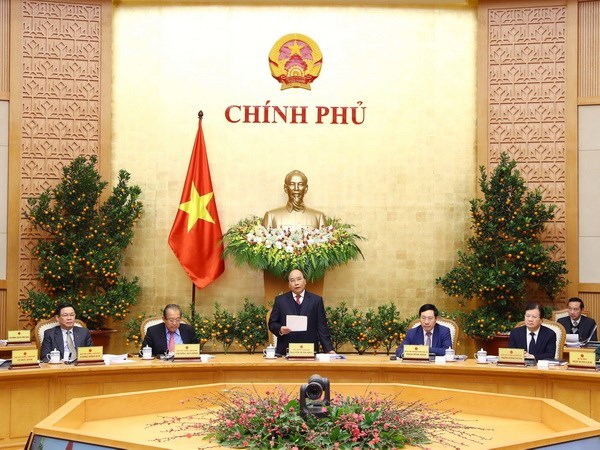 Prime Minister Nguyen Xuan Phuc speaks at the Government meeting for January on February 2 (Photo: VNA)
Hanoi (VNA) – New Year 2018 had a better beginning than the same period in 2017, regarding some indicators, Prime Minister Nguyen Xuan Phuc has said at the Government meeting for January.
In January, the Purchasing Managers’ Index (PMI) of Vietnam grew by 53.4 points, the biggest pace in ASEAN and even higher than that of the Republic of Korea and China. Driving forces of GDP growth also increased, including the index of industrial production increasing 20.9 percent, he noted at the meeting on February 2.
In the month, the number of foreign visitors to Vietnam soared by 42 percent to more than 1.4 million. About 10,800 businesses were set up, higher than the 9,000 new firms in the same period last year, while 4,500 companies resumed operations.
Foreign reserves approximated 57 billion USD. Meanwhile, relevant agencies also paid attention to cultural and social issues, particularly in disadvantaged and disaster-hit areas, the Government leader added.
At the meeting, he told ministries, sectors and localities not to be complacent about the achievements in January and continue the strong determination shown in the final months of 2017 right in the first quarter of this year, citing the indefatigable spirit of U23 Vietnam, which performed a miracle reaching the final at the Asian Football Confederation (AFC) U23 Championship in January 2018.
Regarding the severe cold in the northern region amid the Lunar New Year festival (Tet) nearing, he asked relevant agencies to pay attention to people’s health and agricultural activities.
They have to ensure goods supply, social and traffic safety, and fire prevention during Tet, the biggest traditional festival. Meanwhile, State agencies must be responsible for managing festivals after the holiday, which falls in mid-February.
PM Phuc noted a high growth rate, 0.51 percent, in the Consumer Price Index (CPI) in the reviewed month compared to the same period of 2017, requesting closer coordination in rising electricity and education and healthcare service prices to keep CPI expansion of less than 4 percent in 2018.
During the meeting, the Government is set to discuss several issues, including a report on the socio-economic situation in January, the implementation of the Government’s Resolution 01 on key tasks and solutions steering the realisation of the socio-economic development and State budget plans for 2018, the law and ordinance making programme, a draft resolution on setting up a committee for management of State capital at enterprises, and investment mechanisms and policies for the North-South Expressway. -VNA

You should also see
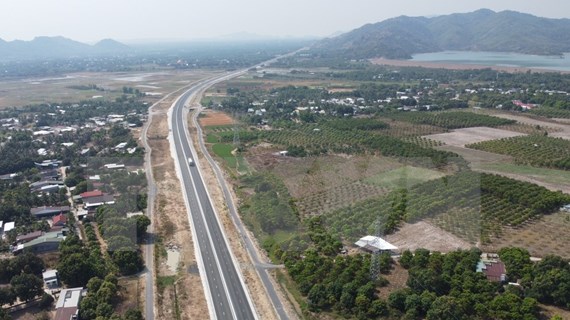
Cam Lam - Vinh Hao Expressway to help drive south-central region's economy
The 78.5km Cam Lam - Vinh Hao Expressway, one of the three sub-projects of the North - South Expressway project’s eastern wing, officially opened to traffic on April 26.
See more
 Business
Airports to offer 9,000 domestic flights during upcoming holidays
Vietnamese airlines are expected to operate 9,000 flights on domestic routes to meet the travel demand during the upcoming National Reunification Day (April 30) and May Day (May 1) holidays, according to the Airports Corporation of Vietnam (ACV).
 Business
Vietnam needs drastic reforms to create firm ground for economic growth: experts
Drastic institutional reforms are needed to create firm ground for economic growth in the context that persistent challenges, both external and internal, still cloud the growth prospect, experts have said.
 Business
Dak Lak firm pioneers in following EUDR in coffee production
The Dak Lak September 2 Import-Export Company Limited (Simexco) has pioneered in building coffee growing areas following the EU Deforestation Regulation (EUDR), it announced on April 25.
 Business
Dong Nai calls for Korean investment into green growth
The southern province Dong Nai introduced its investment projects and incentives to the Republic of Korea (RoK)’s firms at a workshop in Seoul on April 25.
 Business
Vietnam ranks fifth among aquatic product suppliers for Singapore
Vietnam jumped one place to become the fifth largest exporter of aquatic products to Singapore for the first time in the first quarter of this year, according to its Trade Office in the city state.
