ADB helps Vietnam improve climate resilience of infrastructure for ethnic minorities

The Asian Development Bank (ADB) has approved a 60 million USD financing package to improve the climate resilience of transport and water supply infrastructure in Vietnam’s south-central coastal provinces of Binh Dinh and Quang Nam, especially in remote upland districts with large ethnic minority communities.
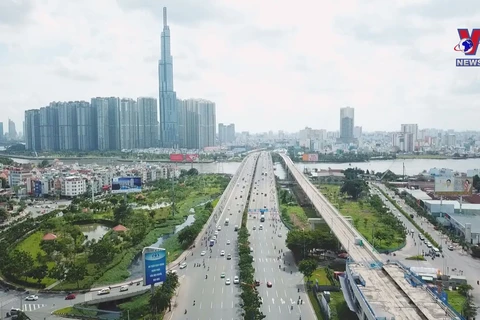
ADB helps Vietnam improve climate resilience of infrastructure for ethnic minorities ảnh 1Illustrative image (Source: VNA)
Hanoi (VNA) – The Asian Development Bank(ADB) has approved a 60 million USD financing package to improve the climateresilience of transport and water supply infrastructure in Vietnam’ssouth-central coastal provinces of Binh Dinh and Quang Nam, especially inremote upland districts with large ethnic minority communities.

The Climate Resilient Inclusive Infrastructure forEthnic Minorities Project I will upgrade 121.8 kilometers of roads usingclimate-resilient design standards, construct 115 kilometers of water supplypipelines, and help provide reliable weather and climate data in a timely,cost-effective manner, the bank said in a news release.

About 243,000 people, including 126,300 from ethnicminority groups, are expected to benefit from the project.  

“The project aims to improve the living conditions ofethnic minority communities in remote areas of Vietnam,” said ADB ProgrammesOfficer Hong Anh Nguyen. “It will better link remote rural production siteswith markets and processing facilities for crops such as acacia and boostbeneficiaries’ access to health, education and market services. The projectwill also expand access to safe water supply and irrigation.”

The financing package includes 58 million USD inregular ADB loans and a 2 million USD grant from ADB’s High-Level TechnologyFund. The grant will fund the supply and installation of data systems forclimate risk management. In addition, the project will include 21.73 million USDin financing from the Government of Vietnam.

Vietnam’s economy grew 7 percent on average from 2016to 2018, but it slowed to 2.9 percent in 2020 due to the COVID-19 pandemic.

Significant gaps exist between the economically booming coastal communities andthe interior upland areas with a high ethnic minority population. About 87pecent of the ethnic minority households in Binh Dinh and 55 percent in QuangNam are poor or near poor.

These areas are challenged by low-quality, fragmentedtransport and water resource infrastructure. Most of the ethnic minoritycommunities are often isolated during the rainy season, cut off by floodedroads situated in hilly or mountainous terrain. Less than 60 percent ofhouseholds within the project area have access to reliable and safe watersupply.

Vietnam faces a high risk of disasters and climatechange. The country experiences an estimated annual average loss of 2.37billion USD due to natural hazards, especially floods, with Binh Dinh and QuangNam among the most affected areas./.
VNA
See more

People and vehicles travel across the Lo river pontoon bridge on the morning of February 16. (Photo: VNA)

PM commends units for constructing pontoon bridge to serve Tet travel demand

Prime Minister Pham Minh Chinh on February 16 sent a letter commending the determination and strong sense of responsibility of agencies and units in urgently building a pontoon bridge across the Lo river in Phu Tho province to promptly serve people’s travel demand during the Lunar New Year (Tet) 2026.

Prime Minister Pham Minh Chinh visits and extends Lunar New Year greetings to a patient undergoing treatment at Bach Mai Hospital. (Photo: VNA)

PM extends best wishes to doctors, patients on Tet occasion

Prime Minister Pham Minh Chinh visited and extended Tet greetings to medical staff and patients at Bach Mai Hospital and Viet Duc University Hospital in Hanoi while inspecting healthcare services during the holiday at these two leading central hospitals on February 16, or the last day of the Year of the Snake.

The Van Mieu-Quoc Tu Giam heritage site in Hanoi remains a major attraction for large numbers of visitors during the early days of spring. (Photo: VNA)

Hanoi offers free parking, public transport during Lunar New Year

During Tet, Hanoi offers free parking at selected schools and locations surrounding central heritage sites. In addition, single-journey fares are waived on the Cat Linh–Ha Dong and Nhon–Hanoi Station metro lines, while subsidised public bus services across the city are operating free of charge during the holiday period.

President Luong Cuong, his spouse, delegates and artists at the special Spring Homeland Art Programme 2026. (Photo: VNA)

Five major shifts chart overseas Vietnamese affairs in 2026 and beyond

In a world marked by intensifying strategic competition, emerging conflicts and intertwined economic, security and social challenges, nearly 6.5 million Vietnamese living in over 130 countries and territories have continued to look to the homeland as a firm spiritual anchor. The homeland remains a source of confidence, connection and aspiration for Vietnamese abroad.

Vietnamese Ambassador to Cuba Le Quang Long (right) symbolically hands over 250 tonnes of rice to Cuban Deputy Minister of Agriculture Telce Abdel González (Photo: VNA)

Vietnam supports Cuba in ensuring food security

Cuban Deputy Minister of Agriculture Telce Abdel González affirmed that Cuba will create all favourable conditions for AgriVMA’s rice production project in Los Palacios district, Pinar del Río province, with a view to expanding the model to other localities across the country.

The Binh Phuoc provincial Intelligent Operations Center (IOC), operational since September 2020, has played an important role in supporting the development of digital government. (Photo: VNA)

Breakthroughs under Resolution 57 drive local development

Following the Politburo’s Resolution No. 57-NQ/TW on advancing science, technology, innovation and national digital transformation, many localities across Vietnam are translating strategic guidelines into concrete action, laying the foundation for a new development model based on knowledge, technology and modern governance.