Agritourism to become integrated economic sector: Minister

Minister of Agriculture and Rural Development Le Minh Hoan on March 15 said that agritourism should be turned into an integrated economic sector with agricultural products and typical characteristics of rural areas being used as resources to serve the tourism industry.
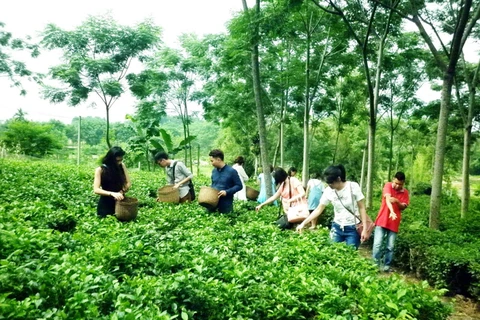
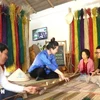
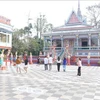
Agritourism to become integrated economic sector: Minister ảnh 1Tourists visit a farm in Lai Vung district, southern province of Dong Thap. (Photo: VNA)

Hanoi (VNA) – Minister of Agriculture and RuralDevelopment Le Minh Hoan on March 15 said that agritourism should be turnedinto an integrated economic sector with agricultural products and typicalcharacteristics of rural areas being used as resources to serve the tourismindustry.

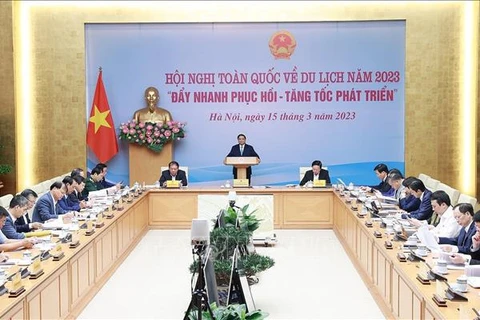
Speaking at a teleconference on tourism, Hoan saidthat the National Strategy for Sustainable Agriculture and Rural Developmentfor the 2021-2030 period, with a vision to 2050, already approved by the PrimeMinister, affirms that rural tourism development is identified as one of thefundamental solutions, a driving force for promoting sustainable new-style rural areas, contributing to bringing into play the advantages and distinctivevalues of agriculture, rural areas, and farmers.

At the same time, thedevelopment of new-style rural areas is the foundation to support and createfavourable conditions for the diversified and sustainable development ofagritourism. The National Target Programme on building new-style rural areasfor the period of 2021-2025 has also added components to the development ofagritourism.

Hoan said over the past time, agritourism has recorded strong growth, bringing new “fresh air” and vitality to rural areas.

Preliminary statistics showed that Vietnam currently has about500 agritourism and rural tourism models.

Thanks to the models, people in remote areas become moreconfident and active, many villages got prosperous and values of agricultural products as well as One Commune One Product (OCOP) products have increased thanks totourism businesses.

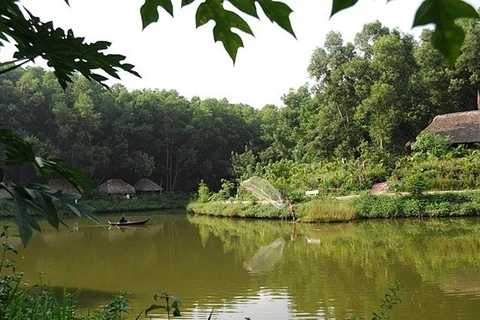
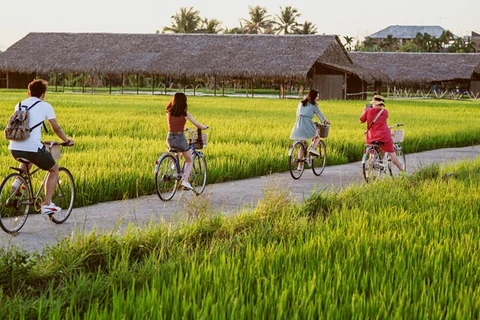
Rice fields, terraced fields, orchards, rivers, streams,ponds, lakes, and fishing villages are all connected to unique destinations onthe visitors’ journey of experience. Knowledge, indigenous culture, folkcuisine, and traditional rituals are awakened thanks to tourism.

Agritourism does not only brings higher incomes to people, andeconomic benefits to localities, but also creates other intangible valuesthat help popularise images of Vietnam's agriculture, and promote agriculturalproducts right at the farms.

Agritourism also introduces and promotes images of Vietnam’s ruralareas with diverse cultural identities and hospitable rural people. Italso helps increase community connectivity, calling for jointly building green,clean, and beautiful countrysides and preserving its values.

However, Hoan said agritourism still faces difficulties asmany localities have not yet seen the potential of this type of tourism andpaid insufficient attention.

Many models were developed spontaneously, without makingdifferences, he said, adding that supporting mechanisms and policies have not yet become thedriving force to develop a tourism industry that brings both economic andsocial values.

Hoan saidthat it’s time to change the attitude towards the importance and values ofagritourism so that it can become a part of the tourism industry.

He suggested the Ministry of Culture, Sports and Tourismconsider adding agritourism to the National Tourism Programme to promote andenrich tourism resources.

Agritourism must be developed in a sustainable, inclusive,and multi-valued way. It effectively makes use of and promotes traditionalvalues, production and farming practices, agricultural activities, and thetypical ecological environment, associated with digital transformation. Thecommunity should be placed at the centre when developing tourism products, according to the minister.

It is necessary to strengthen the connection in agritourism,and form high-quality, diversified, and attractive tours and routes, he added./.
VNA

See more

Con Co “steel island”: a green gem in the open sea. (Photo: VNA)

Con Co “steel island”: a green gem in the open sea

Unlike well-established destinations, this small island quietly preserves its layered heritage: tens-of-thousands-year-old basalt formations, pristine tropical forests and enduring wartime memories. Together, they create a distinctive “green gem” in the open sea, subtle yet captivating enough to hold any visitor.

The Hue–Da Nang “Central Heritage Connection” train takes passengers along one of Vietnam’s most spectacular coastal railway routes. (Photo: nhandan.vn)

Heritage rail journey brings new identity to central Vietnam tourism

The heritage train offers passengers not only a means of transport, but also a sense of connection linking destinations across central Vietnam, tourism with transport, and nostalgic memories with contemporary experiences. While older travellers are reminded of journeys from decades ago, younger passengers and international visitors are discovering a greener, culture-rich way to explore the region.

Many Vietnamese travellers love to plan the trip by themselves even when it requires a lot of time. (Photo courtesy of Booking.com)

Vietnamese travellers enjoy planning for trips

The Booking.com’s Travel Trends 2026 data revealed that a growing number of Vietnamese travellers, about 74% of respondents, are channelling “Main Character Planning Energy”, where planning and booking is just as enjoyable as the trip itself.

Hai Tac Island in An Giang province is increasingly attractive to visitors. (Photo: VNA)

Slow travel increases connections, reshapes tourism trends

Rather than rushing to “check in” at as many attractions as possible, slow travel allows visitors to immerse themselves in local life. Travellers may spend time wandering through a highland market, learning to cook a traditional dish, cycling around a coastal fishing village, or simply enjoying the tranquil rhythm of life in the countryside.

Sunlight streams into the Dinosaur Eye while visitors join the Son Doong adventure tour (Photo: VNA published)

Quang Tri province boosts tourism promotion through international television, films

A special documentary on Son Doong Cave, the world’s largest cave, was aired on March 29 in the renowned “60 Minutes” programme of CBS News. The report retraced the discovery of Son Doong Cave and years of expeditions conducted by the British Cave Research Association, offering global audiences a comprehensive look at the cave through scientific, historical and human perspectives.

The Dien Bien Phu campaign headquarters has become a popular tourist attraction in Dien Bien province. (Photo: VNA)

Dien Bien Phu tourism cable car project receives in-principle approval

The project aims to effectively tap the area’s natural landscapes, geographical advantages and distinctive historical value, while creating a high-quality tourism product with strong competitiveness. It is also intended to preserve, honour and promote the value of the Dien Bien Phu Victory special national historical relic site.

Da Lat station is the hub of the roughly 84-km Phan Rang–Da Lat railway (Photo: VNA)

Da Lat city's century-old railway station doubles as tourist draw

It now functions as both a transport hub and a sought-after photo spot. In the early morning, with mist still threaded through the pines, the station radiates an old-world calm. Visitors arrive at dawn to breathe the mountain air and capture iconic images of the highland city.

Ha Long Bay in Quang Ninh province. (Photo: VNA)

Quang Ninh - magnet for affluent Indian travellers

Alongside wedding tourism, Quang Ninh is also seeing robust growth in arrivals of Indian MICE travellers. Delegations of hundreds, and sometimes thousands, of visitors have been coming to the province for conferences, seminars and incentive travel programmes combined with leisure stays.