Ancient road discovered underground at My Son sanctuary

A group of archaeological experts from India and their Vietnamese partners unexpectedly hit an ancient road while excavating and restoring temples K and H at My Son Sanctuary in Quang Nam province.
Ancient road discovered underground at My Son sanctuary ảnh 1At the excavation site (Photo: VNA)

Quang Nam (VNA) – A group of archaeological experts from India andtheir Vietnamese partners unexpectedly hit an ancient road while excavating andrestoring temples K and H at the My Son Sanctuary in the central province ofQuang Nam.

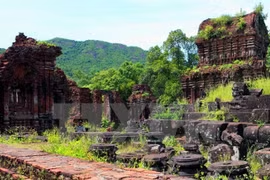
The road is 8 metres in width and located between two parallel walls built fromterra-cotta bricks. It started at behind temple K but how long it is and whenit was built remain a mystery. Experts believed that the road may be reserved forroyal members and religious dignities when attending religious ceremonies atthe sanctuary.

In addition to preserving temple K, Vietnamese and Indian experts decided torestore 50 metres of the unveiled road and the walls as they hold preciousarchaeological values. The remaining of the road is still hidden underground.

Theexcavation group also found several valuable artefacts, including two stonestatues of lion-man, at the site.

Head of the My Son World Heritage site Management Board Phan Ho hoped that thescientists will soon reach conclusion on the road’s scale, purpose andsignificance, saying that the move will increase cultural values and unravelthe mystery of the ancient Cham temples.

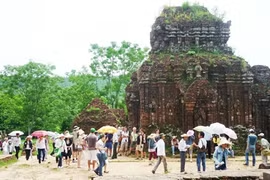
Oncethe religious and political capital of the Champa Kingdom, My Son Sanctuary islocated in a hilly landscape in Duy Phu commune, Duy Xuyen district, about 70km southwest of Da Nang city and 40 km from Hoi An city.

It comprises eight groups of 71 monument built throughout the 7th -13thcenturies.

The first construction of My Son dated back to the 4th century under the reignof Bhadravarman for the worship of God Shiva-Bhadresvara. But later on, thetemple was destroyed.

At the beginning of the 7th century, King Sambhuvarman had it rebuilt andrebaptised Sambhu-Bhadresvara. Each new monarch came to My Son after hisaccession to the throne for the ceremony of purification and to presentofferings and erect new monuments, which explains why My Son is the only placewhere Cham art flourished without interruption from the 7th to 13th century.

The temples in My Son were built into groups that basically followed the samemodel. Each group was comprised of a main sanctuary (Kalan), surrounded bytowers and auxiliary monuments. The Kalan, which is a symbol of Meru Mountain(centre of the universe, where the gods live), is dedicated to Shiva. The smalltemples are devoted to the spirits of the eight compass points. In the towers,topped with tiled, covered roofs, were stocked to the offerings and sacredobjects of the pilgrims. Cham temples do not have windows, so they are verydark inside. Windows are found only in the towers.

Extensive research and restoration work to preserve the Cham architecturalheritage have been carrying out since it became a world heritage site since1999.-VNA

VNA
See more

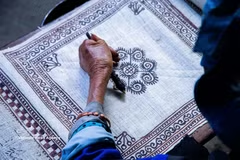
With their skillful hands and innovative thinking, Mong women have transformed traditional flax fiber into a "cultural ambassador". (Photo: VNA)

Mong women turn traditional craft into destination appeal

Alongside local cuisine, traditional attire, and folk games, linen weaving has become a crucial asset in enhancing Lung Tam commune's tourism appeal, creating new livelihood opportunities, and inspiring locals to preserve their heritage.

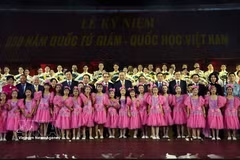
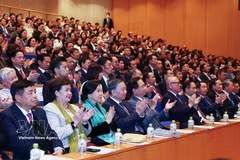
Leaders pose with artists and performers at the ceremony marking 950 years of Quoc Tu Giam (Imperial Academy) on November 13 (Photo: VNA)

Top leader attends ceremony marking Quoc Tu Giam’s 950th anniversary

General Secretary of the CPV Central Committee and President To Lam called for preserving the Van Mieu – Quoc Tu Giam heritage and putting its spirit into daily school life. He asked Hanoi to work closely with culture, education and research agencies to complete open digitised materials on the relic soon.

The opening ceremony for the 2026 Hanoi Creative Design Festival on November 13 (Photo: VNA)

Hanoi Creative Design Festival 2026 opens, targets creative economy

Running from November 13-28, the festival features 150 activities across five cultural, heritage and creative clusters and draws nearly 1,000 domestic and foreign artisans, artists, designers and experts, including nearly 100 foreign artists and overseas Vietnamese from 21 countries.

950 years on, Quoc Tu Giam continues to inspire Vietnam’s pursuit of knowledge ​

950 years on, Quoc Tu Giam continues to inspire Vietnam’s pursuit of knowledge ​

The 950th founding anniversary of Quoc Tu Giam (Imperial Academy), Vietnam’s first national university, is an occasion to reaffirm the enduring values of the country's tradition of learning, respect for teachers, and promotion of talent, which have shaped the nation’s intellectual foundations and continue to support its development in a new era.

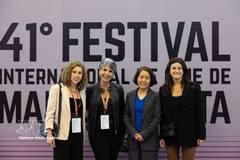
Chair of the Canada-Vietnam Cultural & Educational Council (CVCEC) Phan Thi Quynh Trang (first from left) (Photo: VNA)

Vietnam’s learning tradition gets Canadian reboot

The Canada-Vietnam Cultural & Educational Council (CVCEC) is building culture lessons on Vietnamese landmarks, with the Temple of Literature as a core module. Kids will hear stories about teacher Chu Van An, and practice greetings, gratitude to teachers and respect for elders.

Panamanian President José Raúl Mulino and his spouse visit the Temple of Literature (Photo: VNA)

Quoc Tu Giam at 950: A meeting point for Vietnam’s cultural diplomacy

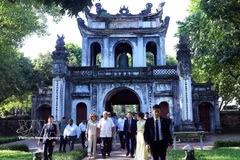
Van Mieu - Quoc Tu Giam is a symbol of Vietnam's culture and education and a regular pick for high-ranking leaders and politicians. That lifts it from national heritage to a valuable platform for promoting cultural diplomacy and showcasing Vietnam's cultural soft power, helping to convey the country's image and cultural identity to the international community.

Construction on APEC Phu Quoc Multi-purpose Performance Hall (Photo published by VNA)

APEC 2027: Inside the making of Asia’s landmark theatre

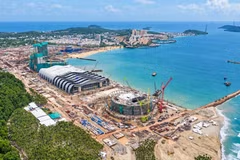
One year in, Sun Group’s APEC Phu Quoc Multi-purpose Performance Hall is taking shape as one of Asia’s largest theatres. It boasts 54,680 sq.m of floor area, 17,250 sq.m of roof, six above-ground floors plus a basement, and 4,030 seats, larger than Hollywood’s Dolby Theatre, the Oscars venue.

Visitors will enjoy free admission to the Vietnam Museum of Ethnology on Vietnam Culture Day (November 24). (Photo: nhandan.vn)

Free admission to museums, historical sites, national parks on Vietnam Culture Day

Organisations and individuals will be entitled to free admission every year on November 24 to eight museums: the Museum of Oceanography, the Vietnam Museum of Ethnology, the Museum of the Cultures of Vietnam’s Ethnic Groups, the Vietnam National Museum of History, the Vietnam National Fine Arts Museum, the Yersin Museum, the Vietnamese Women's Museum and the Vietnam Military History Museum, as well as the Independence Palace historical site.

Vietnamese Consul General in Perth Pham Hai Anh (Photo published by VNA)

Vietnamese community in Australia seen as bridge for bilateral ties

Vietnamese identity and life in Australia are complementary rather than separate. The more successful overseas Vietnamese became in Australia, the greater their ability to contribute to their homeland and bilateral ties, said Vietnamese Consul General in Perth Pham Hai Anh.

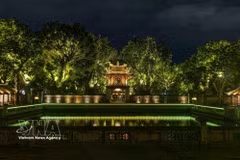
Van Lake within the Temple of Literature (Photo: VNA)

UNESCO Representative: Quoc Tu Giam offers inspiration for new approaches to education

UNESCO Representative to Vietnam Jonathan Wallace Baker said one of the things that stands out in Vietnam is the deep and enduring respect for education, learning and scholarship. Van Mieu –Quoc Tu Giam is a remarkable expression of that tradition, reminding that knowledge, talent and ethical responsibility have long been closely connected in Vietnamese society.

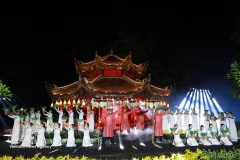
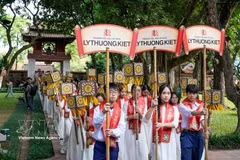
A highlight of the programme is the participation of 950 students in performances staged within the Temple of Literature complex (Photo: VNA)

950 years of Quoc Tu Giam: Continuing Vietnam’s enduring tradition of learning

Through evocative images of students of the Quoc Tu Giam, alongside performances by students and artists, the programme vividly recreated the journey of Vietnam’s scholarly tradition, from the era of the imperial examinations to the spirit of learning in contemporary society. It also helped bring the cultural values of Thang Long-Hanoi to life today.

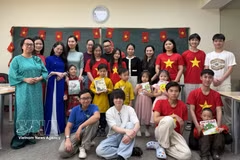
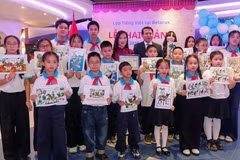
Students pose for a photo at the ceremony (Photo published by VNA)

Mother tongue connects Vietnamese community in Belarus

Vietnamese language education in Belarus not only helps younger generations take pride in their heritage and better understand and appreciate traditional culture, but also serves as a bridge for promoting Vietnamese culture among international friends.

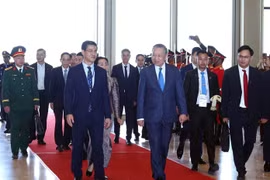
General Secretary of the Communist Party of Vietnam Central Committee and President To Lam (fourth from left, first row) and his spouse, Ngo Phuong Ly, attend the Vietnam-Japan Friendship Concert in Kanagawa Prefecture on November 10 evening. (Photo: VNA)

Vietnam-Japan Friendship Concert fosters cultural cooperation

In his welcoming remarks, Vietnamese Ambassador to Japan Pham Quang Hieu said the concert brought together talented musicians from the Vietnam National Symphony Orchestra and artists who are current or former members of renowned Japanese orchestras, including the NHK Symphony Orchestra, Tokyo Metropolitan Symphony Orchestra, New Japan Philharmonic and Kanagawa Philharmonic.