APEC-Post 2020 Vision should ensure Bogor Goals: Malaysian official

Deputy Secretary General of the Malaysian Ministry of International Trade and Industry Norazman Ayob has stressed that the APEC Post-2020 Vision should ensure further success of Bogor Goals towards sustainable development and shared prosperity.
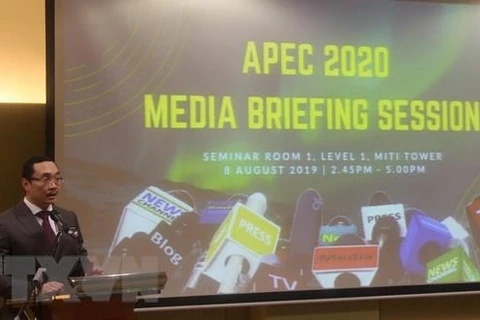
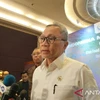
APEC-Post 2020 Vision should ensure Bogor Goals: Malaysian official ảnh 1Deputy Secretary General of the Malaysian Ministry of International Trade and Industry Norazman Ayob speaks at the event (Photo: Straits Times)


Kuala Lumpur (VNA)
– Deputy Secretary Generalof the Malaysian Ministry of International Trade and Industry Norazman Ayob hasstressed that the APEC Post-2020 Vision should ensure further success of BogorGoals towards sustainable development and shared prosperity. 


Addressing theMulti-Stakeholder Dialogue on APEC Post-2020 Vision in Kuala Lumpur on February19, Norazman, who is also head of Malaysia’s APEC Senior Officials’Meeting (SOM) delegation, said the Bogor Goalswhich set the aspiration for a free and open trade and investment in the Asia-Pacificregion by 2020 for APEC economies, has managed to bring the region closerthrough reduction of trade barriers and addressing gaps in regulations.

He saidaverage tariffs dropped from 17 percent in 1989 to 5.3 percent in 2018, throughinitiatives and activities pursued by member economies.

During this agewhen unpredictability is the new norm, economies have to be prepared toconstantly embrace change in order to survive current global uncertainties, hesaid, adding that the globalisation process is being redefined by the ambiguitybrought by rising economic nationalism, policy uncertainty, and rapid adoptionof digital technologies.

According tohim, the theme for APEC 2020 is ‘Optimising Human Potential towards a Future ofShared Prosperity’, with Shared Prosperity identified as the central element inthe agenda setting this year.

Economicdevelopment is not solely about creating equal opportunities and prosperitycreated through trade and investment, but it has to have impact on thewell-being of people, he said./.

VNA

See more

KKP cuts GDP forecast, warns Thailand faces recession risk. (Photo: The Nation)

Thailand’s economy may face recession risk

In its latest report, KKP Research noted that Thailand’s vulnerability goes beyond its reliance on imported crude oil and liquefied natural gas (LNG). Disruptions to shipping routes in the Middle East could also worsen shortages of fertilisers, affecting agricultural output, as well as petrochemical feedstocks, which would impact the plastics and textile industries.

Thai Prime Minister Anutin Charnvirakul speaks before Thai Parliament in Bangkok. (Photo: Xinhua/VNA)

Thailand plans tighter, targeted fiscal 2027 budget

Thailand's fiscal 2027 budget is projected at around 3.78 trillion THB (nearly 118 billion USD), a 2% increase from the previous year, with a focus on targeted spending and cutting unnecessary expenses, according to Prime Minister Anutin Charnvirakul.

Fitch downgrades Philippines’ outlook to ‘negative’. (Illustrative photo: Reuters)

Fitch downgrades Philippines’ outlook to ‘negative’

The Outlook revision reflects rising risks to the Philippines' strong medium-term growth prospects from recent disruptions to public investment, exacerbated in the near-term by elevated exposure to the ongoing global energy shock.

The Singapore Maritime Technology & Research Roadmap is aimed at advancing the sector’s efficiency and sustainability. (Photo: businesstimes.com.sg)

Singapore unveils new roadmap to boost innovation in maritime sector

The Singapore Maritime Technology & Research Roadmap is aimed at advancing the sector’s efficiency and sustainability. It highlights priorities – including digital technologies, decarbonisation and operational integration – to boost resilience, productivity and innovation in Singapore’s maritime ecosystem. It also addresses structural issues such as manpower, land and sea space limitations.

Malaysia considers establishing strategic petroleum reserve

Malaysia considers establishing strategic petroleum reserve

Malaysia, which was previously a net exporter, has now become a net importer due to declining domestic production and rising consumption, with demand estimated at around 800,000 barrels per day compared to production of about 400,000 barrels per day.

Indonesia to halt diesel imports from July

Indonesia to halt diesel imports from July

The move is part of the Indonesian Government’s efforts to strengthen national energy independence by utilising palm oil as an alternative fuel, said Agriculture Minister Andi Amran Sulaiman.

Malaysia’s growing microplastics crisis is largely self-inflicted, driven by domestic waste, weak recycling practices and everyday plastic use, said experts. (Photo: New Straits Times)

Malaysia seeks solutions to microplastic crisis

Microplastics originating from domestic waste and wastewater are increasingly entering the food chain, posing serious threats to seafood safety and the livelihoods of coastal communities.