ASEAN countries continue loosening COVID-19 restrictions

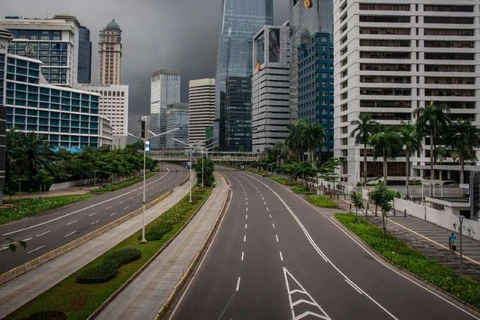
Thailand on May 29 decided to shorten the night curfew by an hour, starting June 1, when the country enters the third phase of COVID-19 lockdown easing.
ASEAN countries continue loosening COVID-19 restrictions ảnh 1Thai people wear face masks to prevent COVID-19 (Photo: AFP/VNA)

Hanoi (VNA) – Thailand on May 29 decided to shorten the night curfew byan hour, starting June 1, when the country enters the third phase of COVID-19lockdown easing.

Secretary-General of the National SecurityCouncil General Somsak Rungsita said that the new curfew time will be from 11pmto 3am, instead of from 11pm to 4am as applied in the second phase.

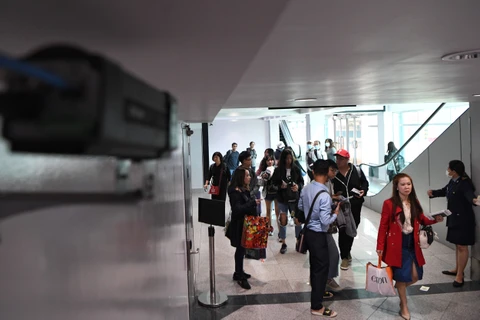
Thailand will also ease inter-provincial travelrestrictions, but has not yet decided to reopen beaches, except cultural, archaeologicaland heritage sites, he said, adding that foreign tourists are not allowed toenter the country.

On the day, the Thai Foreign Ministry announcedthat under the third phase of the lockdown relaxation, foreigners with workpermits or permission from the Labour Ministry or other government agencieswill be allowed to enter the country after registration. They, however, musthave health insurance and a health certificate and will also be subject to 14-quarantine on entry to Thailand, either in a state facility or in a privatefacility at their own cost.

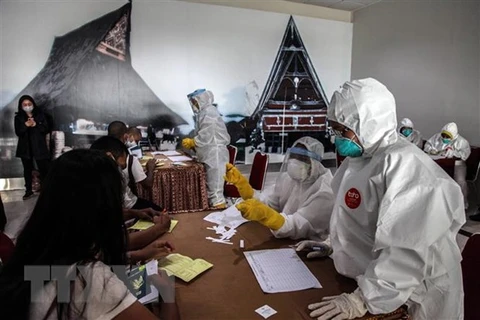
On May 29, Thailand reported 11 new infections,who all had returned from Kuwait, raising the total to 3,076, including 57deaths.

The country is expecting a complete removal of lockdown in July.

Meanwhile, the Cambodian Government announcedthat any traveller entering Cambodia and found violating the mandatory 14-dayquarantine will be punished in accordance with the law.

The announcement comes following last week’slifting of entry bans for travellers coming from Germany, Italy, France, Spain,Iran and the United States with the condition of presenting a health certificateissued by the host country’s health countries, indicating that the traveller iscleared for COVID-19.

Cambodian Prime Minister Hun Sen once again calledfor high vigilance to prevent a second wave of COVID-19 infections, although thecountry has so far confirmed 124 cases, of whom 122 have given the all-clear.

In other developments, on May 29, Laoscontinued to loosen several social restrictions after 47 straight days goingthrough without new cases.

From June 2, students of the last grades areallowed to return to school and short-term training courses to resume. And allschools are allowed to reopen on June 15. Cinemas, night markets andrestaurants can also serve locals again.

However, Laos will continue to restrict entry-exit activities until the end of June.

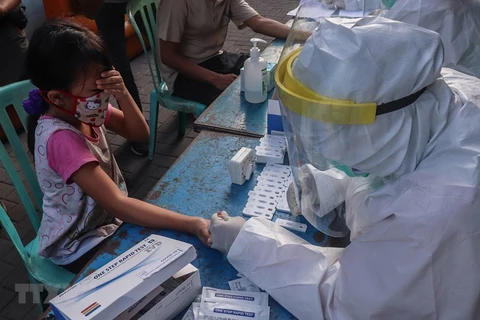
Meanwhile, on May 29, Indonesia reported 678new infections, bringing the tall to 25,216, including 1,520 fatalities.

As of May 30, Malaysia confirmed 7,731 COVID-19infections, with 103 more cases reported on May 29./.
         
VNA

See more

The Ministry of Education building in Singapore. (Photo: channelnewsasia.com)

Singapore raises salaries to retain teachers

About 36,000 teachers and allied educators in Singapore will receive salary increases of between 2% and 9% from October 1, as part of efforts to keep pay competitive and attract and retain quality educators, the Ministry of Education Singapore (MOE) has announced.

Thailand’s capital rolls out “Phone off, learning on” programme. (Photo: nationthailand.com)

Thailand’s capital rolls out “Phone off, learning on” programme

Bangkok Governor Chadchart Sittipunt said this initiative is a proactive measure to regulate and monitor the use of digital devices in schools, thereby enhancing an effective learning environment and preventing negative impacts on health and behaviour caused by excessive screen time.

Workers unload the fertilisers at a distribution centre in Medan on December 5, 2024. (Photo: Antara)

Opportunities for Indonesia’s fertiliser export

Deputy Agriculture Minister Sudaryono said several countries have approached Indonesia seeking large volumes of urea, showing how the geopolitical crisis could create unexpected export opportunities for Southeast Asia's largest economy.

Indonesian Energy Minister Bahlil Lahadalia and Japanese Trade Minister Ryosei Akazawa sign a nuclear power deal on the margins of the Indo-Pacific Energy Security Ministerial and Business Forum in Tokyo on March 15, 2026. (Photo courtesy of Indonesia's Energy Ministry)

Indonesia shakes hands with Japan in developing nuclear power

Japan’s involvement in Indonesia’s nuclear power programme is currently concentrated mainly in a project in West Kalimantan province, where Japan’s JGC Corporation is supporting US-based NuScale Power in developing a small modular reactor complex.

Visitors to a pagoda in Bangkok, Thailand (Photo: Xinhua/VNA)

Thailand tourism plans response to Middle East conflict

The Tourism Authority of Thailand (TAT) is promoting Thailand as a safe destination and plans to suggest the establishment of a strategic operations unit to monitor flight capacity, load factors, oil prices and travel costs.

A large number of ethnic minority voters in Gao commune, Gia Lai province, head to polling stations early in the morning. (Photo: VNA)

International media spotlight Vietnam’s National Assembly election

The election of deputies to the 16th National Assembly and People’s Councils at all levels for the 2026–2031 tenure is an important political event demonstrating the people’s right to mastery in choosing outstanding representatives who will convey their will and aspirations to the bodies of State power.

Sophon Saram of the Bhumjaithai Party is elected Speaker of Thailand's House of Representatives on March 15, 2026. (Photo: nationthailand.com)

Thailand elects new parliamentary speaker

Sophon Saram of the Bhumjaithai Party received 289 votes to become Speaker of the House of Representatives, compared to 123 votes for Parit Wacharasindhu of the People’s Party.

China Central Television (CCTV) reports on Vietnam’s election.( Photo: VNA)

International media spotlight Vietnam’s Election Day

Russia’s Sputnik underscored the election’s significance in consolidating the new-term administration apparatus, advancing institutional reforms and enhancing technological application in electoral activities, thereby contributing to political system reinforcement and national development.

Cambodian Information Minister Neth Pheaktra speaks at the event. (Photo: VNA)

Cambodia intensifies campaign against fake news, misinformation

The initiative aims to enhance information quality in the digital era through three main strategies. These include combating the spread of fake news within Cambodia and across the Greater Mekong Subregion, promoting verified news produced by professional media organisations and digital content creators, and strengthening media literacy education for the public in Cambodia and neighbouring Mekong countries.

A child receives a measles vaccination in Sumenep, East Java, Indonesia (Photo: Antara)

Indonesia faces surge in measles cases

In response, doctors are advising parents to limit their children's exposure to large gatherings, especially during the upcoming Eid al-Fitr holiday, when families often meet in large numbers, increasing the risk of disease transmission.

Authorities in Banteay Meanchey province raids a building used for online fraud in Poipet city, arresting more than 270 people and seizing a large amount of evidence in July (Photo: AKP/VNA)

Cambodia proposes life imprisonment for leaders of online scam networks

A 2024 report by the United States Institute of Peace estimated that illicit revenues from online scams in Cambodia could exceed 12.5 billion USD annually, equivalent to roughly half of the country’s GDP. Prime Minister Hun Manet has previously said the scam centres are seriously damaging Cambodia’s economy and international image, pledging to “clean up” the problem.