ASEAN seeks solutions to ease COVID-19 impacts on tourism

ASEAN member nations have agreed to commit to a prevention plan, with each country sharing information through the Tourism Crisis Communications Team, as well as seeking cooperation from international organizations to together to revive travel confidence following the pandemic.
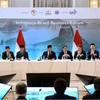
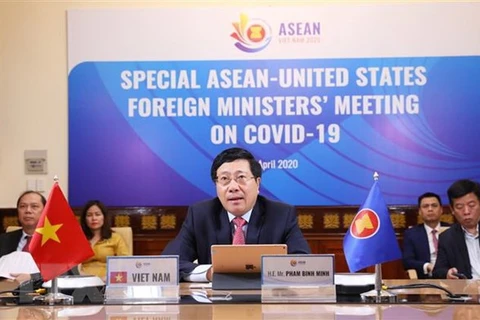
ASEAN seeks solutions to ease COVID-19 impacts on tourism ảnh 1ASEAN seeks solutions to ease COVID-19 impacts on tourism  (Photo: https://asean.org/)

Bangkok (VNA) –  ASEAN member nations have agreed to commit toa prevention plan, with each country sharing information through the Tourism CrisisCommunications Team, as well as seeking cooperation from international organizationsto together to revive travel confidence following the pandemic.

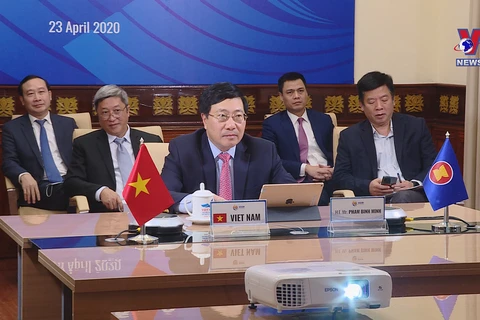
According to Thai Ministerof Tourism and Sports Phiphat Ratchakitprakarn, at a Special Meeting of ASEANTourism Ministers on COVID-19 via video conference April 29, tourism ministersof the member nations approved in principle the Joint Statement of ASEAN TourismMinisters on Strengthening Cooperation to Revitalise Tourism.

Local media quoted Phiphat as saying that participants were skipping any discussion of visa policy allowing ASEANcitizens to travel freely between borders.

“The visa facilitation policy will be reconsidered once ASEANcan contain the virus spread and travel restrictions in each country are lifted,allowing tourism activities to resume”, he said.

If avaccine is not developed this year, all ASEAN members agreed to implementshared standards that highlight social distancing practices as well as safetyand hygiene in tourism services.

Each country in this region shares a hopeful viewthat domestic tourism will restart in July, said Phiphat. The driver ofinternational markets will be Southeast Asian tourists, before expanding toAsia overall, he said.

He added that if the situation in Asia, including China, Japan and the Republic of Korea,can improve by the last quarter, intra-Asia tourism will help mitigate theimpacts of the pandemic in the region.

According to the official, countries where economic growth reliesheavily on tourism such as Thailand, Malaysia and Singapore are suffering the worst losses, followed by Indonesia and thePhilippines. Meanwhile, Laos, Vietnam and Cambodia are facing lessimpacts on their tourism industries./. 
VNA
See more

A meeting of the Lao National Assembly (File photo: VNA)

Lao parliament discusses new development, budget plans

During the NA's 10th meeting, Lao legislators are set to consider the implementation results of the 9th five-year socio-economic development plan (2021–2025), the draft 10th five-year plan (2026–2030), along with budgetary and monetary plans for 2025 and 2026.

A convenience store damaged in the Thailand – Cambodia border conflict in Sisaket province of Thailand (File photo: Xinhua/VNA)

Thailand halts peace deal with Cambodia

The Thai Government views the landmine blast that injured Thai soldiers as a setback to efforts aimed at reducing tensions, and the scheduled release of Cambodian prisoners of war on November 12 will also be suspended.

The Philippines evacuates 100,000 people as Fung-wong intensifies into super typhoon. (Photo: economictimes)

Typhoon Fung-Wong causes severe economic damage in Philippines

Preliminary reports from ReliefWeb estimate combined infrastructure damage in the Philippines from Kalmaegi and Fung-Wong at 292,000 USD, with agricultural losses of 184,000 USD, affecting over 600 farmers and fishermen and 460 hectares of farmland.

Singaporean Prime Minister Lawrence Wong (R) welcomes Thai Prime Minister Anutin Charnvirakul (Photo: thestar.com)

Thailand, Singapore enhance bilateral collaboration

The Thai and Singaporean PMs witnessed the signing of several memoranda of understanding (MoUs), notably an MoU on rice trade cooperation between the two governments, under which Thailand agreed to sell Singapore up to 100,000 tonnes of rice annually.

Indonesia to add 30 urban trains in Jakarta

Indonesia to add 30 urban trains in Jakarta

The addition of new trains is expected to help Indonesia ease traffic congestion, improve the quality of public transport services, and promote sustainable socio-economic development in Indonesia’s most densely populated urban area.

Illustrative image (Photo: Antara)

Indonesia to end diesel imports by 2026

Indonesian Minister of Energy and Mineral Resources Bahlil Lahadalia has reported to President Prabowo Subianto that Indonesia is on track to stop importing diesel fuel by early 2026, marking a major milestone in national energy independence.

Director General of the Metal, Machinery, Transportation Equipment, and Electronics (ILMATE) Industry at the Ministry of Industry Setia Diarta during the Opening of GIIAS Makassar on November 5. (Photo: ANTARA)

Indonesia to downstream EV batteries in two years

Indonesia is projecting the downstreaming of electric vehicle (EV) batteries for motorcycles and cars within the next two years, according to Director General of the Metal, Machinery, Transportation Equipment, and Electronics (ILMATE) Industry at the Ministry of Industry Setia Diarta.

At the launch of the programme. (Photo: nationthailand.com)

Thailand launches programme to reduce healthcare costs for citizens

Under the new Memorandum of Understanding (MoU), private hospitals in Thailand must provide complete and accurate prescriptions listing drug names and usage details. This transparency allows patients to choose whether to buy their medicines directly from the hospital or from registered pharmacies outside.

Illustrative photo (Photo: bangkokpost.com)

Thailand delivers tepid rice export forecasts for 2026

Thailand maintains its export target for next year at 7.5 million tonnes, including 3.5 million tonnes of white rice, 1.7 million tonnes of hom mali rice, 1.4 million tonnes of parboiled rice, 600,000 tonnes of Thai fragrant rice and 300,000 tonnes of sticky rice.

ASEAN Secretary-General Kao Kim Hourn (Photo: Bernama)

ASEAN Secretary-General: Higher education will shape the region’s future

The ASEAN chief revealed that the ASEAN Socio-Cultural Community (ASCC) Strategic Plan designates education as a driver for equity and sustainable development. Its agenda calls for enhancing access to quality education, promoting lifelong learning, and integrating green skills into curricula. In short, academic purpose serves societal and community purpose.