Assaults on medical staff on the rise in Vietnam

The number of assaults against medical workers climbed to a record high last year, with 25 cases reported to the police.
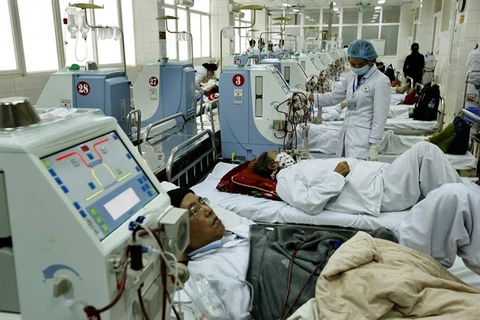
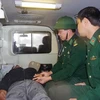
Assaults on medical staff on the rise in Vietnam ảnh 1A patient receives emergency aid at a hospital in ​Hanoi. (Source: nld.vn)

 Hanoi (VNA) -The number of assaults against medical workers climbed to a record high lastyear, with 25 cases reported to the police. Hospital violence stayed in theheadlines year-round, prompting both Prime Minister Nguyen Xuan Phuc and theNational Assembly to voice concerns.

In the first months of 2018, two obstetricians in Yen Bai province werephysically abused by a husband and 10 others after the medical workers, whowere delivering his baby, asked him not to climb on the window railing to filmthe birth.

This was among many reasons for patients and their family members to attackmedical workers, 70 percent of whom were doctors and 15 percent nurses,according to the Ministry of Health.

The reasons ranged from a doctor’s refusal to conduct a fluid infusion to adrunken patient, or a doctor preventing a fight between patients.

In another case, the family assumed the doctor’s diagnosis was wrong and hithim before forcing an apology out of the doctor.

Lawyer Bui Dinh Ung from the Hanoi Bar Association told the Lao Dong (Labour)newspaper that while some medical workers’ attitude could have triggered theviolence, the patients and their families – the assaulters – were mostly atfault in those attacks.   

“Protection for the doctors and nurses is an important issue and must beimproved for the sake of the (medical) staff,” Ung said.

Ung said most national and provincial hospitals had recruited their ownsecurity force to little avail, as the assaults kept happening despite thepresence of security guards.

“We can see from those attacks that the security force at the hospitals was yetto play the real ‘security’ role but only to monitor the people entering andexiting the hospitals. Apparently, they could not protect medical staff shouldan incident occur,” he added.

Hanoi’s Bach Mai Hospital General Planning Department head Duong Duc Hungtold Nguoi Lao Dong (The Labourer) newspaper that the hospital dispatchedmore security guards to hotspots, for example the emergency room, after severalcases of hospital violence. The hospital director board also worked with localpolice to tighten security near the hospital, he added.

Such measures will not eliminate violent actions in the hospital, he admitted,but at least it is hoped to ease and prevent the assaults.

Minister of Health Nguyen Thi Kim Tien, who said that the health sector wasalone in the fight against hospital violence and it was looking for bettersecurity through “police posts” inside the hospitals.

Ministry of Public Security Chief of Staff, Major General Luong Tam Quang saidthat so far the ministry had yet received an official request from the healthministry to dispatch police officers to the hospitals, or to allow hospitalsecurity guards to carry supporting gear.

“Local police have always cooperated to protect hospitals. If there are anypolice officers to be stationed at the hospitals, it (the procedure) mustfollow the law,” he said.

Admitting the working environment was no longer safe for the medical staff,Nguyen Huy Quang, head of the Department of Legal Affairs under the healthministry, said protective measures like hiring more security guards would onlytreat the symptom and not the real problem.

“Any solutions must include listening to what the patients and their families wantand giving them a proper health consultation,” Quang said.

“The key is to solve the root of the issue.” -VNA
VNA

See more

The “I Love My Fatherland" Journey 2026 kicks off in Nghe An province on May 16. (Photo: VNA)

"I Love My Fatherland” journey features diverse activities

The “I Love My Fatherland” journey will span seven stages across historical and cultural sites and “red addresses” nationwide. There will be a combination of education on traditions, field-based programmes, and digital communications.

At the handover of 33 Chinese nationals who had violated Vietnamese law to Chinese authorities in Quang Ninh on May 15, 2026. (Photo: VNA)

Vietnam hands over 33 law violators to China

Investigations found that the individuals had violated Vietnamese laws relating to illegal entry and unlawful residence in Vietnam. The handover was conducted safely and in compliance with Vietnamese law and international practice.

At the talks between authorities of the northern province of Lang Son and Pingxiang city in the Guangxi Zhuang Autonomous Region of China (Photo: VNA)

Vietnam, China seek to build modern, smart border gates

Authorities of the northern province of Lang Son and Pingxiang city in the Guangxi Zhuang Autonomous Region of China held talks on May 15 at Tan Thanh (Vietnam) – Po Chai (China) clearance point near markers 1090–1091 in Hoang Van Thu commune of Lang Son to promote trade, develop smart border gates and expand cross-border tourism cooperation.

The Vietnam Association for Victims of Agent Orange (VAVA) has carried out various activities to support Agent Orange/dioxin victims. (Photo: VNA)

Over 9.3 billion VND raised for AO/dioxin victims in 2025

VAVA President Lieutenant General Nguyen Huu Chinh said that although the war ended more than 50 years ago, the consequences of toxic chemicals remain severe and long-lasting, with millions of people affected during the war and hundreds of thousands continuing to suffer serious physical impacts in peacetime.

An overview of the meeting (Photo: VNA)

Measures sought to accelerate construction of inter-level boarding schools in border areas

The construction of boarding schools in land border communes is a particularly important political task receiving close attention from the Politburo and Party General Secretary and State President To Lam. The programme not only aims to improve learning conditions for students in border areas, but also carries strategic significance for social welfare, human development, national defence and security, and safeguarding territorial sovereignty.

An overview of the court on May 14 (Photo: VNA)

Man gets life sentence for terrorism, anti-State activities

The People’s Court of Ho Chi Minh City on May 14 handed down life imprisonment to Dao Minh Quan on charges of “terrorism aimed at opposing the people’s administration” and “activities aimed at overthrowing the people’s administration”.

Secretary of the Ho Chi Minh Communist Youth Union Central Committee and VYF President Nguyen Tuong Lam addresses the event (Photo: VNA)

“I love my fatherland” journey 2026 launched

The “I Love My Fatherland” journey will comprise seven stages linked to historical, cultural and revolutionary sites across the country. The journey will begin in Nghe An on May 16 to mark President Ho Chi Minh’s birthday, before continuing through Hue city, Tuyen Quang–Lung Cu Flag Tower, Dien Bien, Khanh Hoa, Ca Mau and Ho Chi Minh City, and concluding in Hanoi in October.

Students in the Mekong Delta city of Can Tho are honoured for their outstanding performance in startup activities. (Photo: VNA)

Education ministry targets five digital technology incubators at universities

A key target under the new plan is the establishment of five digital technology incubators, or Deeptech Hubs, at universities and research institutes with strong potential. The education ministry also plans to launch a training programme for 1,000 outstanding technology entrepreneurs and develop criteria for selecting and supporting startup ecosystems within educational institutions.

At the equipment handover ceremony for the Narcotics Targeting Centre of Vietnam Customs. (Photo: cand.com.vn)

Vietnam Customs expands capacity to tackle cross-border narcotics crime

Established in November 2025, the NTC comprises six officers from the Anti-Smuggling Investigation Sub-Department specialising in surveillance, intelligence collection and information analysis. The centre is tasked with strengthening customs capacity in risk assessment and drug crime targeting, helping authorities detect and prevent illicit cross-border trafficking of narcotics and other dangerous substances at an early stage.