Bad debt ratio at 2.3 percent by end of 2017

Non-performing loans (NPLs) of credit institutions were controlled effectively in 2017, helping the NPL ratio of the entire banking system reduce to 2.3 percent from 2.46 percent in late 2016.
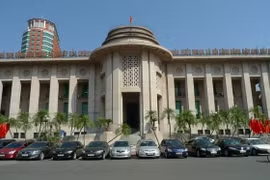
Bad debt ratio at 2.3 percent by end of 2017 ảnh 1Bad debts worth 93.7 trillion VND (4.12 billion USD) were recovered last year. (Photo: cafef.vn)

Hanoi (VNA) - Non-performingloans (NPLs) of credit institutions were controlled effectively in 2017,helping the NPL ratio of the entire banking system reduce to 2.3 percent from2.46 percent in late 2016.

Deputy Governor of theState Bank of Vietnam (SBV), Nguyen Kim Anh, said the ratio of NPLs and otherrisky debts that could become NPLs also slid to 7.91 percent by the end of Novemberfrom 10.08 percent at the end of 2016.

From January to Novemberlast year, NPLs worth 93.7 trillion VND (4.12 billion USD) were recovered,raising the total NPLs that were recovered in the past six years to 705.3trillion VND.

The positive result waspossible due to an improvement in legal frameworks for restructuring creditinstitutions and dealing with bad debts, such as the Resolution No 42/2017/QH14issued by the National Assembly and the amended Law on Credit Institutions.

Notably, the National Assembly’sResolution 42 on supporting bad debt settlement has begun to push the bed debtsettlement process, though it has only come into effect for the last four months of 2017. According to the centralbank, the entire banking system recovered a total of more than 50 trillion VND untilDecember 31 based on the resolution.

Reports from the NationalFinancial Supervisory Commission also estimated that the pre-tax of profits ofthe banking sector in 2017 would rise more than 40 percent over the previousyear and after-tax profits by 44.5 percent, mainly thanks to the handling ofbad debt, hastened by the National Assembly’s Resolution 42.

SBV said this year it wouldstep up the restructuring of the banking sector as well as settlement of baddebt.

SBV stated that lendingthis year would continuously focus on the Government’s prioritised sectors,such as agriculture, exports, spare-parts industries, small- and medium-sizedenterprises and hi-tech firms, while limiting the capital to risky industriessuch as real estate and securities.-VNA
VNA

See more

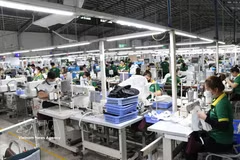
Production of footwear for export at Lefaso Tra Vinh Industrial Investment and Production Joint Stock Company, Tra Cu commune, Vinh Long province (Illustrative image. Source: VNA)

VEFTA implementation requires exporters to restructure supply chains: Experts

Under VEFTA, tariff reductions to zero will be meaningless for Vietnam’s key export sectors, including textiles and garments, footwear, and agricultural and aquatic products, if goods are found to contain banned chemicals, violate rules of origin or lack transparency regarding their carbon footprints.

Deputy Prime Minister Nguyen Van Thang meets with Martin Sommer, head of the IMF’s Article IV consultation mission team to Vietnam, in Hanoi on November 13, 2026. (Photo: VNA)

IMF sees positive growth prospects for Vietnam, urges cautious monetary policy

Martin Sommer, head of the IMF’s Article IV consultation mission team to Vietnam, noted that inflation risks in Vietnam remain under control, but several factors could add to price pressures. He therefore called for cautious monetary policy management and readiness to respond promptly if inflationary pressures increased.

Representatives of the three first-prize-winning startups receive their awards at the event. (Photo: SGGP)

Seven green-tech startups secure 770,000 USD at Net Zero Challenge 2026

In its fourth year, the competition attracted more than 1,100 applications from 80 countries and territories, making it the most competitive edition since its launch in 2023. Nine finalists presented solutions in three categories, namely renewable energy and carbon removal; food systems and sustainable agriculture; and circular economy and waste management.

Vietnamese and Malaysian businesses connect at the event (Photo: VNA)

Vietnam, Malaysia connect businesses to boost bilateral trade cooperation

It centred on a business-to-business (B2B) matchmaking session, bringing Vietnamese and Malaysian companies together to discuss import-export needs, seek partners and explore cooperation. Vietnamese businesses aimed to connect with Malaysian importers, distributors and retailers, while expanding access for their products to Malaysia and other markets.