Brands urged to prepare for changes in VN’s consumer market

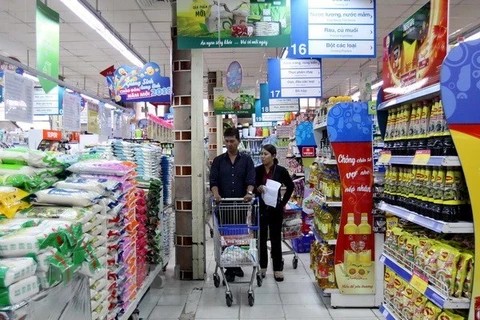
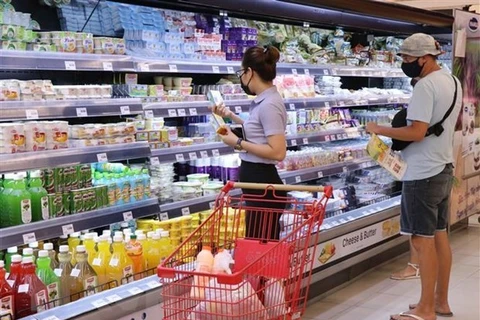
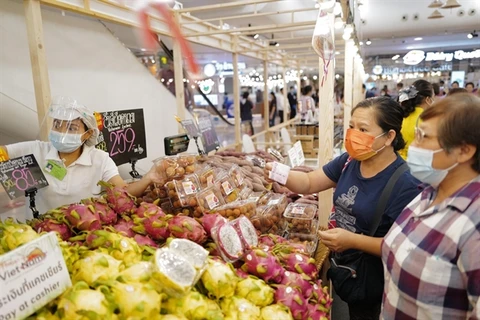
A rising affluent class, more nuclear families, the booming development of digital technology, and an increasing demand for personalisation among consumers will offer opportunities and challenges for FMCG brands in the coming years, according to Kantar Worldpanel Vietnam.
Brands urged to prepare for changes in VN’s consumer market ảnh 1Winners of top three most chosen brands in packaged foods presented by Kantar Worldpanel Vietnam. (Photo: VNA)
HCM City(VNS/VNA) - A rising affluent class, more nuclear families,the booming development of digital technology, and an increasing demand forpersonalisation among consumers will offer opportunities and challenges forFMCG brands in the coming years, according to Kantar Worldpanel Vietnam.

Speaking at its “10 years of consumer choice in Vietnam’ event last week, NguyenPhuong Nga, the company’s business unit director, said Vietnam’s GDP per capitain 2021 is 3,743 USD, up 3.6 times in 10 years.

With higher purchasing power, consumers are having new needs and adopting newdevices such as washing machines, air conditioners, laptops, microwaves,tables, and cars.

In FMCG (Fast Moving Consumer Goods), “premiumisation" demand has grown,she said.

In food and beverages, demand for ‘safety’ and ‘health’ has been drivingconsumer choices, while branded/packaged products are on the rise as ahealthier diet, reduced fat, and sugar-free products are adopted, she said.

Nga said "the size of the average Vietnamese household has decreased over10% over the past decade. As households get smaller, new forms of connectionand consumption are emerging.

“The household consumption of most FMCG categories is lower, which leads to thehigher need for small-sized pack offerings,” she said.

FMCG brands have relentlessly innovated to attract and retain consumers totheir brands.

In 2021, new FMCG products are launched every hour, she said.

“To a big brand, consumer retention can be more challenging. However, stayingout of the innovation game could impact negatively on business growth.”

Digital mainstream

With internet development, the online shopper base has increased 10 times andin FMCG 20 times over the past seven years.

This enormous development is fueled mostly by e-commerce sites and modern traderetailers. The FMCG online basket is becoming more diverse with the growth offood and beverages.

“The way consumers make purchase is messy and it will be messier," shesaid.

Online is now playing role in every stage of a consumer journey, she said,adding that small brands, who are very digital focused, have more opportunityto interact with costumers and gain their business, she said.

Online is expected to become a key source of sales in coming years.

In addition, consumers have higher demand for personalisation, not only withproducts but also in every moment that brands interact with them, she said.

They have greater demand for convenience, not only with the product but also inevery single step of the buying journey.

Expectations for transparency and social responsibility will be higher as willthe opportunities for those brands who can show and act their commitments, sheadded.

Also at the event, Kantar Worldpanel revealed its top three most chosen brandsin dairy and dairy substitutes, packaged food, beverages, home care andpersonal care in four key cities (Hanoi, HCM City, Da Nang and Can Tho) and inrural areas.

Vinamilk, TH and Ngoi Sao Phuong Nam;Vinamilk and Fami; and Ong Tho are the top three most chosen brands in dairyand dairy substitutes in four key cities and rural areas, respectively.

Hao Hao, Nam Ngu and ChinSu; Nam Ngu and 3 Mien; and Hao Hao are the top threemost chosen brands in packaged food in four key cities and rural areas,respectively.

In beverages: Coca Cola, Tiger and Nescafé; Saigon Beer and Nescafé; and CocaCola are in the top three most chosen brands in cities and rural areas,respectively.

Bien Hoa Sugar, Vim and Aquafina were chosen as the top three risers of thedecade in FMCG.

The brands were chosen based on an innovative metric that measures how manyhouseholds are buying a brand (penetration) and how often (frequency) itprovides a true representation of shopper choice./.
VNA
See more

Visitors explore Vietnamese products at WorldFood Moscow 2026. (Photo: VNA)

Vietnamese goods step up market expansion in Russia

The Vietnamese participants are showcasing a wide range of products, including beverages, fresh and dried fruit, processed foods, instant foods and dipping sauces, while seeking distribution partners, expanding their market presence and increasing brand recognition in the country.

A Vietnamese manufacturer showcases a modern production line at VietnamPrintPack 2026. (Photo: VNA)

VietnamPrintPack 2026 kicks off in Ho Chi Minh City

VietnamPrintPack 2026 serves as a hub connecting the supply chain, showcasing breakthrough solutions in automation, digital printing, radio-frequency identification (RFID)-integrated smart packaging, and eco-friendly materials across Vietnam's industrial landscape.

Gemalink International Port in Ho Chi Minh City is one of the strategic seaports for industry, trade and global integration. (Photo: VNA)

Vietnam deepens global supply-chain integration

Deputy Minister of Industry and Trade Phan Thi Thang said Vietnam remains a top priority for international corporations and buyers seeking new sources of supply, thanks to its 17 FTAs, stable investment environment, improving production capacity and strategic location in Southeast Asia.

Illustrative image (Photo: VNA)

Vietravel Airlines resumes Hanoi – Da Lat route

Resuming the route is part of the carrier's year-end operating plan. It's a concrete step toward optimising the airline's domestic network, and a sign of its commitment to helping Lam Dong province revitalise tourism following the airport upgrades, its representative said.

Prof. Tan Jian Ping, Director of the Centre of Excellence for Sustainable Technologies for Agricultural Advancement and a Zero-Waste Economy (STARGAZE) at Xiamen University Malaysia (Photo published by VNA)

Vietnam, Malaysia see potential for smart agriculture cooperation

Prof. Tan Jian Ping, Director of the Centre of Excellence for Sustainable Technologies for Agricultural Advancement and a Zero-Waste Economy (STARGAZE) at Xiamen University Malaysia (XMUM), said NAP 2.0 focuses on applying Industry 4.0 technologies, including the Internet of Things (IoT), unmanned aerial vehicles, artificial intelligence (AI), automation and biotechnology.

The 30th Export Day draws representatives from various organisations and businesses in Argentina. (Photo: VNA)

Vietnam, Argentina eye broader Mercosur access amid free trade push

During the 30th Export Day, organised on September 15 in Buenos Aires by the Chamber of Exporters of the Argentine Republic (CERA) under the theme "New Export Frontier: The Transformation Underway," Vietnamese Ambassador to Argentina Ngo Minh Nguyet highlighted that Vietnam considers Argentina and Mercosur important partners in South America and sees broad potential to deepen trade and investment ties.

Drone is used in seeding, fertilising and pesticide spraying (Photo: VNA)

Greening agriculture through low-emission crop production

The scheme to sustainably develop 1 million ha of high-quality, low-emission rice in the Mekong Delta by 2030 is advancing, said Nguyen Quoc Manh, Deputy Director of the Department of Plant Production and Protection at the Ministry of Agriculture and Environment.

DACE launches organic spice processing, preservation and export plant in Cao Bang (Photo: VNA)

Cao Bang develops organic farming zones linked to European markets

Around 2,353ha of farmland in the province meets organic standards, including more than 2,332ha of spice-growing areas cultivating cinnamon, star anise and ginger that have obtained internationally recognised certifications such as USDA (US), EU and JAS (Japan).

Electronic components are produced at a factory in Hanoi. (Photo: VNA)

Hanoi's imports surge 41% in first eight months of 2026

Hanoi aims to achieve average annual export growth of at least 12% during 2026-30, with the city seeking to diversify export markets, boost high-tech and value-added products and reduce reliance on traditional markets.