Can Tho, Japanese prefecture boost links in environmental treatment

Can Tho city, with its position as a development driving force of the Southwest region, is selected as a main cooperation partner of Japan’s Hiroshima prefecture in improving the environment in the Mekong Delta region, a Hiroshima official has said.
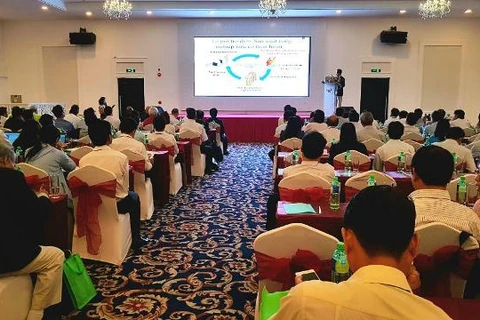
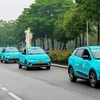
Can Tho, Japanese prefecture boost links in environmental treatment ảnh 1Illustrative image (Source: VNA)


CanTho (VNA)
- Can Tho city, with its position as a development drivingforce of the Southwest region, is selected as a main cooperation partner ofJapan’s Hiroshima prefecture in improving the environment in the Mekong Delta region,a Hiroshima official has said.

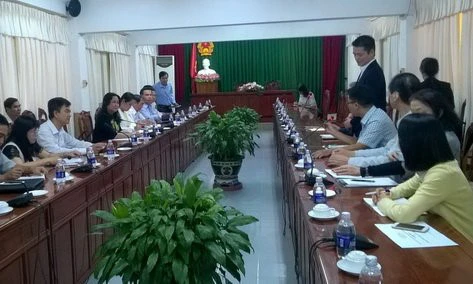
KazukiMatsubara, who is in charge of foreign relations and trade of Hiroshimaprefecture, made the statement at a working session with representatives of thePeople’s Committee of Can Tho city on May 30.

The two localities’ officials discussed how to connect enterprises operating inimproving the environment in Can Tho and the Mekong Delta with those inHiroshima.

Matsubara said climate change is a global issue and the Mekong Delta is one ofthe world’s three deltas that are the most severely affected by climate change,especially in terms of water and saline intrusion.

Changesin the region’s natural advantages have affected production models and habitsof local residents, threatening the region’s development, he noted.

He revealed that in recent years, Hiroshima has actively shared Japan’s technologiesand new scientific achievements related to environmental treatment with othercountries over the world, which was made through expanding cooperation andconnections among its enterprises with those in countries that are facing seriouschallenges caused by climate change, including Vietnam.

Matsubara hoped Can Tho will play the role as a bridge to support the expansionand development of hi-tech models adaptive to climate change in Mekong Delta provinces and cities, thus deciding optimal solutions suitablewith the actual situation of the region, helping to remove difficulties andobstacles in environmental treatment.

Japanese delegates introduced Hiroshima’s advanced technology achievements inimproving the environment such as organic agricultural production, waste collectingand recycling technology, plastic recycling technology, gas monitoring technologyin thermal power plants.

They noted the need to promote cooperation among localities and relevantsectors in the Mekong Delta to enhance the efficiency in the work.

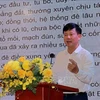
DaoAnh Dung, Vice Chairman of the municipal People’s Committee, highlighted the significanceof connection with Hiroshima to the region’s socio-economic development andenvironmental protection goals.

The municipal authorities will create favourable conditions for the twolocalities’ enterprises to enhance economic and investment links, and totransfer technologies in the environmental sector, he affirmed.

As scheduled, eight enterprises operating in environmental treatment fromHiroshima, namely Aina, Ogawa Econos, Futaba, Sankyo, Chugai Technos, Furukawa,Hionomaru Sangyo, Mikuniya Japan and Tromso, will attend the Can Tho InvestmentPromotion Conference 2018 in August.-VNA
VNA

See more

The German Agency for International Cooperation (GIZ)'s Managing Director Thorsten Schäfer-Gümbel speaks at the working session with the Vietnamese-German University. (Photo: VNA)

Vietnam, Germany step up collaboration on energy transition, green hydrogen

Schäfer-Gümbel praised the strong commitment of Vietnamese partners to sustainable energy goals. He noted that the long-standing development cooperation between Germany and Vietnam is evolving, with energy transition emerging as a strategic area of collaboration in addressing global challenges.

Cat Ba langur is an extremely rare primate species found exclusively in the humid tropical forests of Cat Ba island (Photo: VNA)

Belgian TV spotlight: Vietnam's wild nature reborn

Through the lens of “Le Jardin Extraordinaire”, Vietnam was portrayed not simply as a travel destination but as a still-emerging realm of discovery: a nation whose nature, though heavily wounded in the past, demonstrates extraordinary powers of recovery, quietly upholding its pristine essence against the pressures of time.

The macaque, scientifically known as Macaca arctoides. (Photo: VNA)

Quang Tri receives endangered stump-tailed macaque

The Cam Lo-Dong Ha forest protection unit in the central province of Quang Tri has received a rare stump-tailed macaque, a species listed as endangered, precious and rare in the Vietnam Red Data Book.

At a ceremony to donate 100,000 trees to the Naval Region 4 (Photo: HANE)

Tree planting programme spreads green momentum in islands

The Ho Chi Minh City Association for Conservation of Nature and Environment (HANE) on January 11 announced 10 outstanding green programmes and activities carried out in 2025, including a programme to plant 1 million trees in Vietnam’s island areas.

Lam Dong releases hundreds of wild animals into the wild. (Photo: VNA)

Lam Dong releases hundreds of wild animals back into the wild

According to the Ta Dung National Park Management Board, the park has for years served as a trusted destination for authorities and residents to hand over and release wildlife. Such actions not only contribute to biodiversity conservation but also help reduce illegal hunting and captivity of wild animals.

According to the Hanoi Department of Agriculture and Environment, air quality index (AQI) readings have at times reached poor and very poor levels. (Photo: VNA)

Hanoi targets 20% reduction in PM2.5 levels

Hanoi has affirmed its commitment not to trade environmental protection for economic growth. The city is moving to establish low-emission zones (LEZs) as a core measure to control emissions and promote green, sustainable urban development.

A waste collection area. (Photo: VNA)

Ca Mau approves investment policy for waste-to-energy plant

The waste-to-energy plant is planned for construction in Dat Moi commune, covering a total area of about 20 hectares. It will have a waste treatment capacity of approximately 600 tonnes of household waste per day and a power generation capacity of 6MW.