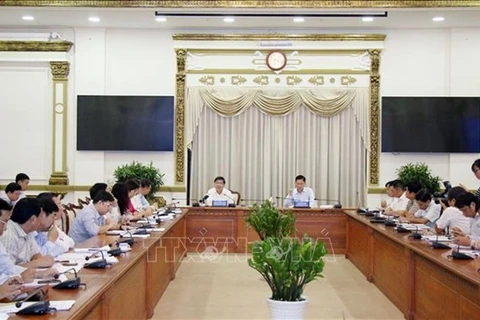
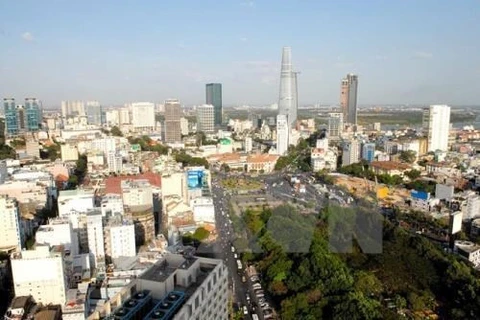
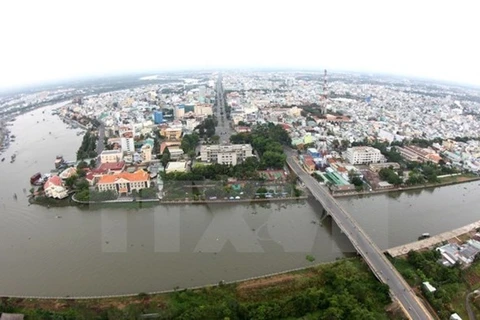
A view of Can Tho city (Photo: VNA)
 Can Tho (VNS/VNA) - Can Tho, the most populated city in the Mekong Delta region, has achieved outstanding results in developing a project to build a smart city after nearly two years of implementation.
Vo Thi Hong Anh, Vice Chairwoman of the Can Tho City People’s Committee, said the project aims to make the city to become the first smart city in the southwestern region by 2025.
A smart city enhances civic engagement in urban management, with the aim of improving competitiveness and socio-economic development, she said.
To achieve the goal, Can Tho will use modern information technology and improve State management and the quality of life, she said.
Can Tho’s agencies have many plans to achieve the goal.
The Department of Planning and Investment is building technical platforms to develop an e-government model, while the Department of Transport has started using IT to manage urban transport services.
Two years ago, Can Tho city signed a cooperation agreement with the Vietnam Posts and Communications Group (VNPT) to develop its smart city project by 2025.
Under the project, VNPT has set up a smart city framework system, including an Information and Communication Technology (ICT) and smart city solution framework, ensuring that the solutions of all developers can run on this platform.
Can Tho and VNPT have worked to apply a range of information technologies in city administrative activities to better serve people and businesses.
Do Hoang Trung, Director of Can Tho city’s Department of Information and Communications, said the city is building an intelligent operating centre connected with information technology systems to monitor socio-economic targets and the government’s performance.
The centre will supervise the education and tourism sectors and monitor residents’ feedback, ensuring urban order and security.
In addition, Can Tho will use My City app, a mobile platform with a built-in camera system and an intelligent security surveillance, to receive and resolve residents’ feedback on public services.
The city will also apply information technology in management of traffic safety; information security and safety; food safety and hygiene; environmental protection, as well as land use management.
In addition, intelligent parking systems at tourist destinations and integrated traffic management system, including traffic lights, signs and traffic flow analysis, will be set up.
Can Tho will encourage the private sector to take part in the smart city project by applying technologies and innovation in providing services to the public.
Experts said enterprises play a major role in the socio-economic development of smart urban areas, which should be supported with infrastructure and incentive policies based on modern technology.
To ensure the project’s schedule, the Department of Information and Communications will seek experts’ opinions in implementing the smart city plan./.
Vo Thi Hong Anh, Vice Chairwoman of the Can Tho City People’s Committee, said the project aims to make the city to become the first smart city in the southwestern region by 2025.
A smart city enhances civic engagement in urban management, with the aim of improving competitiveness and socio-economic development, she said.
To achieve the goal, Can Tho will use modern information technology and improve State management and the quality of life, she said.
Can Tho’s agencies have many plans to achieve the goal.
The Department of Planning and Investment is building technical platforms to develop an e-government model, while the Department of Transport has started using IT to manage urban transport services.
Two years ago, Can Tho city signed a cooperation agreement with the Vietnam Posts and Communications Group (VNPT) to develop its smart city project by 2025.
Under the project, VNPT has set up a smart city framework system, including an Information and Communication Technology (ICT) and smart city solution framework, ensuring that the solutions of all developers can run on this platform.
Can Tho and VNPT have worked to apply a range of information technologies in city administrative activities to better serve people and businesses.
Do Hoang Trung, Director of Can Tho city’s Department of Information and Communications, said the city is building an intelligent operating centre connected with information technology systems to monitor socio-economic targets and the government’s performance.
The centre will supervise the education and tourism sectors and monitor residents’ feedback, ensuring urban order and security.
In addition, Can Tho will use My City app, a mobile platform with a built-in camera system and an intelligent security surveillance, to receive and resolve residents’ feedback on public services.
The city will also apply information technology in management of traffic safety; information security and safety; food safety and hygiene; environmental protection, as well as land use management.
In addition, intelligent parking systems at tourist destinations and integrated traffic management system, including traffic lights, signs and traffic flow analysis, will be set up.
Can Tho will encourage the private sector to take part in the smart city project by applying technologies and innovation in providing services to the public.
Experts said enterprises play a major role in the socio-economic development of smart urban areas, which should be supported with infrastructure and incentive policies based on modern technology.
To ensure the project’s schedule, the Department of Information and Communications will seek experts’ opinions in implementing the smart city plan./.
VNA