Central bank works on legal framework for credit scoring

The State Bank of Vietnam (SBV) has proposed using credit scoring to better manage the banking sector and promote the development of finance and fintech companies.

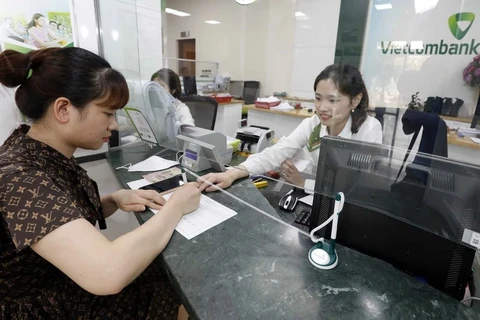
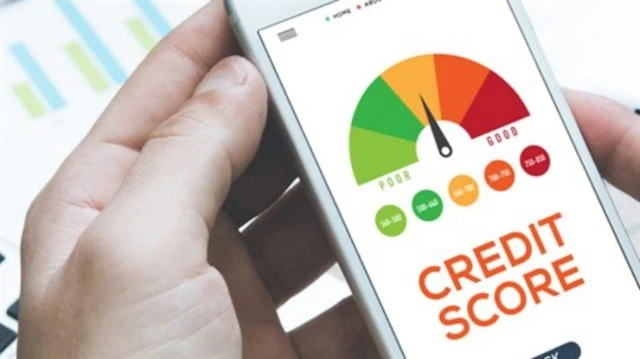
A customer checks their credit scoring by way of their mobile phone. Credit scoring has remained an unpopular concept among domestic users. (Photo: moneyhub.vn)

Hanoi (VNS/VNA) - The State Bank of Vietnam (SBV) has proposed using credit scoring to better manage the banking sector and promote the development of finance and fintech companies.

It is contained within a recently released draft decree on regulating from the sandbox mechanism in the banking sector.

According to the SBV, though the Vietnam National Credit Information Centre (CIC) introduced the first credit scoring model according to international standards in 2015, it has remained an unpopular concept among domestic users. Therefore, the draft policy is aimed at helping fintech companies provide credit scoring solutions with a better development foundation.

Credit scoring is considered a useful tool for lenders, such as banks, finance companies and peer-to-peer lending companies (P2P) as it is a statistical analysis performed by lenders and financial institutions to determine the creditworthiness of a person or a small, owner-operated business. Credit scoring is used by lenders to help decide whether to extend or deny credit while the score can impact customers’ ability to qualify for financial products like mortgages, auto loans, credit cards and private loans.

According to Dr Chau Dinh Linh, a lecturer at the Ho Chi Minh City Banking University, the credit scoring model is a tool that helps lenders know when to lend, in what amount and what strategies to build to increase profits while still managing lending risks.

Developing an effective credit scoring tool would bring many benefits to lenders, such as reducing the cost of credit analysis and appraisal, better assessing the insolvency of customers to make more accurate credit decision, reducing credit decision-making time and minimising bad debts and losses in credit activities.

In addition, credit scoring has many other direct benefits such as improving capital flow, improving liquidity, understanding customer behavior, diversifying financial products and determining banks' credit risk appetite.

According to Linh, potential risks of the consumer lending market are very high as it often involves small loans with no collateral.

Linh believed that credit scoring through the sandbox mechanism for fintech companies is the right decision to perfect the legal mechanism to develop the consumer lending market, especially P2P lending of fintech companies, as it will minimise default risk and lead to credit safety, which will ensure financial and fintech companies to have a greater probability of finding sustainable profits.

However, Dr. Nguyen Huu Huan, a lecturer at the HCM City University of Economics, noted the management authorities should carefully select companies that are allowed to participate in the credit scoring sandbox to avoid the establishment of too many credit rating organisations, causing information confusion in the market.

“The sandbox mechanism must clearly mention the criteria for selecting credit scoring companies. Organisations that are chosen to participate in the sandbox must be reputable and capable of fulfilling responsibilities and ensure ethical risk issues,” Huan said.

In Vietnam, in addition to using CIC's credit score as an important reference, commercial banks, financial and fintech companies currently use many different methods to score credit while there is a growing trend for using AI and big data in setting a credit score./.
VNA

See more

VinFast EV sales jump 127% in March 2026. (Photo: Vinfast)

VinFast EV sales jump 127%, cementing market dominance

According to its report, all models in VinFast’s EV lineup recorded strong growth in March. Notably, on March 28 alone, the company completed 3,520 orders, the highest number ever recorded in a single day by an automotive brand in Vietnam.

Illustrative image (Photo: VNA)

Australia announces import conditions for Vietnamese pomelos

Australia’s formal publication provides an important legal basis, marking the completion of the review, assessment and agreement on technical requirements for fresh Vietnamese pomelos. This represents a significant step forward in market access, creating favourable conditions for relevant agencies, localities and businesses to prepare for export activities in the coming time.

Containers of fresh Vietnamese durian for export are subject to a full-chain traceability system. (Photo: VNA)

First “green lane” durian shipment exported to China

​Under the “green lane” process, quality control begins at the cultivation stage, including soil sampling and monitoring, and continues through harvesting and processing, with traceability labels attached to trees and applied to fruit at the time of picking. It also allows plant quarantine procedures and the issuance of certificates of origin (C/O) directly in the localities where the orchards are located.

Delegates at the Vietnam Expo 2026 (Photo: VNA)

Vietnam pushes for deeper auto supply chain ties with RoK

The RoK stood as Vietnam’s largest foreign investor with more than 95.2 billion USD in registered capital as of February 2026, or about 18% of all foreign cash flowing in, with thousands of active projects. In January-February alone, the RoK led the pack with nearly 2 billion USD in pledges, grabbing a whopping 32.7% of total registered capital and showing no signs of slowing down.

More than 600 tourism firms, 15 countries and territories, and 34 provinces and cities are promoting destinations and introducing tourism products at the fair (Photo: VNA)

Digital transformation key to elevating Vietnam’s tourism: official

Speaking at the opening of the Vietnam International Travel Mart (VITM) 2026 in Hanoi on April 10, Deputy Minister of Culture, Sports and Tourism Ho An Phong noted that despite challenges in 2025, Vietnam largely fulfilled its socio-economic development goals. Tourism remained a bright spot, recording 21.5 million foreign arrivals and 135.5 million domestic visitors, with total revenue exceeding 1 quadrillion VND (37.9 billion USD).

A drone sprays fertiliser over rice fields. (Photo: VNA)

Low-altitude economy emerges as new growth driver for Vietnam

The UAV technology is particularly effective in addressing challenges faced by ground infrastructure, especially in densely populated urban areas and remote regions. Smart aerial devices also enable real-time data collection, improving governance, decision-making and digital transformation across industries.

Passengers at Cat Bi Airport in Hai Phong city (Photo: VNA)

Aviation sector ensures fuel supply for April 30–May 1 peak

Aviation fuel suppliers are actively negotiating and diversifying supply sources both domestically and internationally, while strengthening coordination, storage and distribution capacity to meet immediate demand. These efforts aim to support airlines in optimising operations and maintaining stable flight schedules.