Centralised bidding should be implemented to solve drugs and medical supplies shortage

A sudden increase in the number of patients has caused overloading and a shortage of equipment, medical supplies and chemicals at some central hospitals.
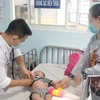
Centralised bidding should be implemented to solve drugs and medical supplies shortage ảnh 1A patient is being treated at a hospital. (Photo: VNA)
Hanoi (VNS/VNA) - A sudden increase in the number ofpatients has caused overloading and a shortage of equipment, medicalsupplies and chemicals at some central hospitals.

Associate Professor, Doctor Dao Xuan Co, Director of Bach MaiHospital, said one of the reasons for this is the COVID-19 pandemic, affectingthe drug supply of enterprises. 

Many businesses do not have drugs and medical supplies toparticipate in the bidding or witness poor revenue due to low prices, hereported to the Ministry of Health's inspection team on August 16.

In 2022, there were 77 out of 1,690 drugs that contractors failedto supply in sufficient quantities under the orders, affecting thehospital's stock of drugs while waiting for the bidding results, Co said.

The hospital also recommended the Government and the Ministry ofHealth issue policies and accelerate the implementation of national andlocal centralised bidding. 

Centralised bidding will increase competitiveness with lowerprices, reduce manpower, time and costs of organising the bidding at hospitalsas well as better handle problems in the bidding process.

On August 16, the inspection team of the Ministry of Health, ledby Associate Professor, Dr. Luong Ngoc Khue, visited the hospital to findsolutions and remove difficulties for the hospital.

"All efforts and solutions are aimed at the satisfaction ofpatients and medical staff," said the Director of the Department ofMedical Examination and Treatment.

"The lack of medical supplies has affected treatment, servicequality, patient and medical staff satisfaction," Associate Professor,Doctor Pham Tuan Canh, Director of the Central Otolaryngology Hospital, toldthe inspection team. 

The hospital has to transfer patients to other hospitals dueto a lack of medical supplies and equipment such as CT and MRI scanners,he said.

The hospital currently has to apply old methods and techniques totreat patients. 

He also proposed the Government and the Ministry of Healthaccelerate national centralised bidding for all lists of drugs, equipment and medicalsupplies and soon issue documents on bidding so that hospitals have a basis toimplement the process.

After examining and listening to reports from two hospitals, Khuesaid the problem is bidding activities at hospitals. There areregulations that must be revised and adjusted.

The purchase and supply of medical equipment have been greatlyaffected after the COVID-19 pandemic due to the oil crisis and supply chaindisruption, while the bidding regulations and bidding process are stillinadequate.

He said many medical staff and suppliers were afraid that they maycommit wrongdoings after a series of cases in the health sector. 

Although facing difficulties due to a lack of equipment andmedical supplies, doctors have made every effort to ensure medical examinationand treatment quality, and explain the difficulties to patients, he added. 

The two hospitals were suggested to report their issues to theMinistry of Health./.
VNA
See more

Medical staff at Cho Ray Hospital in Ho Chi Minh City cares for and treat the victim. (Photo published by VNA)

Last survivor of Phu Quoc boat capsize shows signs of recovery

The health condition of the last patient receiving treatment following the deadly boat capsize off the Phu Quoc special one in An Giang province has shown positive signs of improvement after three more days of intensive care, Cho Ray Hospital in Ho Chi Minh City said on July 16.

The number of foreign tourists coming to Ho Chi Minh City for travel combined with medical check-ups is increasing. (Photo: VNA)

Vietnam looks to unlock medical tourism potential with national strategy

The draft strategy aims to position Vietnam as a trusted healthcare destination in Southeast Asia by 2030 and eventually among Asia's leading medical tourism hubs. The plan marks a shift from viewing medical tourism as an untapped opportunity to making it a national development priority.

Delegates at the conference. (Photo: VNA)

Vietnam to produce first homegrown next-generation vaccines from 2028

Under the agreement, Sanofi will transfer technology to VNVC to manufacture selected high-demand vaccines for children and adults at VNVC Vaccine and Bioproduct Plant. The first next-generation vaccines produced in Vietnam are expected to roll off production lines in 2028.

Eric and Alysha joyfully welcome their baby through Mini IVF after more than 10 years of waiting. (Photo: Hong Ngoc Phuc Truong Minh General Hospital)

Vietnam - a destination for journeys to parenthood

An increasing number of international families are choosing Vietnam for infertility treatment, embarking on journeys to parenthood that transcend geographical distance and differences in nationality.

Prime Minister Le Minh Hung delivers remarks at the inauguration ceremony for Viet Duc University Hospital's second campus in Ninh Binh province. (Photo: VNA)

PM urges modern restructuring of healthcare network

The PM stressed that throughout the country’s development process, people have consistently been regarded as the centre, the driving force, the objective and the most important resource for national development. Sustainable and rapid development requires not only a healthy, knowledgeable and skilled population but also a modern, equitable, efficient, sustainable and accessible healthcare system.

Thu Duc General Hospital, with a capacity of 1,000 beds, was inaugurated and put into operation in April 2025 (Photo: VNA)

Ho Chi Minh City moves to expand robotic surgery to gateway hospitals

According to the municipal Department of Health, developing gateway hospitals is a key pillar of the city's strategy to establish a regional specialised healthcare system. The network is designed to permanently relieve overcrowding at major downtown hospitals while strengthening strong inter-regional emergency care and treatment network.

Doctors conduct health screenings for children in Tru Van Tho commune, Ho Chi Minh City. (Photo :VNA)

Ho Chi Minh City moves closer to universal health check-ups

Achieving universal health check-ups in 2026 will lay the foundation for a new healthcare model in which every resident has an electronic health record, receives regular screenings, benefits from lifelong health management and gains access to early intervention through primary healthcare services.