Cham Islanders join power grid

The Cham Islands, 18km off the coast of Hoi An city, gained access to the national power grid on September 3, after a one year construction project to install a 15.5km sub-marine cable system.
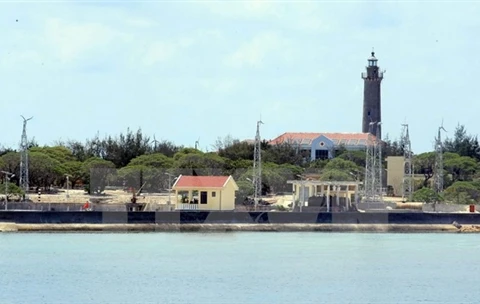
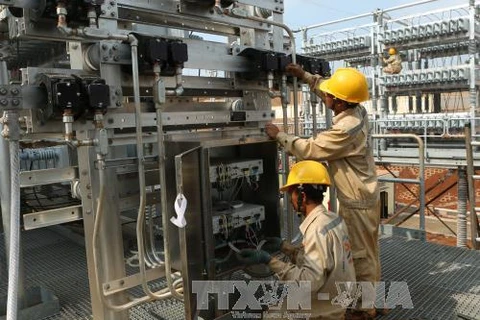
Cham Islanders join power grid ảnh 1The Cham Islands gained access to the national power grid on September 3 (Photo: VNA)

Quang Nam (VNA) - The Cham Islands, 18km off the coast of Hoi An city, gained access to the national power grid on September 3, after a one year construction project to install a 15.5km sub-marine cable system at a total cost of 485 billion VN D (22.7 million USD ).

Chairman of the islands’ People’s Committee, Nguyen Van An, told Vietnam News that the project is crucial for the islands’ future development.

The Electricity of Vietnam (EVN)’s Central Power Corporation officially switched on the islands’ power with the national grid on September 3, providing 24-hour power for over 2,400 people live in the four villages on the islands.

“It’s a great milestone for the island people. We were eager to have power for years, hoping for a bright future. The islands have been designated a biological tourism complex, featuring different environmentally friendly initiatives, since 2009,” An said.

The sub-marine cable project was 85 percent funded by the State budget. It includes nearly 30km of lines over the islands and six transmission stations. It is expected to boost socioeconomic development and national security and defence of Vietnam’s islands and seas.

About 98 percent of the province’s 1.4 million residents already have access to power. Cham is the newest remote area of the province to connect to the national power grid.

Chairman and General Director of the Central Power Corporation Tran Dinh Nhan said the system will provide power to local islanders 24 hours a day and limit emissions from diesel-driven generators on the area.

He said islanders used power from diesel generators seven hours a day, while renewable energy sources fall short of demand.

In 2010, a solar power station with a 28KW capacity was built on the island. But it only supplied power to 100 households in Bai Huong Commune. The solar power station received funds from SIDA (Swedish International Development Cooperation Agency) but it was unreliable due to lack of sufficient sunlight.

Wind power is also an option. But turbines are only able to power single households with a limited supply of electricity.

In 2013, the islands were given access to fresh water for the first time when an 80,000 cubic metre reservoir was built.

The Islands’ chairman said environmentally friendly technology solutions - such as wind power and solar energy - remain a top priority.

Recognised as a world biosphere reserve by UNESCO in 2009, Cham Islands welcome around 100,000 tourists annually, 10 percent of whom are foreigners.-VNA

VNA

See more

A performance at the meeting with over 1,000 overseas Vietnamese in Ho Chi Minh City on February 6 evening to celebrate the upcoming Lunar New Year (Tet). (Photo: VNA)

Ho Chi Minh City hosts pre-Tet gathering with overseas Vietnamese

Nguyen Van Duoc, Deputy Secretary of the municipal Party Committee and Chairman of the municipal People’s Committee, attributed the southern metropolis’s socio-economic development achievements partly to important contributions by OV entrepreneurs, scientists, experts, and intellectuals worldwide through investment activities, knowledge transfer, market connection, and promotion of the city’s image.

Aerial view of Co To Island. (Photo: VNA)

Co To to offer free vessel trips to/from island on 29th day of last lunar month

To meet rising demand from residents returning home for Tet and visitors travelling to the island, transport operators in Co To will continue daily passenger and cargo services to/from the island until the 29th day of the last lunar month, with operations resuming from the second day of the first lunar month (February 18).

PM orders stronger transport measures to ensure traffic safety during Tet. (Illustrative photo: VNA)

PM orders stronger transport measures to ensure traffic safety during Tet

To accommodate surging travel demand and keep transport operations running smoothly, the PM instructed relevant bodies to boost transport capacity, particularly public passenger services, to ensure seamless connections at railway stations, airports, bus terminals and ferry ports. Authorities were told to ensure that no travellers are left stranded or delayed in returning home for Tet due to a shortage of transport, while strictly preventing fare gouging and unlawful price hikes. Proactive measures to curb traffic accidents and congestion during the peak holiday period were also highlighted.

Politburo member and Permanent member of the Party Central Committee’s Secretariat Tran Cam Tu presents gifts to the elderly in Da Nang city on February 5. (Photo: VNA)

Permanent member of Party Central Committee's Secretariat pays Tet visit to Da Nang

Politburo member and Permanent member of the Party Central Committee’s Secretariat Tran Cam Tu reaffirmed that the Party and State consistently uphold the principle of placing the people at the centre, stressing that caring for their material and spiritual well-being is both the goal and the driving force of national development.

The delegation Inspects anti-IUU fishing efforts at Hung Thai Port, Long Hai commune. (Photo: VNA )

Ho Chi Minh City's efforts to combat IUU fishing examined

The inspection aimed to identify grassroots-level difficulties, promptly address technical bottlenecks, require telecommunications enterprises to upgrade their systems, and advise the Government and relevant ministries and sectors on refining mechanisms and policies.

Representatives of Hanoi units sign a coordination mechanism for piloting public interest civil litigation (Photo: VNA)

Hanoi launches pilot mechanism for public interest civil litigation

The coordination framework is designed to ensure that the People’s Procuracy can promptly, fully and accurately access information related to public interest civil cases; facilitate the swift and effective verification and collection of documents and evidence; and strengthen the responsibilities of agencies, organisations and individuals in fulfilling their mandates to protect the civil rights of vulnerable groups and public interests.