HCM City arranges 17 bus routes for better connectivity with Ben Thanh-Suoi Tien Metro

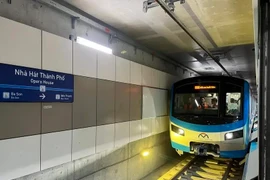
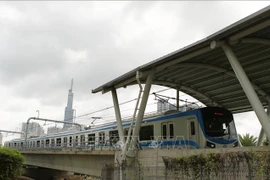
The Ben Thanh-Suoi Tien urban railway line No 1 in Ho Chi Minh City is expected to roll out on December 22, and to help passengers, the municipal Department of Transport (DoT) is setting up 17 electric bus routes connected to metro stations, the equivalent of 150 buses.

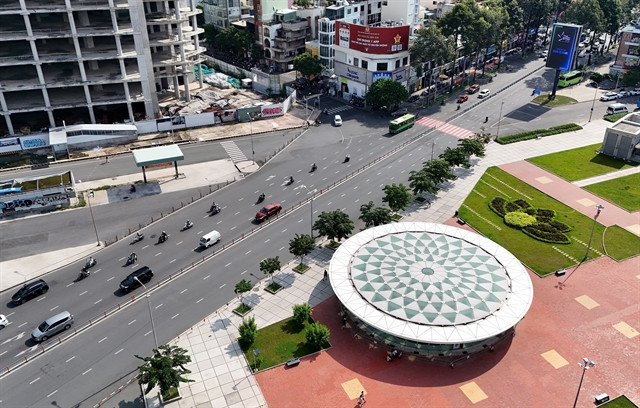
Aerial view of the Ben Thanh Station, which is the first and also the largest underground station of Metro Line No 1 in HCM City. (Photo: VNA)

HCM City (VNS/VNA) - The Ben Thanh-Suoi Tien urban railway line No 1 in Ho Chi Minh City is expected to roll out on December 22, and to help passengers, the municipal Department of Transport (DoT) is setting up 17 electric bus routes connected to metro stations, the equivalent of 150 buses.

The details were revealed by Ngo Hai Duong, head of the Road Transport Management Division under the DoT, at a meeting on socio-economic issues organised by the municipal Party Committee's Commission for Information and Education, in coordination with the HCM City Department of Information and Communications, December 12 afternoon.

The bus routes will run along the Ben Thanh-Suoi Tien Metro corridor and pick up passengers from neighbouring streets to take them to the nearest station.

Duong said that construction on Metro Line No 1 of the Ben Thanh-Suoi Tien route is now complete, with the service running a trial last month.

Currently, the city’s Urban Railway Management Board is completing final procedures related to the system safety certification and environmental permits.

To ensure the Metro Line 1 works at optimal efficiency, the DoT has developed a plan and implemented many integration options with other types of transport including buses, public bicycles, four-wheel electric vehicles and river buses.

At the same time, it installed 162 stops, 61 waiting rooms, and two-wheeled parking spaces for train passengers at Van Thanh, Thao Dien, Binh Thai, Rạch Chiec and Phuoc Long stations.

The electric bus routes will be rolled out earlier than the official launch date of Metro Line 1 to ensure smooth operation and allow people to gradually get used to the new transport option.

Regarding the electric bus charging station system, the Phuong Trang Company – which manages the 17 bus routes – built two charging stations at the company's parking lot in Thu Duc city with 23 charging posts, with a capacity of 180kW and 240kW.

For public bicycles, the Public Transport Management Centre coordinated with the Tri Nam Group Joint Stock Company to rearrange 45 public bicycle stations in District 1, establishing them around underground metro stations and equipping them with electric bicycles to increase passenger convenience.

For four-wheel electric vehicles with engines, the centre finished a plan to connect with three underground stations of Metro Line 1 including Ben Thanh, City Opera House, Ba Son, and Tan Son Nhat Airport.

At the three stations, the electric vehicles will operate with flexible routes and times, based on people's needs to reduce travel costs, with ticket prices between 5,000-10,000 VND (0.19-0.39 USD) per trip.

In addition, the DoT plans to develop a river bus route connecting the Ba Son and Tan Cang stations.

The city's public transport system, including Metro Line 1, buses, river buses, and open-top double-decker buses, has been integrated into the Gobus app, making it easy for passengers to find information and choose convenient routes.

Duong said that Metro Line 1 was expected to bring positive and profound changes to traffic in HCM City. Major routes such as Le Loi, Nguyen Hue, Ton Duc Thang, Nguyen Huu Canh, and Vo Nguyen Giap should be significantly eased in terms of traffic volumes, especially during rush hours.

Bus operations will also be adjusted to avoid overlapping routes with the metro line, while optimising operating times and effectiveness. This will significantly reduce personal vehicles, reducing congestion and traffic accidents.

With its speed, convenience and reasonable ticket prices, the city hopes the metro line will encourage more computers to switch to public transport, changing travel habits and awareness of environmental protection, he said.

The Metro Line 1 also plays an important role in sustainable urban development. Reducing the number of personal vehicles will significantly improve air quality, reduce noise and minimise environmental pollution in the city.

The metro line will promote transit-oriented development (TOD), helping to increase land use value, change the urban landscape, and promote economic and tourism development around the station area.

This is an important step towards a modern, efficient and environmentally friendly transport system.

The Ben Thanh-Suoi Tien Metro is approximately 19.7km long, with three underground stations and 11 elevated stations. The line will carry a total of 17 trains, each capable of carrying 930 passengers, including 147 seated and 783 standing passengers. The maximum design speed is 110km/h (for the elevated section) and 80km/h (for the underground section). /.
VNA

See more

The Vietnam National University, Ho Chi Minh City leads Vietnamese institutions in natural sciences, social sciences, and management, ranking in the 401–450 and 341 bands, respectively. (Photo: vnuhcm.edu.vn)

Vietnamese universities climb global rankings in multiple disciplines

In the broad subject rankings, seven Vietnamese universities were listed, three more than last year. Van Lang University ranked 260th globally in arts and humanities, the highest position for Vietnam in this category. Duy Tan University maintained a strong standing in engineering and technology, placing 346th worldwide.

Outstanding young Vietnamese faces and promising young Vietnamese faces in 2025 (Photo: VNA)

Top 10 Vietnamese Outstanding Young Faces of 2025 honoured

Among the 10 outstanding young Vietnamese of 2025 are Dr. Pham Anh Tuan from KTH Royal Institute of Technology in Sweden, listed among the world’s top 2% most influential scientists, and Dr. Dang Thi Le Hang from the Vietnam Academy of Science and Technology, recognised for her work in biomedical materials.

Young trailblazers power Vietnam’s digital future

Young trailblazers power Vietnam’s digital future

Digital transformation is an unstoppable trend, driving the renewal of growth models, enhancing governance, and improving the quality of life. In this shift, young people – armed with knowledge, adaptability to new technologies, and creativity – are stepping up as a leading force.

Former Minister of Health Nguyen Thi Kim Tien (Photo: VNA)

Former Health Minister Nguyen Thi Kim Tien prosecuted

The Supreme People's Procuracy has prosecuted former Minister of Health Nguyen Thi Kim Tien for “violating regulations on management and use of State property, causing losses and wastefulness” in a case related to the construction of the second campuses of Bach Mai Hospital and Viet Duc University Hospital. ​

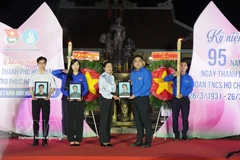
Ngo Minh Hai, Secretary of the Ho Chi Minh Communist Youth Union and President of the Vietnam Youth Federation of Ho Chi Minh City, presents portraits to the family of Heroic Vietnamese Mother Nguyen Thi Dau and her two children, martyrs Tran Thi Sau and Tran Van Chan. (Photo: VNA)

Youth Month: Restoring portraits to honour war heroes

The initiative on restoring and digitising portraits of Heroic Mothers and martyrs across Ho Chi Minh City not only helps safeguard valuable historical records but also highlights the creativity and volunteer spirit of young people in applying technology to meaningful community projects.

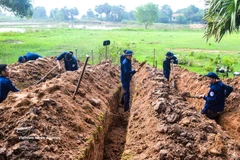
Team K91 under the Dong Thap provincial Military Command search for martyrs’ remains in Cambodia. (Photo: VNA)

Campaign launched to boost search, identification of fallen soldiers’ remains

The “500-day-and-night campaign” aims to mobilise the combined strength of the entire Party, political system, armed forces and society to accelerate progress in carrying out the task, regarded as both a special political mission and a meaningful activity of gratitude to those who laid down their lives for the Fatherland's independence and freedom and the people's happiness.

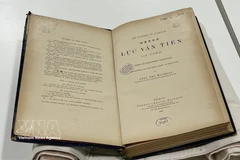
A publication printed in the romanised Vietnamese script in 1883.(Photo: VNA)

Event series honours romanised Vietnamese script pioneer, promotes Vietnam–Portugal exchange

APCV Chair Diane Nguyen Duc Thu Dung said that the initiative aims to pay tribute to missionary Francisco de Pina, one of the early contributors to the formation of the modern writing system of the Vietnamese language (quoc ngu). Beyond its historical significance, the project is expected to serve as a platform to promote cultural exchange and expand cooperation between Vietnam and Portugal across various fields.

The Filipino sailor suffering from a serious illness is brought ashore for treatment. (Photo: VNA)

Foreign sailor brought ashore for emergency treatment

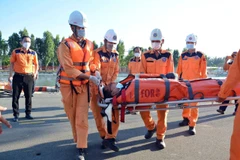
A specialised search-and-rescue ship which was on standby off Ho Chi Minh City’s Phuoc Thang ward was immediately dispatched, accompanied by a medical team from the Vung Tau General Hospital, to give first aid and bring the patient ashore.

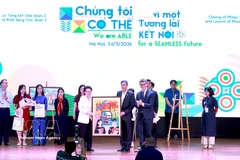
Delegates at the event to launch the third phase of the “We Are ABLE” project in Hanoi on March 24 (Photo: VNA)

UNESCO-backed STEAM initiative helps boost gender equality

Launched in 2019, the “We Are ABLE” initiative aims to promote gender equality, support girls’ education, and foster safe and inclusive learning environments. During its second phase from 2023 to 2025, the project reached more than 8,000 students and their families in the provinces of Cao Bang, Vinh Long, and Khanh Hoa.

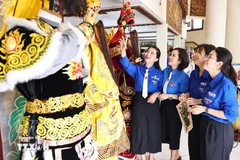
Youth delegates take part in hands-on cultural experiences such as calligraphy writing, Dong Ho folk painting, mask painting, traditional games, and exchanges with young performers of “tuong”, “cheo” and “cai luong” theatre (Photo: VNA)

Youth - Key force in preserving, promoting national cultural values

The initiative “Bringing youth members to traditional theatres” has become a flagship model of the ministry’s Youth Union in recent years, helping popularise traditional arts among the public, particularly younger generations, and contributing to the implementation of the Politburo’s cultural development orientation under Resolution 80.

Nguyen Trong Nghia, Politburo member, Secretary of the Party Central Committee and Head of the Party Central Committee’s Commission for Information, Education and Mass Mobilisation (R) and Nguyen Dac Vinh, Chairman of the National Assembly’s Committee for Culture and Education, present the Ly Tu Trong Award. (Photo: The HCYU Central Committee)

100 youth union officials honoured with Ly Tu Trong Award 2026

In 2026, all 40 provincial youth unions and affiliated units submitted their nominations to the HCYU Central Committee. Candidates were assessed based on criteria set out in the award’s regulations, including outstanding achievements in youth union work and youth movements; as well as initiatives and ideas recognised by competent authorities and effectively applied in practice, delivering value to individuals and organisations.