Abundant workforce still lacks skills: experts

The shortage of highly skilled workers and inadequate skill levels to meet production demands have left many businesses in Vietnam in dire need of technical personnel.

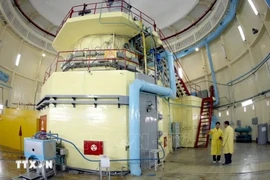
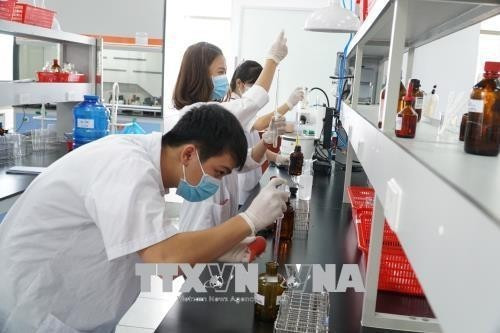
Students of Ton Duc Thang University practice biochemistry experiments (Photo: VNA)

Hanoi (VNS/VNA) - Despite having an abundant labour force, Vietnam still lacks skilled technical workers, while many workers struggle to find suitable jobs.

The gap between training and market demand is becoming a bottleneck for productivity and investment attraction.

For many years, a plentiful labour force has been considered one of Vietnam’s advantages.

However, as the country aims for double-digit growth, limitations are emerging.

The shortage of highly skilled workers and inadequate skill levels to meet production demands have left many businesses in dire need of technical personnel.

Many enterprises are facing difficulties in recruiting highly skilled workers.

According to Dr Bui Sy Loi, former vice chairman of the National Assembly’s Committee for Social Affairs, this reflects a shortage of high-quality human resources.

Vietnam’s labour supply is not lacking in quantity but is limited in skills and qualifications.

As the production structure rapidly shifts toward new technologies and models, businesses increasingly require skilled workers, while the training system has yet to catch up. As a result, the labour market faces a paradox: an oversupply of unskilled labour but a shortage of technical workers.

Loi said the shortage of highly skilled labour stemmed from a lack of long-term vision in training, with insufficient preparation for emerging industries. While the economic and industrial structure was changing rapidly, both regulators and businesses had limited capacity to forecast labour demand.

The biggest bottleneck lay in the mismatch between training supply and labour demand, making training less proactive and unable to keep pace with market shifts, he said.

He emphasised the need for closer coordination between training institutions and businesses. Training should be conducted based on market demand and real business needs.

“When training is tailored to specific market demands, the quality of human resources will improve and training waste will be reduced,” Loi said.

The shortage of skilled labour was also directly affecting labour productivity and national competitiveness. Productivity could only truly improve when science and technology are applied to reduce costs and increase product value within the same time frame, he said.

He also highlighted the need to strengthen labour forecasting capacity to support digital transformation, restructure the training system, and assign roles among institutions to focus on their strengths while ensuring labour supply-demand balance.

Businesses must be more proactive in workforce planning, anticipating industry trends in the coming years to train or retrain workers accordingly, he said.

According to Dr Nguyen Tri Hieu, an economist, with a population of around 100 million, about 60%, roughly 60 million people, are in the labour force. However, most are unskilled workers who can perform various jobs but lack formal professional training.

Vietnam has yet to develop a comprehensive policy framework for training high-skilled labour. For years, industrial parks and businesses have mainly recruited unskilled workers for repetitive, low-skill jobs, resulting in insufficient attention to workforce training and skill upgrading.

“We have the advantage of a large labour force and relatively low labour costs compared to many countries in the region," he said.

"Yet the paradox is that highly skilled and specialised workers remain scarce.”

In addition to policy factors, working conditions and learning opportunities remain limited, according to Hieu. Many workers migrating from rural areas to cities focus on earning a living, leaving little room for vocational training or skill development.

Many businesses have not made systematic investments in workforce training, relying instead on short-term training to meet immediate needs. This leads to an oversupply of unskilled labour but a shortage of skilled workers.

Foreign investors coming to Vietnam often seek technically qualified workers, particularly in high-tech, engineering and healthcare sectors, but face difficulties in finding suitable candidates.

Another major barrier is foreign language proficiency.

“In the context of globalisation, English has become an international language, yet many Vietnamese workers still have limited language skills," Hieu said.

"This affects their ability to work in international environments.”

To address these challenges, Hieu suggested that Vietnam develop a national strategy for human resource development, particularly for high-skilled labour. Priority should be given to strengthening foreign language training, with English widely promoted as a key language in both general and vocational education.

Vocational training centres should be expanded with in-depth programmes aligned with labour market needs. Training should go beyond basic knowledge to include specialised courses, even delivered in English, enabling workers to operate in international environments, he said.

He also recommended that businesses, especially large enterprises, take a more proactive role in training and upgrading workers’ skills. With long-term investment in training and the development of a professional workforce, the labour market can gradually improve and better meet the demands of economic growth./.

VNA

See more

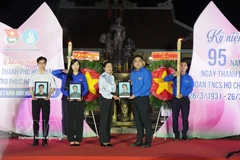
Ngo Minh Hai, Secretary of the Ho Chi Minh Communist Youth Union and President of the Vietnam Youth Federation of Ho Chi Minh City, presents portraits to the family of Heroic Vietnamese Mother Nguyen Thi Dau and her two children, martyrs Tran Thi Sau and Tran Van Chan. (Photo: VNA)

Youth Month: Restoring portraits to honour war heroes

The initiative on restoring and digitising portraits of Heroic Mothers and martyrs across Ho Chi Minh City not only helps safeguard valuable historical records but also highlights the creativity and volunteer spirit of young people in applying technology to meaningful community projects.

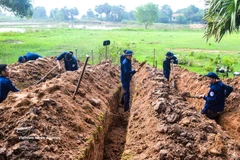
Team K91 under the Dong Thap provincial Military Command search for martyrs’ remains in Cambodia. (Photo: VNA)

Campaign launched to boost search, identification of fallen soldiers’ remains

The “500-day-and-night campaign” aims to mobilise the combined strength of the entire Party, political system, armed forces and society to accelerate progress in carrying out the task, regarded as both a special political mission and a meaningful activity of gratitude to those who laid down their lives for the Fatherland's independence and freedom and the people's happiness.

A publication printed in the romanised Vietnamese script in 1883.(Photo: VNA)

Event series honours romanised Vietnamese script pioneer, promotes Vietnam–Portugal exchange

APCV Chair Diane Nguyen Duc Thu Dung said that the initiative aims to pay tribute to missionary Francisco de Pina, one of the early contributors to the formation of the modern writing system of the Vietnamese language (quoc ngu). Beyond its historical significance, the project is expected to serve as a platform to promote cultural exchange and expand cooperation between Vietnam and Portugal across various fields.

The Filipino sailor suffering from a serious illness is brought ashore for treatment. (Photo: VNA)

Foreign sailor brought ashore for emergency treatment

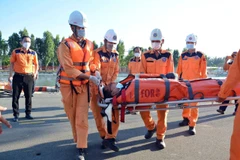
A specialised search-and-rescue ship which was on standby off Ho Chi Minh City’s Phuoc Thang ward was immediately dispatched, accompanied by a medical team from the Vung Tau General Hospital, to give first aid and bring the patient ashore.

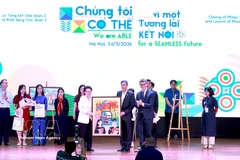
Delegates at the event to launch the third phase of the “We Are ABLE” project in Hanoi on March 24 (Photo: VNA)

UNESCO-backed STEAM initiative helps boost gender equality

Launched in 2019, the “We Are ABLE” initiative aims to promote gender equality, support girls’ education, and foster safe and inclusive learning environments. During its second phase from 2023 to 2025, the project reached more than 8,000 students and their families in the provinces of Cao Bang, Vinh Long, and Khanh Hoa.

Youth delegates take part in hands-on cultural experiences such as calligraphy writing, Dong Ho folk painting, mask painting, traditional games, and exchanges with young performers of “tuong”, “cheo” and “cai luong” theatre (Photo: VNA)

Youth - Key force in preserving, promoting national cultural values

The initiative “Bringing youth members to traditional theatres” has become a flagship model of the ministry’s Youth Union in recent years, helping popularise traditional arts among the public, particularly younger generations, and contributing to the implementation of the Politburo’s cultural development orientation under Resolution 80.

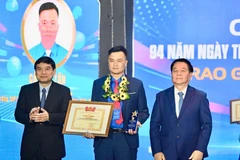
Nguyen Trong Nghia, Politburo member, Secretary of the Party Central Committee and Head of the Party Central Committee’s Commission for Information, Education and Mass Mobilisation (R) and Nguyen Dac Vinh, Chairman of the National Assembly’s Committee for Culture and Education, present the Ly Tu Trong Award. (Photo: The HCYU Central Committee)

100 youth union officials honoured with Ly Tu Trong Award 2026

In 2026, all 40 provincial youth unions and affiliated units submitted their nominations to the HCYU Central Committee. Candidates were assessed based on criteria set out in the award’s regulations, including outstanding achievements in youth union work and youth movements; as well as initiatives and ideas recognised by competent authorities and effectively applied in practice, delivering value to individuals and organisations.

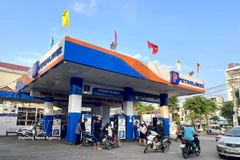
At a petrol retail outlet (Photo: VNA)

Vietnam tightens fuel smuggling controls to safeguard energy security

Under the directive, customs units, particularly those operating at land border gates, inland waterways and seaports, have been instructed to step up patrols and inspections of vehicles entering and exiting Vietnam. Special attention will be given to boats, barges, trucks and other means of transport suspected of concealing fuel in modified tanks or hidden compartments.

Illustrative image (Photo: VNA)

Vietjet Air to launch Hanoi-Prague route

The Civil Aviation Committee of Kazakhstan has officially approved the plan for the route, which is expected to commence on July 11, 2026, with two flights per week, using wide-body Airbus A330.

Achievements in education, healthcare, social welfare – solid foundation for Vietnam’s steady development

Achievements in education, healthcare, social welfare – solid foundation for Vietnam’s steady development

Vietnam’s development journey has not only been marked by economic growth figures but also clearly reflected in achievements in education, healthcare, social welfare, and improvements in people’s quality of life. With a consistent orientation that places people at the centre of development, numerous policies have been implemented to ensure development opportunities for all people, helping realise the goal of “leaving no one behind.”

Within the framework of the 10th National Uncle Ho’s Good Children Congress in 2025, 150 exemplary child delegates visit and experience activities at the Military Industry and Telecommunications Group (Viettel) on May 13, 2025 (Photo: VNA)

Child protection, support programme in cyberspace approved

The programme aims to achieve the objectives of strengthening child protection while promoting their healthy and positive development, and enhancing their digital capacity in the context of national digital transformation, thus contributing to the formation of a generation of Vietnamese “digital citizens” in the new situation.

Young people introduce and guide local residents in Ha Tinh province on how to use the "i-HaTinh" digital citizen application. (Photo: VNA)

Youth Month: Youngsters create social values through digital transformation

From youth-developed digital maps to heritage digitisation projects, technology is being applied in accessible and effective ways, generating tangible social value while contributing to the implementation of the Politburo’s Resolution No. 57-NQ/TW on science, technology, innovation and national digital transformation.

A building destroyed by a missile strike in Dimona, Israel, on March 22, 2026. (Photo: Xinhua/VNA)

Life of Vietnamese community in Israel gradually stabilises

According to the Vietnamese Embassy in Israel, no Vietnamese nationals have been reported injured or killed as a direct result of the attacks over the past three weeks. The outcome reflects both proactive emergency responses and strong adherence to security guidance among the community.