Clinical trials of Vietnam’s 2nd COVID-19 vaccine candidate begins

Vietnam has contained the spread of COVID-19 over the recent past and is among a few countries making strides in vaccine development.
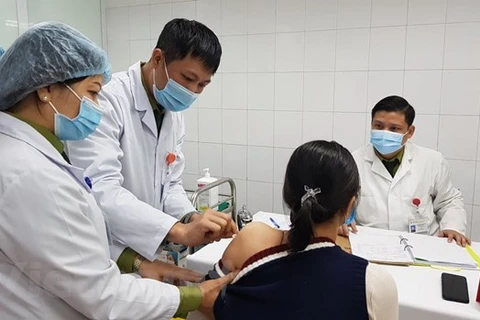
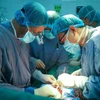
Clinical trials of Vietnam’s 2nd COVID-19 vaccine candidate begins ảnh 1COVIVAC vaccine developed by the Institute of Vaccines and Biological Medical (IVAC) (Photo: VietnamPlus)

Hanoi (VNA) – Vietnam has contained the spread of COVID-19 over the recent past and is among a few countries making strides in vaccine development.

A ceremony was held at the Hanoi Medical University (HMU) on January 21 to kick-start clinical trials of COVIVAC, Vietnam’s second COVID-19 vaccine candidate and developed based on the new highly-infectious coronavirus variants.

It applies primary chicken embryo cell culture, a technique used previously to successfully produce seasonal flu vaccines and shipped to many other countries in the world.

Pre-clinical period proved that COVIVAC has many advantages, including high immunogenicity and suitability for infrastructure at vaccination facilities in Vietnam, as well as effectiveness against SARS-CoV-2 variants, said Dr Pham Van Tac, Director of the Ministry of Health’s Administration of Science Technology and Training during a launch ceremony for clinical trial of COVIVAC held by the Institute of Vaccines and Biological Medical (IVAC).

Strengths of COVIVAC

COVIVAC has undergone pre-clinical trials in India, the US, and Vietnam, said IVAC Director Dr Duong Huu Thai, adding that results showed that it satisfies all conditions to be tested on humans.

The vaccine candidate is being developed by IVAC and universities, research institutes and international organisations.

It does not contain adjuvants and conservatives, and is developed with a technology of Vietnam in vaccine production which tackles seasonal influenza, Thai explained.

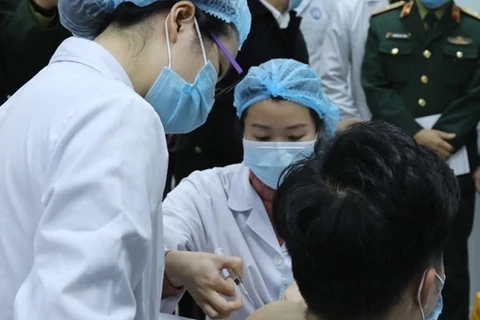
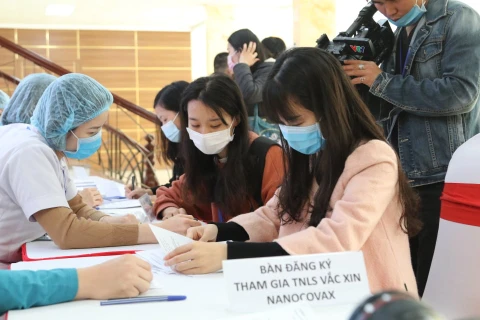
Clinical trials of Vietnam’s 2nd COVID-19 vaccine candidate begins ảnh 2Experts respond to questions raised at the launch ceremony (Photo: VietnamPlus)

He added that with completed and concerted infrastructure, 6 million doses of COVIVAC may be manufactured a year and the amount could hit 30 million. The institute may produce about 500,000 doses per batch.

Of especial note, it only requires to be stored at 2-8 degree Celcius, while Pfizer/BioNTech vaccine must be kept at minus 70 degree Celcius and can only be used within five days at room temperature.

Clinical testing on more than 120 people

Prof. Dr. Ta Thanh Van, Rector of the Hanoi Medical University (HMU), said that plans for phases 1 and 2 of clinical trials of the vaccine have been assessed by the ethics councils in relevant agencies.

The trials will be carried out by the National Institute of Hygiene and Epidemiology together with the HMU. A center for clinical pharmacology at the university, recognised as meeting Good Clinical Research Practice (GCP), will be responsible for the process under the supervision of the Health Ministry.

The first phase is expected to select 120 volunteers with good health. The volunteers, aged 18 to 59, has been recruited by the research team. Previously, Nano Covax was tested on 60 volunteers in its first phase.

Volunteers for COVIVAC will be divided into five groups, comprising of three without adjuvants with three doses of 1 mcg, 3 mcg and 10 mcg, one group of 1-mcg dose with adjuvants and another of placebo.

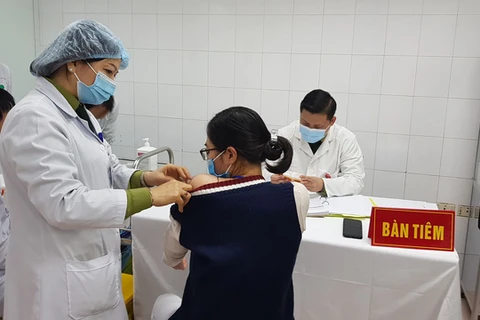
Volunteers will receive two shots (vaccine or placebo) and the second jab will be 28 days after the first one.

The first shot is scheduled to be injected at the Hanoi Medical University in February.

If data on health conditions of volunteers on their 43rd day shows that the vaccine fulfils safety criteria and produces antibodies effective in COVID-19 prevention, the second phase will be rolled out with a larger number of volunteers.

In last December, the Health Ministry, the Military Medical University under the Defence Ministry, and Nanogen Pharmaceutical Biotechnology JSC officially launch a project on clinical trials of Nano Covax developed by Nanogen.

Twenty volunteers received the second shots of Nanocovax on January 20.

Out of over 500 applicants for the vaccine trials, more than 200 underwent health check-ups, of whom 51 people are eligible for the first stage.

The second stage, starting from February, is expected to conduct trials on 400-600 people aged between 12-17.

If successful, Vietnam will begin mass production of the COVID-19 vaccine in early 2022./.
VNA

See more

A long-term strategy for a healthier Vietnam

A long-term strategy for a healthier Vietnam

Resolution No. 72-NQ/TW of the Politburo underscores the pivotal role of physical exercise and sports as a breakthrough solution, shifting the mindset from “treatment” to “proactive health protection and improvement.”

Healthcare workers administer Ebola vaccines to residents in Kampala, Uganda. (Photo: Xinhua/VNA)

Ministry of Health steps up surveillance amid Ebola risk

The Ministry of Health said it is closely monitoring developments, regularly updating information from WHO and national focal points implementing the International Health Regulations, while strengthening surveillance at medical facilities and health quarantine measures at border gates.

The 47th Asia Pacific Dental Congress and the second Hanoi International Dental Exhibition and Congress 2026 (Photo: VNA)

Vietnam hosts 47th Asia Pacific Dental Congress for first time

The three-day event is co-hosted by the Vietnam Odonto-Stomatology Association (VOSA), the Asia Pacific Dental Federation (APDF), the Hanoi Central Odonto-Stomatology Hospital (NHOS), and the FDI World Dental Federation. It’s the first time Vietnam has hosted the APDC, drawing over 4,000 domestic and foreign experts, scientists, and dental practitioners.

Mr. Gilberto recovered well after treatment at Hong Ngoc General Hospital.

US veteran calls Vietnamese doctors “heroes” after life-saving treatment

After being assisted on a medically supported flight back to the United States for continued treatment, Gilberto’s health condition showed positive improvement. From afar, he later sent a heartfelt video message expressing gratitude to the medical team at Hong Ngoc General Hospital, the people he called “heroes.”

Residents in Hanoi's Bach Mai ward receive free health check-ups. (Photo: VNA)

Vietnam moves toward universal free annual health checkups from 2026

Every Vietnamese citizen from 2026 onward will be entitled to at least one free annual medical checkup or screening. Each individual will also have a digital health record integrated into the national digital identification platform VNeID, enabling authorities and healthcare providers to manage health data in a synchronised and continuous manner.

Ho Chi Minh City's digital citizen application (Photo: nld.com.vn)

Ho Chi Minh City rolls out electronic health records on digital citizen app

Under the plan, each resident will be assigned a unique EHR linked to their personal identification number, ensuring accuracy and consistency while minimising duplication and data discrepancies. Health data will be continuously updated from medical facilities, routine check-ups, and screening programmes, then integrated and centrally displayed on the application.

At the Government’s regular press briefing (Photo: VNA)

Hospital duo on track for Q2 opening as roadblocks vanish

The Health Ministry has worked in lockstep with the Ministry of Construction to clear cost-appraisal and contract-approval bottlenecks, with the process now flowing smoothly. It has also teamed up with the construction and defence ministries to press contractors to accelerate outstanding licensing requirements, including fire safety and waste treatment systems.

A kidney transplant performed at the Hue Central Hospital. (Photo published by VNA)

Six lives extended through single organ donation

When one heart stops beating so that others may live on, it represents not only a medical transfer but also a continuation of compassion and humanity, said Professor Dr Pham Nhu Hiep, Director of the Hue Central Hospital.

Doctors at the University Medical Center Ho Chi Minh City perform colorectal cancer surgery on the Indonesian patient. (Photo: published by VNA)

Indonesian patient travels to Vietnam for colorectal cancer surgery

The successful colorectal cancer surgery for an Indonesian patient once again demonstrates the advances in the professional expertise of Vietnamese doctors and has further strengthened the country’s medical reputation and the trust of patients across the region and beyond.

Illustrative photo (Photo: VNA)

Vietnam intensifies efforts to end malaria by 2030

In 2025, the country reported 246 cases with no deaths, down more than 30% year-on-year. In the first months of 2026, only 25 cases were recorded, again with no fatalities. So far, 26 out of 34 provinces and cities have been officially recognised as malaria-free.

Illustrative image -(Source: Internet)

Vietnam warns of HiPP baby food after Austria’s recall

The Austrian Agency for Health and Food Safety (AGES) has announced that HiPP – a German-Swiss baby food producer – and supermarket chain SPAR had recalled all 190g-jars of HiPP Vegetable Carrot with Potato from 1,500 stores in Austria due to suspected contamination with rat poison.

The caregivers’ club in Coc village, Pu Luong commune, the north-central province of Thanh Hoa, has established a livelihood support fund, helping households develop their economies through models such as rice cultivation, vegetable growing, fish farming and poultry raising. (Photo: VNA)

Community-based child nutrition care model benefits Thanh Hoa’s locality

After more than one year of implementation with the support of World Vision, the model has delivered positive outcomes in improving nutrition and enhancing the quality of childcare. Household livelihoods have improved, mothers’ awareness and caregiving skills have been strengthened, and notably, the rate of child malnutrition in Coc has declined markedly.