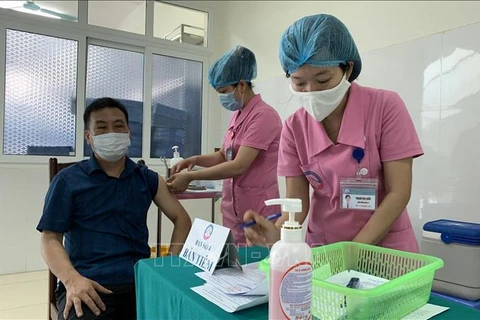
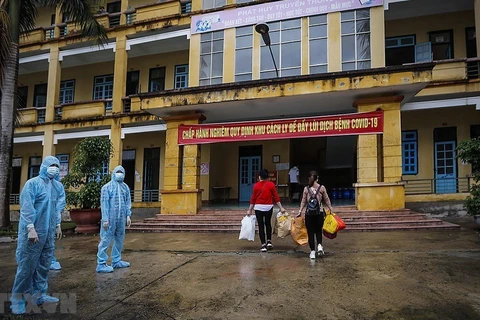
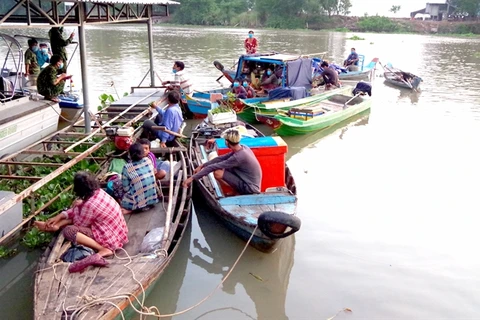
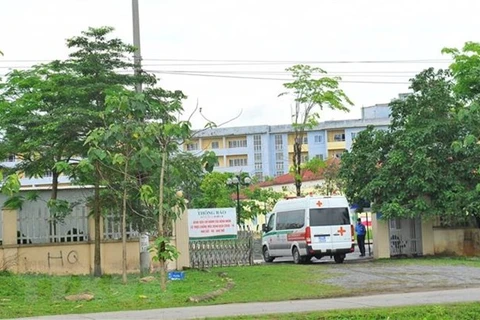
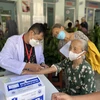
In a concentrated quarantine establishment (Photo: VNA)
 Hanoi (VNA) - The compulsory concentrated COVID-19 quarantine period in Vietnam has been officially extended to 21 days.
The mandatory concentrated quarantine for those enter Vietnam from abroad or had close contact with confirmed COVID-19 cases will be extended from the current 14 days to 21 days, and the new regulation takes effect from May 5, Minister of Health Nguyen Thanh Long has said.
The decision was made after consultation with epidemiologists and virologists in light of new variants of the virus prompting revisions to our knowledge of disease incubation time, he said.
The new protocol aims to “protect the community from the spread of coronavirus” amid recent cases found positive following the completion of 14-day quarantine, Long said.
The minister requested local health departments and centres for disease control to strictly comply with concentrated quarantine protocols to avoid cross-infection within quarantine facilities and transfer people who have completed concentrated quarantine to the authorities in their residence.
The follow-up medical observation period at home for those who have completed concentrated quarantine will be cut from two weeks to seven days.
People who return from quarantine facilities should make daily health declarations with local medical workers. If they show signs of fever, cough, sore throat, shortness of breath, tiredness or loss of taste, they must go to the closest health clinic for guidance, a dispatch from the health ministry from earlier this morning, which still put the quarantine period at 14-day but provided tightened regulations.
They are not allowed to leave their houses or places of residence. If they need to go out for work or other necessary purposes, they must report to local police and medical staff and strictly follow basic prevention measures.
Long also requested all localities to review cases of foreigners entering Vietnam and screen high-risks groups of people like those in service sectors like at discotheques, bars, karaoke bars, and massage parlours for COVID-19.
He also called on the public for strict observance of basic prevention and control measures like 5K – Khau trang (face mask), Khu khuan (disinfection), Khoang cach (distance), Khong tu tap (no large gatherings), and Khai bao y te (health declaration).
Previously, in late April, a Vietnamese national returning from Japan has found to be infected with the virus after finishing 14-day concentrated quarantine and caused a cluster of infections in the northern province of Ha Nam.
An Indian expert in Hanoi was confirmed on May 4 to be carrying the virus after 14 days of concentrated quarantine./.
The mandatory concentrated quarantine for those enter Vietnam from abroad or had close contact with confirmed COVID-19 cases will be extended from the current 14 days to 21 days, and the new regulation takes effect from May 5, Minister of Health Nguyen Thanh Long has said.
The decision was made after consultation with epidemiologists and virologists in light of new variants of the virus prompting revisions to our knowledge of disease incubation time, he said.
The new protocol aims to “protect the community from the spread of coronavirus” amid recent cases found positive following the completion of 14-day quarantine, Long said.
The minister requested local health departments and centres for disease control to strictly comply with concentrated quarantine protocols to avoid cross-infection within quarantine facilities and transfer people who have completed concentrated quarantine to the authorities in their residence.
The follow-up medical observation period at home for those who have completed concentrated quarantine will be cut from two weeks to seven days.
People who return from quarantine facilities should make daily health declarations with local medical workers. If they show signs of fever, cough, sore throat, shortness of breath, tiredness or loss of taste, they must go to the closest health clinic for guidance, a dispatch from the health ministry from earlier this morning, which still put the quarantine period at 14-day but provided tightened regulations.
They are not allowed to leave their houses or places of residence. If they need to go out for work or other necessary purposes, they must report to local police and medical staff and strictly follow basic prevention measures.
Long also requested all localities to review cases of foreigners entering Vietnam and screen high-risks groups of people like those in service sectors like at discotheques, bars, karaoke bars, and massage parlours for COVID-19.
He also called on the public for strict observance of basic prevention and control measures like 5K – Khau trang (face mask), Khu khuan (disinfection), Khoang cach (distance), Khong tu tap (no large gatherings), and Khai bao y te (health declaration).
Previously, in late April, a Vietnamese national returning from Japan has found to be infected with the virus after finishing 14-day concentrated quarantine and caused a cluster of infections in the northern province of Ha Nam.
An Indian expert in Hanoi was confirmed on May 4 to be carrying the virus after 14 days of concentrated quarantine./.
VNA