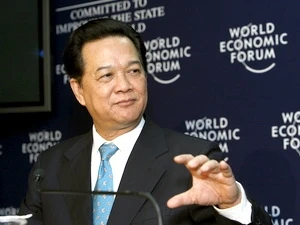
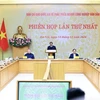
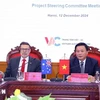
Deputy Foreign Minister Nguyen Quoc Dung (Source: VNA)
 He delivered an opening remark, presided over the first session on reviewing and setting orientations to cooperation, and will make a closing speech.
Dung said ASEAN 3 (China, Japan and the Republic of Korea) needs to strengthen operations and create a firm position in the regional integration process to effectively tap existing regional connectivity initiatives such as Belt and Road, Free and Open Indo-Pacific Strategy, Partnership for Quality Infrastructure, and Asian Infrastructure Investment Bank.
He underscored the importance of maintaining an environment of peace and stability for development cooperation, fostering trust building, shaping an open, balanced, transparent and rules-based regional architecture.
Themed “20 years of ASEAN 3 cooperation: Towards the East Asia Economic Community”, the event attracted nearly 60 delegates from governmental agencies and scholars from 13 regional countries.
Participants shared view that over the past two decades, ASEAN 3 has reaped successes in the fields of economy, trade, finance, environment protection, narrowing development gaps, strengthening regional connectivity, and promoting cultural and people-to-people exchange.
The total annual trade in ASEAN 3 group is stable with more than 700 billion USD, and China, Japan and Republic of Korea have poured in excess of 30 billion USD into the bloc each year.
As part of the ASEAN 3 Working Plan for 2013-2017, 475 projects have been underway. Member states are actively drafting the Working Plan for 2018-2022, which is scheduled for adoption at the ASEAN 3 Summit in November 2017.
Participating countries agreed to improve operational efficiency of existing mechanisms, give priority to cooperation in stabilising finance, developing micro, small and medium-sized enterprises, narrowing development gap, strengthening regional connectivity and integration while coping with emerging non-traditional security challenges such as terrorism, cyber security, population aging, poverty reduction, food and energy security, and epidemic prevention.-VNA
VNA