Disease-free zones key to export of husbandry products

Establishing disease-free zones was critical for Vietnam to promote the export of husbandry products, according to the Department of Animal Health.
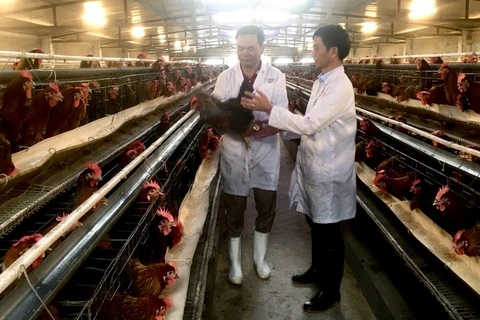
Establishing disease-free zones is the key to the export of husbandry products (Photo: VietnamPlus)
Hanoi (VNA) - Establishing disease-free zones is the key to the export of husbandry products, heard a recent online talk to disseminate information on new regulations on veterinary medicines held by some units of the Ministry of Agriculture and Rural Development.

Nguyen Van Long, Director of the ministry’s Department of Animal Health, said that the animal farming industry of Vietnam has expanded strongly in recent years, but the export of husbandry products remains modest. Long cited statistics that the export of husbandry products was at around 400 million USD in 2022.
The department’s statistics showed that Vietnam exported 232 million USD worth of husbandry products in the first half of this year but imported 1.67 billion USD, meaning a deficit of more than 1.4 billion USD.
The official said scattered farming remained a problem to the development of the animal husbandry industry which made it difficult to ensure veterinary hygiene, thus hindering export. Import countries are concerned about the risk of disease transmission between animals and animals, animals and people.
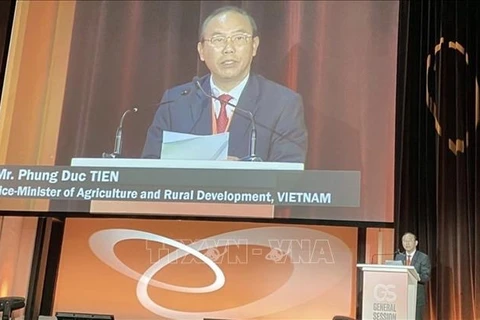
Disease-free zones key to export of husbandry products ảnh 1Some units of the Ministry of Agriculture and Rural Development hold an online talk to disseminate information on new regulations on veterinary medicines (Photo: VietnamPlus)

To increase the export of animal husbandry products, Long said it is necessary to ensure hygiene and disease-free zones in animal farming.

Vietnam has signed 17 free trade agreements which required the amendments of corresponding regulations following international commitments, he said, adding that the Department of Animal Health has made a comprehensive review of relevant legal documents with a view to aligning them with international regulations. The department has also worked to streamline administrative procedures to facilitate production and trade in the field.

The official noted that as part of the effort, in late July, the Government approved a national plan to strengthen capacity for disease control and ensure food safety of food products with animal origin for the 2023-30 period.

The agriculture ministry also issued Circular No 24/2022, amending Circular No 14/2017 about regulations on disease-free animal zones.

Long said that the provisions of Circular 24 basically meet the requirements of the World Organisation for Animal Health with an aim to lead Vietnam’s livestock industry to approach global standards.

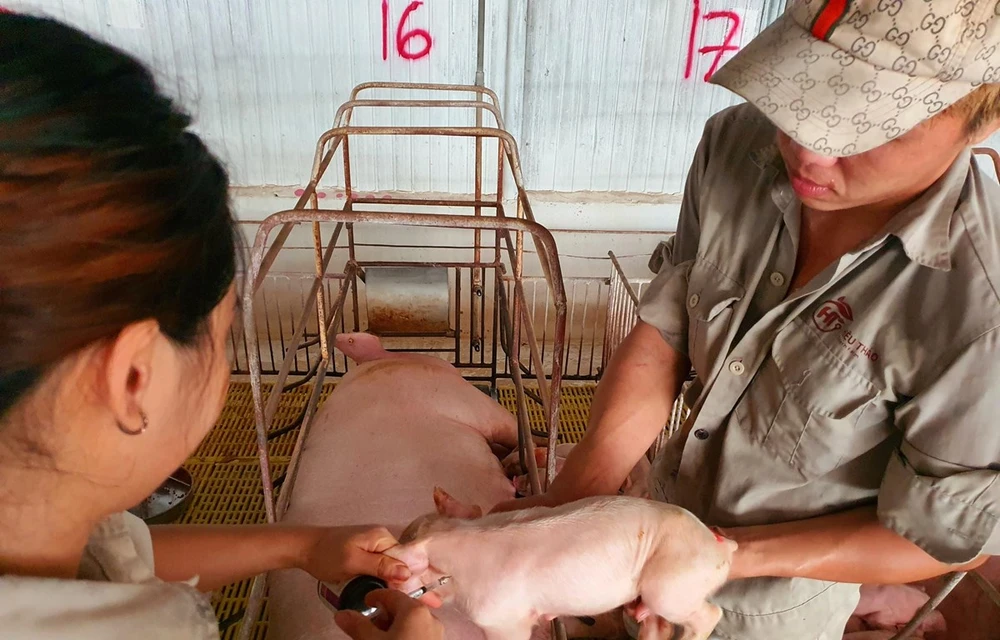
Disease-free zones key to export of husbandry products ảnh 2The animal farming industry of Vietnam has expanded strongly in recent years, but the export of husbandry products remains modest (Photo: VietnamPlus)

Nguyen Ngoc Tien from the department said that establishments certified as disease-free zones would get many benefits, including priority in choosing breeds, animals and animal products. In addition, animal products originating from certified establishments would get a quarantine certificate within just one day after registration.

There were about 2,230 establishments in 55 provinces and cities certified disease-free in Vietnam to date.

On July 25, the Prime Minister promulgated Decision No. 889/QD-TTg approving a national plan to strengthen the capacity of animal disease control and the management of food safety of food products with animal origin in the 2023-2030 period.

Under the decision, Vietnam is set to establish 19 disease-free zones for animal breeding by 2025 in line with domestic standards, including four zones in southern Binh Phuoc province and one in nearby Tay Ninh province satisfying standards set by the World Organization for Animal Health. It is expected that eight disease-free zones will be established in Binh Duong, Tay Ninh, and nearby Dong Nai provinces by 2030./.

VNA

See more

Vietnamese fruits introduced to German consumers (Photo: VNA)

“Vietnamese Goods Day” promotes agricultural products in Germany

Vietnamese Ambassador to Germany Nguyen Dac Thanh said the event, held close to Vietnam’s Lunar New Year, helped promote Vietnamese tropical fruits while introducing Vietnamese cultural values to German consumers, and creating opportunities for Vietnamese businesses to connect directly with German importers.

Downtown area in Ho Chi Minh City. (Photo: VNA)

Vietnam's golden gateway: FDI poised for gains in 2026

More than just volume, the quality of FDI entering Vietnam has improved. The nation is evolving from a base for basic assembly and processing into a genuine contributor to hi-tech manufacturing and R&D across global value chains.

Deputy Minister of Finance Do Thanh Trung speaks at the ceremony (Photo: VNA)

Project to advance growth, innovation, leadership for enterprises kicks off

AGILE is not only a testament to the long-standing and trusted strategic partnership between Vietnam and Canada, but also an important contribution to the Vietnamese Government’s efforts to promote innovation and sustainable growth within the private sector, thereby effectively mobilising private investment to realise inclusive and sustainable development goal.

At Regza Vietnam Electronics Co., Ltd. in Dong Nai province. (Photo: VNA)

FDI disbursement in January hits five-year high

Economists said that the continued growth in realised FDI reflects foreign investors’ sustained implementation and expansion of production and business activities in Vietnam. This is seen as an encouraging signal, underscoring investors’ confidence in Vietnam’s business environment and economic prospects.

In Q1 2026, Vietnam records 16 export commodities with turnover exceeding 1 billion USD. (Photo: VNA)

Exports face stiff test in bid to hit 550 billion USD

To achieve export growth of over 15% as directed by the Government, the MoIT said it will prioritise a set of core measures in 2026, including expanding production capacity, developing new export products, increasing domestic content and value added, accelerating the shift from processing to manufacturing, and proactively addressing trade barriers and defence measures.

Illustrative photo (Photo: VNA)

January CPI rises on stronger Tet holiday demand

CPI in January 2026 rose 0.05% month-on-month, with urban areas up 0.02% and rural areas up 0.09%. Of the 11 major commodity and service groups, nine recorded price hikes while two saw declines.